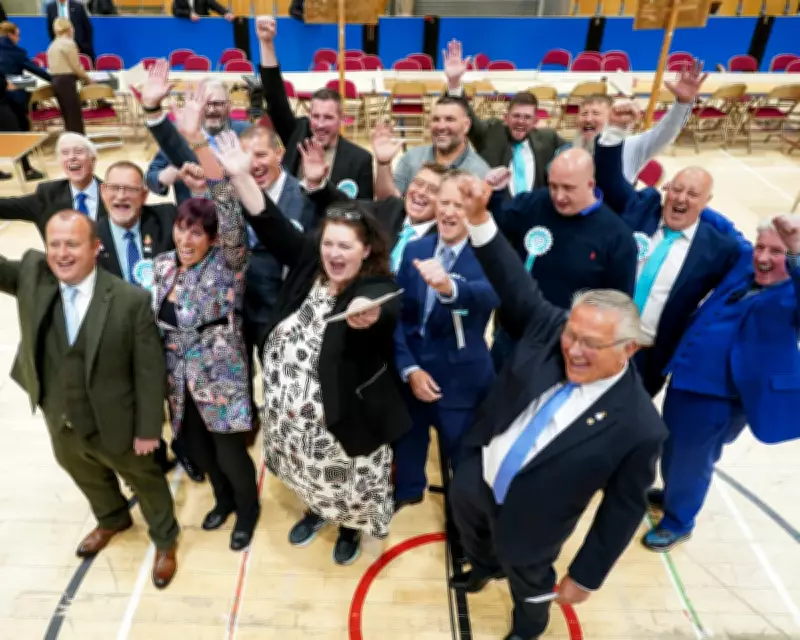
Reform UK councillors celebrated after winning seats in all 12 contested wards in Hartlepool, marking a significant early victory in the 2026 local elections. The results, captured in a photograph by Ian Forsyth, underscore the party's growing influence in traditional Labour strongholds.
Early Trends in England's Local Elections
Only a third of English councils that held elections had their votes counted overnight, with the rest set to announce results on Friday morning. Despite the incomplete picture, several trends are emerging for the major parties.
1. Labour
Labour's results are disappointing but not as catastrophic as some had feared. The party has lost numerous seats in its traditional heartlands, including control of councils such as Hartlepool, Tameside, Redditch, and Tamworth, largely due to the Reform UK surge. Prominent Labour figures like Angela Rayner in Tameside and Lisa Nandy in Wigan face worrying outcomes, which may fuel internal arguments about the threat from the right, though seats were lost as Labour voters switched to progressive parties.

Elections experts John Curtice and Michael Thrasher predict that if losses continue at the current rate, Labour could lose just over 1,200 of the 2,500 seats it is defending. Given lowered expectations in recent weeks, Labour politicians will be relieved to lose fewer than 1,500 seats. However, the prospect of losing control in Wales—where Labour has dominated for over a century—and coming third in Scotland will be a severe emotional blow, potentially destabilizing for Keir Starmer's leadership.
2. Reform UK
Reform UK is the biggest winner so far, capturing seats in former Labour heartlands across the Midlands and North, many of which voted for Brexit. The party won control of Newcastle-under-Lyme council and made gains from the Conservatives. Nigel Farage celebrated after Reform took Havering council in east London, with further gains expected in Suffolk, Norfolk, and Essex, eating into the vote of senior Conservatives like Kemi Badenoch, Priti Patel, and James Cleverly.
Despite the strong showing, there are private concerns. Elections expert Peter Kellner noted that in last year's local elections, Reform won 41% of all contested seats across England; this year's overnight tally is about 33%, reflecting recent polling and suggesting support may have peaked.
3. Conservatives
The Conservative Party has had a mixed set of results, with more losses to Reform than anticipated as the battle for the right continues. Losses in Essex, Kemi Badenoch's backyard, are particularly painful. The party also faces risks from the Liberal Democrats in southern England heartlands. However, there is a bright spot in central London, where the Tories won Westminster and regained control of Wandsworth. Some may spin this as the start of a fightback, similar to Kenneth Baker's spin after the 1990 poll tax rout. The party also saw off the Reform threat in Bexley, south-east London.
4. Greens
The Green Party has seen an increase in vote share since 2022, but many of its biggest targets—including Greater Manchester and the Hackney mayoralty—are still to come. The party has struggled to convert votes into significant seat gains, partly due to the first-past-the-post system. Poor expectation management and a dip in support for leader Zack Polanski, amid accusations of antisemitism raised on doorsteps, may have hindered progress.
5. Liberal Democrats
The Liberal Democrats have experienced mixed results. Losing control of Hull is painful, but taking Stockport and Portsmouth offers some consolation. The party believes its best results are yet to come, with hopes of winning Hampshire and Surrey from the Tories and breaking down the "blue wall" in southern England. Results in their south-west London stronghold were mixed: they failed to take Merton from Labour, but Richmond has become a one-party state.