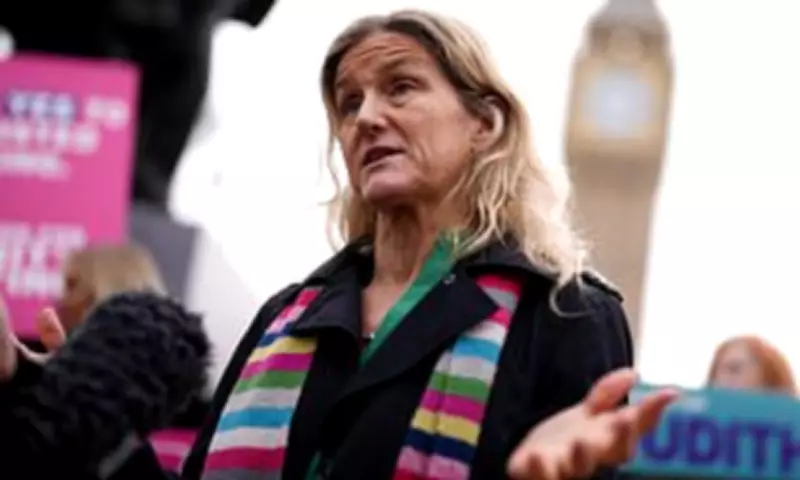
Fewer than one in 10 voters believe legalising assisted dying should be a priority for their local MP, according to a new mega-poll. A survey of more than 10,000 voters revealed just 7 per cent think legalising assisted dying should be among their local MP's top three priorities over the next 12 months.
The MRP poll, a constituency-level modelling technique, also uncovered widespread opposition to any attempt to force through legislation that has already failed. The Terminally Ill Adults (End of Life) Bill, which proposed establishing a framework for assisted dying in England and Wales, fell in the House of Lords earlier this year. Peers ran out of time to conclude their debates on the bill, amid accusations of filibustering, before the last parliamentary session ended in April.
Despite the bill's failure, which was fronted by Labour MP Kim Leadbeater, supporters of assisted dying have indicated they might try to revive the legislation. Those who backed Ms Leadbeater's original bill could use the Parliament Act to bypass the Lords if they can get another MP to take it through the Commons again. Yet this would be against voters' wishes, the mega-poll, conducted by Whitestone Insight on behalf of The Other Half think tank, suggested.

The poll showed a majority in every single British constituency do not want their MP to support a law pushed through Parliament without full scrutiny by both Houses. Across the country, only 8 per cent of the public supported pushing a non-manifesto commitment into law without approval and full scrutiny by both Houses. Of those who took a position, 88 per cent of the public were opposed to such action, the poll found.
Ms Leadbeater's bill was introduced to Parliament as a private member's bill, after she won a 2024 ballot to begin steering a bill of her choosing through the Commons. Two supporters of Ms Leadbeater's bill, Labour MP Lauren Edwards and Liberal Democrat MP Andrew George, were highly placed in this year's ballot. This has prompted speculation that one of them could reintroduce Ms Leadbeater's bill and then use the Parliament Act to force it into law.
Ms Leadbeater's bill cleared the Commons at third reading by 314 votes to 291, a majority of 23, before it fell in the Lords. But the MRP poll suggested voters in neither Ms Edwards' nor Mr George's constituency wanted their local MP to front such a bid. In the St Ives constituency of Mr George, almost two-thirds (64 per cent) agreed they would not want their MP to support a law pushed through without full scrutiny and approval by both Houses. In Rochester and Strood, the constituency of Ms Edwards, 61 per cent of constituents agreed they would not want their MP to support a law pushed through without full scrutiny and approval by both Houses.
Jess Asato, Labour MP for Lowestoft and an opponent of Ms Leadbeater's bill, said: 'Two years ago, like all Labour MPs, I was elected on a manifesto focused on the priorities of people up and down the country. On improving their standard of living, fixing the NHS and rebuilding our country. This polling shows that this hasn't changed. We need to be resolutely focused on why people put us in Government and any distraction from our core mission squanders our political capital, and the resources, time and energy of this Labour Government. We know the Assisted Dying Bill is flawed and unsafe because the experts like the Royal Medical Colleges and the Equalities and Human Rights Commission have told us.'
Fiona Mackenzie, CEO of The Other Half, said: 'This polling clearly shows that the public does not want assisted dying introduced via the back door using the Parliament Act. In every constituency in Great Britain, voters say they do not want their MP to back a law pushed through without the approval of both Houses of Parliament. This should be a warning to any MP thinking of giving in to pressure from assisted dying campaigners to use the Private Members' Bill ballot to revive Kim Leadbeater's Bill. Assisted dying is a proposed law change that should require the highest level of scrutiny, not a procedural manoeuvre to get around the House of Lords to force it into law.'

Andrew Hawkins, founder of Whitestone Insight, said: 'Large national polls can sometimes hide big local differences, which is why MRP is useful. But what is striking here is how consistent the picture is across Great Britain. In every constituency we modelled, more voters said they would not want their MP to support a law being pushed through without sufficient scrutiny, or the approval of both Houses, than said the opposite. So this is not a story of a handful of outlier seats. The demand for proper parliamentary scrutiny is broad, deep and remarkably consistent across the country. Voters are effectively saying: if Parliament is dealing with a life-and-death issue, they expect Parliament to do its job properly and the polling paints a picture of an electorate that is wary of unintended consequences. It expects MPs and peers alike to scrutinise any legislation rigorously.'
Whitestone Insight, a member of the British Polling Council, interviewed 10,222 adults in Great Britain online between 7 and 14 May.