Burnham's Path to Premiership
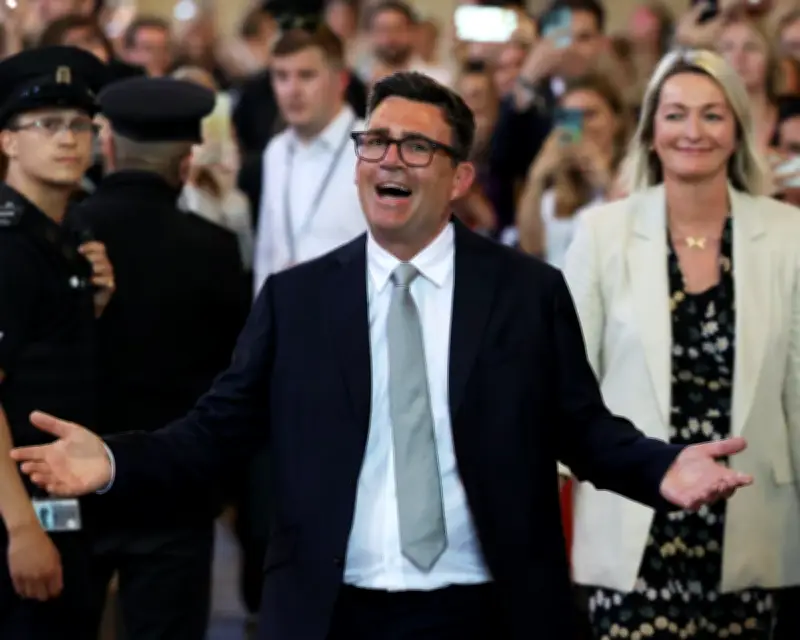
Andy Burnham, the 56-year-old mayor of Greater Manchester, is poised to become the next UK prime minister following Keir Starmer's announcement that he intends to resign once a successor is chosen. Burnham, who has spent nine years as mayor, is seen as the Labour Party's best chance to recapture votes from Reform UK and the Greens, offering a politics that understands concerns outside London.
The Turning Point at Anfield
Burnham often cites a pivotal moment in his political life: in 2009, at the 20th anniversary of the Hillsborough disaster at Liverpool's Anfield stadium, he was booed by fans demanding justice. As culture secretary under Gordon Brown, his speech was interrupted by angry calls. Footage shows him rattled and close to tears, later saying, 'My journey away from Westminster began at Anfield that day. It was the turning point in my life. To be honest, I fell out of love with it.'
Political Rise and Shifts
Born in Aintree, Liverpool, Burnham grew up in Culchest, Cheshire, with a phone engineer father and doctor's receptionist mother. Inspired by the BBC drama 'Boys from the Blackstuff,' he joined Labour at 14. He studied English at Cambridge, where he met his wife, Marie-France van Heel. After working on trade magazines and as a researcher for MP Tessa Jowell, he became an adviser to culture secretary Chris Smith. Elected MP for Leigh in 2001, he served under Blair and Brown as chief secretary to the Treasury, culture secretary, and health secretary.

Burnham ran for Labour leader in 2010 on 'aspirational socialism' but came fourth. He ran again in 2015 with a centrist, business-friendly pitch, launching at Ernst & Young, but lost to Jeremy Corbyn. Unlike many, he served as home affairs spokesperson in Corbyn's shadow cabinet and did not resign after the Brexit vote. He left in 2017 to become Greater Manchester's first mayor, winning with over 60% of the vote and re-elected by a larger margin in 2021.
Mayoral Achievements and Criticism
As mayor, Burnham gained praise for bringing buses under public control and championing the region's economic performance, earning the nickname 'king of the north.' During the Covid pandemic, he battled Boris Johnson's government over tier 3 restrictions, boosting his 'man of the people' image. Critics call him 'Captain Flip-flop' for shifting politics, but supporters see a leader who listens. His promise of a 'turning point' for the country aligns with his own narrative of transformation since Anfield.