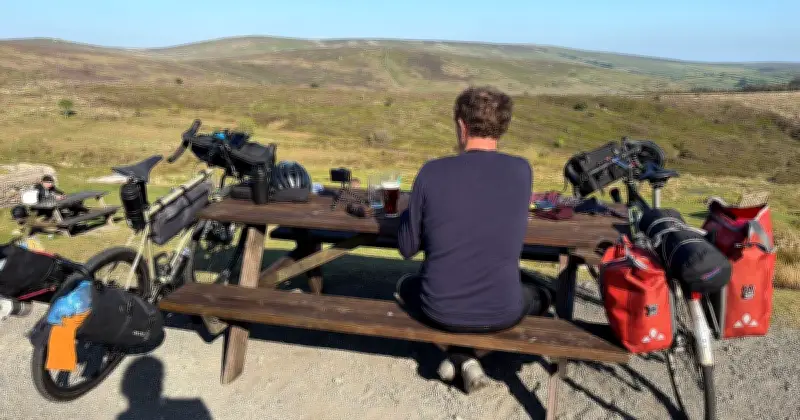
Travel writer Simon Parker has visited all 15 of the UK's national parks on foot and bicycle, discovering a landmark Supreme Court ruling that upheld the public's right to wild camp in Dartmoor, alongside significant funding cuts affecting these landscapes.
Parker, along with his friend Jack Hadley, set off from Totnes on a trip across Dartmoor just days after the Supreme Court upheld the legal rights of the public to wild camp inside the national park. The ruling came after Alexander Darwall, a multimillionaire hedge fund manager and Dartmoor's fourth-largest landowner, argued that camping on his 4,000-acre Blachford estate did not fall within the definition of 'open-air recreation' as stated in legislation passed in 1985.
Landmark Ruling and Its Implications
Had Darwall's case against the Dartmoor National Park Association been successful, the two-and-a-half-year dispute could have cost the environmental body £400,000 in legal fees. Victory, however, helped amplify a contentious debate about public access to not only Dartmoor but all 15 of the UK's national parks, and the British countryside more widely.
Unlike many national parks systems around the world managed by federal governments, such as in the United States, Dartmoor is privately owned by more than 50 different farms, landowners and organisations, with the Duchy of Cornwall being the biggest. Approximately 37% of Dartmoor's 368 square miles is also classed as common land, where around 850 'commoners' have a historic right to graze livestock across 92 parcels of open moorland.
Dartmoor's Landscape and History
Dartmoor has more than 160 tors, granite outcrops formed between two million and 10,000 years ago. The moor boasts around 132,000 unique sites of archaeology, the highest density in Britain. The national park was designated in 1951, 75 years ago, and has been shaped by people for 10,000 years, producing tin, copper and granite, including for the British Museum in London.
The landscape has a rich history of folklore, with tales of travellers lured from well-worn paths into muddy bogs. Sir Arthur Conan Doyle wrote in The Hound of the Baskervilles: "The longer one stays here, the more does the spirit of the moor sink into one's soul, its vastness, and also its grim charm."
Funding Challenges Across the UK
Parker's journey revealed that England's ten national parks were dealt a 9% cut in their core funding from the Department for Environment, Food and Rural Affairs (DEFRA) in 2025. While the story in Wales and Scotland looked slightly more optimistic, these landscapes had faced a 40% cut to their budgets in real terms since 2010. Despite covering 10% of the country's total area, they received less than one per cent of the DEFRA budget, £48.8 million in 2025.
During the trip, Parker and Hadley camped on the open moor near Sourton Tor, after struggling with a tent designed for alpinists. Parker described waking at dawn to the sound of sheep, and defined 'barefoot luxury' as the whistle of a moka pot on a camping stove while resting in a sleeping bag. His journey is detailed in his book, The Wild Ride Home, which marks the 75th anniversary of the UK's national parks.