US World Cup 2026 Faces Dual Crises: Funding Delays and ICE Fears
On Sunday, 19 July 2026, the final match of the FIFA World Cup will be held in East Rutherford, New Jersey, promising to make the community the centre of the world for a day. However, as this moment approaches, concerns are mounting over whether the United States is prepared, with two major crises threatening to turn a generational opportunity into an international embarrassment.
Financial Mess: Host Cities Await Critical Funding
The first problem is a financial mess. Congress allocated $625 million to assist the 11 American cities hosting World Cup games in managing the expected influx of visitors, with each of the 104 matches posing logistical challenges akin to a Super Bowl. State and local law enforcement agencies are counting on these funds to handle security and operational demands.
Yet, with roughly four months remaining until the event, not a single host city has received any of this promised money. At a congressional hearing on 24 February, officials highlighted the dire consequences of these delays.

- In Miami, the Fan Fest—anticipated to draw hundreds of thousands—faces cancellation within 30 days if funding does not arrive.
- Kansas City, which expects 650,000 visitors for six matches, reports that delayed funds are hindering security planning.
- Foxborough, Massachusetts, has threatened to withhold the license FIFA needs to host games at Gillette Stadium due to a lack of the promised $7.8 million, a sum representing about half of the town's annual public safety budget for its 18,600 residents.
These are not abstract issues but tangible threats to events planned for years. The Department of Homeland Security, administering grants through FEMA, must release these funds promptly, as every day of delay complicates an already complex logistical challenge.
ICE Presence: Security Concerns and Chilling Effects
The second threat involves the presence of U.S. Immigration and Customs Enforcement (ICE). As ranking member of the House homeland security taskforce overseeing World Cup security, Congresswoman Nellie Pou has pressed this issue, asking ICE Director Todd Lyons at a recent hearing if he would rule out enforcement activity at or around World Cup venues this summer.
Lyons refused, describing ICE's presence as a "key part" of World Cup security and declining to rule out tactical enforcement teams, similar to those deployed in incidents like the shooting in Minneapolis. While ICE has a legitimate role in large-event security, such as at Super Bowls, the uncertainty is alarming communities.
ICE and the Department of Homeland Security arrive with a record that has raised fears across the country. Dozens of nations have issued travel advisories about conditions in the United States, and over 90 civil society organizations have written to FIFA expressing concern about immigration enforcement chilling fan attendance.
In districts like Paterson, New Jersey, immigrants and their children fear being swept up by ICE despite legal status. For instance, a restaurant worker in the district, speaking anonymously, said he would avoid World Cup events due to these fears, highlighting a broader trend that could impact economic projections, such as the $3.3 billion in activity expected in the New York-New Jersey region alone.
Urgent Calls for Action
None of these issues are inevitable. Solutions include:
- The Department of Homeland Security must release the withheld funding immediately.
- Congress should hold emergency hearings on ICE's role.
- The administration can offer clear assurances that legally present visitors will not be targeted at games, fan fests, or watch parties.
Security concerns have been raised by both Republicans and Democrats, underscoring that keeping the World Cup safe and welcoming is not a partisan issue. While recent leadership changes, such as the firing of Secretary Kristi Noem, are noted, the core problems persist.
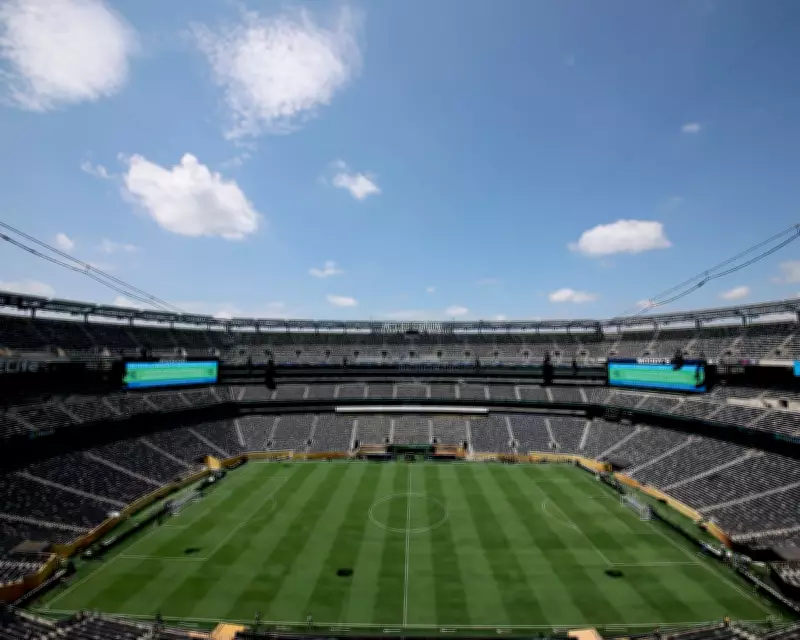
When visiting MetLife Stadium, the potential of the World Cup was evident: eight matches in the district, including the final, with fans from Brazil, France, Norway, Panama, Germany, and many other nations celebrating together in an area rich with immigrant diasporas. This vision represents the World Cup at its best.

With fewer than 100 days until the 2026 FIFA World Cup arrives in the US, the taskforce continues to push for funding release and safety assurances for all fans. As Congresswoman Pou emphasizes, this is a singular chance to showcase the best of America to the world.