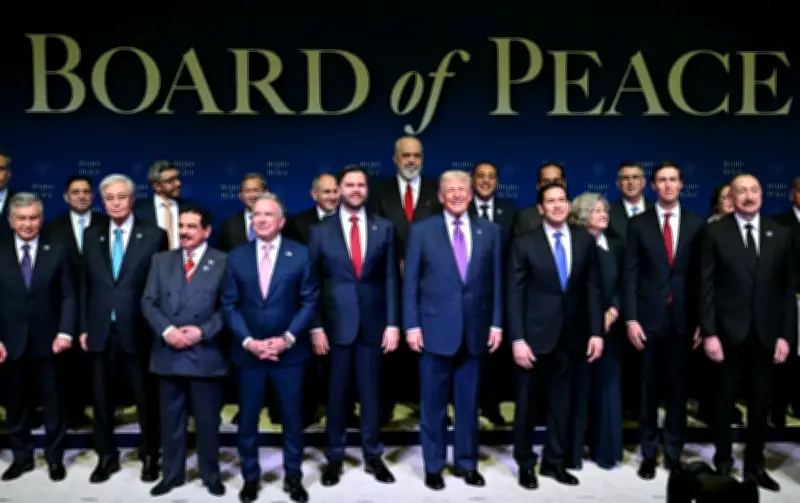
The UN-sanctioned Board of Peace, announced by Donald Trump earlier this year to govern Gaza, is planning a sweeping grant of legal immunity for itself, according to a draft resolution obtained by the Guardian. The four-page document, labeled "sensitive but unclassified," would also allow the organization to obtain public property in Gaza "free of charge."
Scope of Immunity
The draft resolution extends broad protections to every member of the Board of Peace and its administrative affiliate, the Office of the High Representative (OHR), as well as to Palestinian technocrats, international military forces, and nonresident contractors working in Gaza. It defines immunity from "any arrest, detention or legal proceedings in the courts or other entities in Gaza." It remains unclear whether the document seeks to shield the Board from prosecution in international courts as well.
Trump's Role and Board Membership
The draft states that Board chair Donald Trump would have the right to waive someone's legal immunity, pending majority support from the peace board. The seven-member executive board includes Trump's son-in-law Jared Kushner, special envoy Steve Witkoff, chief of staff Susie Wiles, and national security adviser Marco Rubio. Despite billions in pledges, most funds have not been transferred, and no major contracts have been issued.

Official Response
The Board of Peace did not answer specific questions but an official stated: "There is no operative resolution or immunity framework of the kind described ... Any suggestion that this process is designed to create lawlessness or impunity is wrong." The official called the idea that Trump would waive immunity "categorically false" and said the Board would ensure all personnel follow applicable law, without specifying oversight mechanisms.
Legal Expert Analysis
Six lawyers specializing in US contracting law and international armed conflict reviewed the draft. They noted it is unclear how Board officials, soldiers, and contractors would be held accountable for shootings, accidents, or routine disputes. Emily Schaeffer Omer-Man, an expert in international humanitarian law, said: "It looks like an attempt to exempt the board from accountability for potential legal violations." Noura Erakat, an international law professor at Rutgers, added: "They are basically saying there’s no external oversight ... It’s creating a legal system unto itself."
Contractor Concerns and Status of Forces
Contractors have pressed for clarity on legal protections for Gaza work, where the Board has solicited bids for rubble removal, security, and reconstruction. Doug Brooks, president emeritus of the International Stability Operations Association, said: "I would think any company would want a very clear legal framework." Unlike typical status of forces agreements between countries, no such document exists for Gaza, as Israeli officials reportedly avoid recognizing Gaza as a state.
Property and Premises
The draft's final section states the Board "shall be provided, free of charge, public premises and facilities needed for the accomplishment of the missions in Gaza." Legal experts warned this could enable illegal confiscation of Palestinian property. Omar Shakir, executive director at Dawn, said: "By unilaterally declaring the power to seize Palestinian land ... the Board of Peace is taking a page out of Israel’s repressive playbook." Brad Parker of the Center for Constitutional Rights questioned the Board's legal authority without a status of forces agreement.
UN Authorization and Implementation
The UN Security Council authorized the Board to oversee Gaza's administration until December 31, 2027. The draft resolution, titled "RESOLUTION NO 2026/3," would go into force upon High Representative Nickolay Mladenov's signature. It has not been shared with Palestinian administrators. The Board did not clarify what other parties would sign the resolution.