A new study has concluded that Stonehenge's most enigmatic stone, the Altar Stone, was transported hundreds of miles from Scotland to Wiltshire by human effort, not by glaciers as previously theorised. The six-tonne bluestone originated in northeast Scotland, approximately 430 miles (700 km) from its current location on Salisbury Plain.
Human Transport vs. Glacial Theory
For years, experts debated whether the stone was carried south by ice sheets during the last Ice Age. However, research published in the Journal of Quaternary Science suggests that while glaciers may have moved the stone partway—potentially to Dogger Bank in the North Sea—humans were responsible for the final leg of the journey, covering at least 250 miles (400 km) across challenging terrain.
Co-lead author Dr Anthony Clarke from Curtin University in Perth stated: "Rather than being carried naturally by ice, the evidence points to a deliberate, carefully planned movement across a challenging and varied landscape. Our modelling shows glaciers may have transported rocks part of the way during the last Ice Age, but not into southern England. This means the stone would still have needed to be moved hundreds of kilometres by people."

Multi-Stage Journey
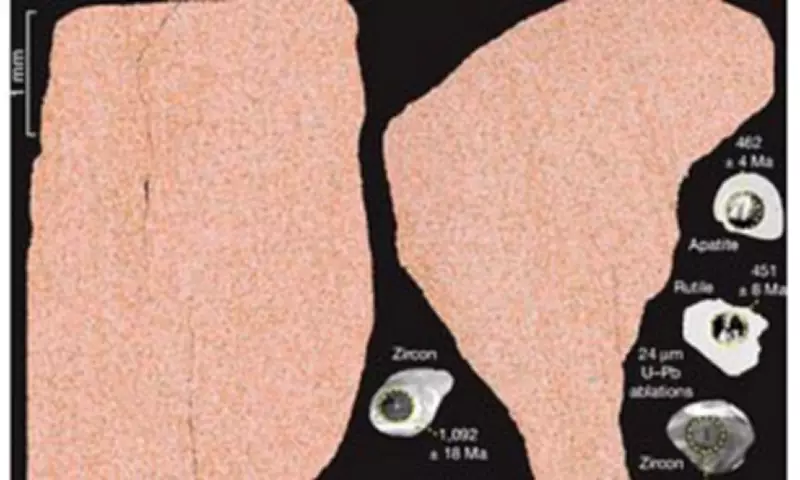
The researchers analysed mineral grains from the Altar Stone and combined this with ice sheet modelling to pinpoint its origins. They found no viable glacial pathways linking the source region directly to Stonehenge, reinforcing the conclusion that human transport was required.
One proposed route involves the stone being transported by glacier from Caithness in northeast Scotland across an ice sheet covering the North Sea to Dogger Bank—a prehistoric, habitable landmass that connected England to Europe during the last Ice Age. Mesolithic people may have recovered the stone before the area flooded around 7,000 years ago, then transported it further south by boat through sheltered waterways. After travelling up the Thames river system, the stone could have been carried over land along the Berkshire Ridgeway, a prehistoric high-ground route. Finally, it was erected as the Altar Stone at Stonehenge around 2500 BC.
Challenges and Implications
The study acknowledges that a Dogger Bank origin would require a complex, multi-phase history: the stone would have had to be removed from a landscape undergoing marine transgression, taken to a location that remained above sea level for thousands of years, and then transported to Stonehenge. Such a scenario "requires prolonged cultural significance or multiple-phase activity across an exceptionally large temporal gap," the authors note.
Even if the stone reached Dogger Bank via glaciers, humans would still have needed to move it some 400 km (250 miles), "implying considerable Late Neolithic capacity for organisation, labour mobilisation and overland and marine transport." Dr Clarke added that the findings reveal a level of organisation and cooperation among Neolithic communities not previously fully appreciated.
Broader Context of Stonehenge Construction
Stonehenge, one of Britain's most prominent prehistoric monuments, was built in four stages. The first stage, around 3100 BC, involved a large earthwork with a ditch, bank, and Aubrey holes. After a hiatus of over 1,000 years, the second stage (around 2150 BC) saw the arrival of bluestones from Wales, transported via a combination of land and water routes. The third stage (around 2000 BC) brought the larger sarsen stones from the Marlborough Downs, likely moved using sledges and ropes. The final stage (after 1500 BC) involved rearranging the bluestones into the horseshoe and circle visible today.
The study concludes: "Direct transport from northeast Scotland would have represented a formidable undertaking, requiring sophisticated logistical planning, technological solutions and durable long-distance social networks. Either scenario implies a society capable not merely of moving stone but also coordinating complex, large-scale acts of monument construction across extensive geographic ranges."