
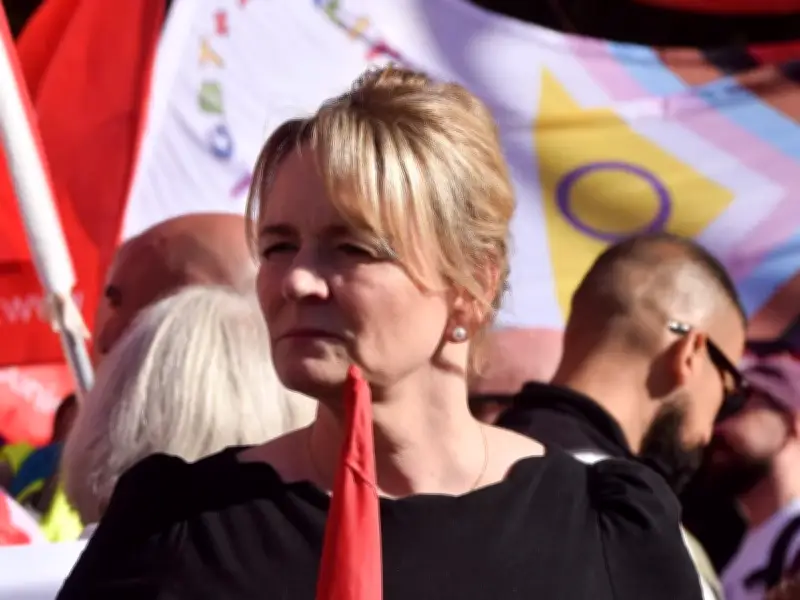
Unite General Secretary Sharon Graham has called the upcoming Budget Andy Burnham's first real test, urging immediate cost-of-living measures and long-term investment to rebuild industry.
Writing for The Mirror ahead of Wednesday's Budget, Graham acknowledged that Burnham has given Labour a second chance and a welcome change of tone. However, she warned that hope will soon evaporate unless there is real change that workers and communities can feel and touch.
Who pays in the Burnham Budget?
For the working class and Unite members, Graham said two things matter above all: immediate measures to address the cost-of-living crisis, putting money back in people's pockets, and long-term investment to bring back industry and create jobs.
The big question, she said, is who pays. She pointed to the 2008 banking crash and the subsequent crises of austerity, pandemic, energy crunch, cost-of-living pressures, tariffs and wars, arguing that each time the working class has paid the price.
Graham noted that the government doubled national debt to bail out banks after 2008, followed by ten years of austerity. In real terms, the average worker now makes £10,000 less than if wages had kept growing at the same rate as before 2008. She also cited the freezing of income tax thresholds, which she said will cost the average worker £5,800 if it continues to 2031, and forecast energy bill rises of another £400 in January.
Two concrete suggestions
Graham described these as political choices, not accidents of fate, noting that energy companies bank higher profits when bills jump while workers keep paying more tax because governments refuse to tax wealth piled up by the richest one per cent.
She offered two concrete suggestions: end the tax threshold freeze and cap energy company profits to cut bills. Her proposals, she said, would give the average double-income household an extra £700 a year, a serious first step towards shifting the burden onto those making extreme wealth and excessive profits.
Investment to rebuild industry
Graham also argued that working-class people want to see a good future ahead, to live rather than just survive. She traced the roots of decline back 40 years, saying free market economics privatised water, energy, steel, transport and communications systems and saw the Government withdraw from its role as investor of first resort.
She cited the energy grid collapsing, sewage spills, crumbling hospitals, refinery closures such as Grangemouth and Lindsay, and a £500 billion public investment backlog. Unite's consistent demand, she said, is to boost public investment by 1% of GDP, or around £28 billion per year.
Graham suggested using the National Wealth Fund, which she said currently sits idle with less than £30 billion capital compared to £580 billion in Germany's infrastructure bank. UK pension funds hold £3 trillion, but invest more of that money in overseas stock markets than domestic industry, she said, proposing the National Wealth Fund attract and pool pension fund investment to channel into rebuilding industry.
Graham concluded that pandering to the free market, the super-rich and profiteers has hit the working class in the pocket and robbed them of aspiration. She said this Budget must be a turning point and that it is time to take a different path, asking who pays in the Burnham Budget.




