Seattle on Verge of Year-Long Ban on New Data Centers in Tech Rebuke
Seattle Set to Pass Year-Long Data Center Moratorium

Seattle's city government is on the verge of passing a year-long ban on the construction of new data centers, becoming the largest US city yet to consider such a moratorium as nationwide backlash against big tech grows. Four companies sought to build five large data centers in areas serviced by Seattle's public utility; if approved, they would have consumed approximately a third of the city's current daily demand for electricity.

Unanimous Committee Approval

On Wednesday, city council committees unanimously passed the moratorium and an accompanying resolution. A full council vote on both measures is expected on Tuesday, which activists see as a formality after weeks of engagement with city officials on the topic. Lawmakers cited the two measures as an effort to protect residents from rising utility costs and environmental hazards. They said they plan to spend the duration of the moratorium drafting regulations tailored to the AI industry's massive facilities.

Rebuke in Tech's Backyard

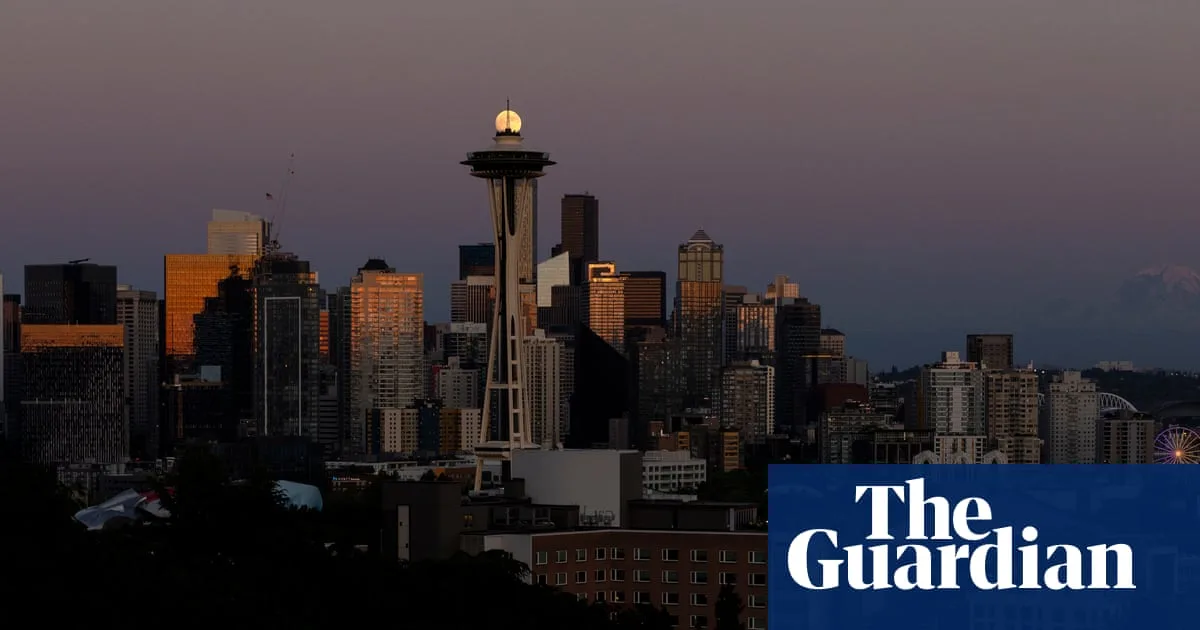
The swift response to the proposed data centers represents a major rebuke in tech's own backyard. A hub for the technology sector, Seattle's metro area serves as the headquarters for Microsoft and Amazon, which have laid off thousands of local workers over the past year as they spend a projected $390 billion on AI investments in 2026. Seattle's tech workers have shown up in large numbers to organize against the proposed data centers.

Wide Pickt banner — collaborative shopping lists app for Telegram, phone mockup with grocery list

Lawmakers and advocates hope Seattle's status as a tech city can encourage more jurisdictions to join the dozens of other local governments moving to regulate data centers, which are bipartisanly unpopular.

Strategic Pause

Seattle Mayor Katie Wilson was alarmed by developers' ambitions to build five large data centers when the Seattle Times broke the news in April. 'That was the first that I, as the mayor, had heard about this,' she said. 'Both I and many of the councilmembers were happy to move toward a moratorium, especially knowing that there was really strong public support out there for that course of action.'

Climate activists, progressive activists, an Amazon employee group and others participated in an email-writing campaign to Seattle lawmakers in protest of the proposed data centers, and scheduled direct meetings and information sessions with city politicians. Eddie Lin, who chairs the city council's land use and sustainability committee, received more than 10,000 emails from local residents in favor of the moratorium, according to his office.

Regulatory Details

During a moratorium, officials may establish pollution standards, energy connection requirements and contract terms, labor standards and other rules specific to data centers. The moratorium and accompanying resolution enable Seattle's public utility to establish separate rates for new 'large load' customers, a category that includes large data centers. An amendment allows existing data centers in Seattle to apply for expansions requiring up to 20 megawatts of additional power during the moratorium.

Activists are calling for tighter language to be introduced during the final vote, hoping to specify the types of data centers that can apply for an expansion, such as those supporting emergency calls and healthcare facilities.

The pause would also allow the city to determine whether data centers are a 'good use of urban land,' Wilson said. If so, officials may draft public benefit requirements, such as requisite investments in affordable housing and transit projects, in exchange for approval. Those are the kinds of stipulations 'that are sometimes put on development that's of questionable value to the community,' she said.

'Is there a world in which we would want a large data center in Seattle? I think the answer to that is unclear,' Wilson said.

Activist Strategy

Activists intentionally favored a year-long moratorium over a full-out ban because the former strategy could assemble a larger coalition in its favor, while potentially delivering the same end result. Ben Jones, a spokesperson for the climate justice group 350 Seattle, said delays caused by a moratorium may still defeat the data centers' construction: if an AI market bubble bursts in the coming year, the facilities are unlikely to be built.

Pickt after-article banner — collaborative shopping lists app with family illustration

During a period of public comment at city hall on May 20, more than 50 Seattle residents spoke in favor of the moratorium, while none spoke against it. Residents expressed concern about the climate impacts of data centers, which often run on fossil fuels; cause noise and air pollution; convert arable land into warehousing for computer chips; and can threaten stable and affordable access to natural resources.

Jones said: 'A lot of people came forward because of a lack of other ways to voice or have any control over AI's rollout.' That included a 'huge number' of tech workers, because AI is now locally 'synonymous with people losing their jobs.'

Tech Workers Organize

Eyeing regional tech companies' amassed wealth amid a housing and affordability crisis, progressive groups and politicians have mounted several attempts to tax Seattle's tech giants and other large corporations over the past decade, including a February 2025 ballot initiative to tax large compensation packages and fund affordable housing efforts. It won by a landslide.

According to Nivi Achanta, a former tech consultant who now works as a climate activist in Seattle, the outsized presence of corporate giants like Amazon and Microsoft makes it easier, paradoxically, for Seattle tech workers to organize against the sector's overreach.

'I do think the consolidation of these large tech companies makes it easier to find the backlash, and to see very easily that you're not alone,' she said. Through internal messaging as well as public-facing campaigns, employee-activist groups such as Amazon Employees for Climate Justice (AECJ) have 'primed' Seattle's tech workers to translate their feelings about where the sector is headed into real political engagement, she added.

Tech workers in Seattle and elsewhere see that AI has helped make them 'more productive, but also more disposable,' Achanta said.

Regional Concerns

Debora Juarez, who chairs the committee overseeing Seattle's public utility, and who is an enrolled member of the Blackfeet Nation, said that the data centers' water use could threaten local Indigenous groups' treaty and water rights, which spurred tribes to be among the first to organize against new data centers.

She said Seattle's city government consulted with tribal lawyers and other groups to learn about the effective regulation of data centers. 'While we cannot look to the federal government for leadership, we can look to tribal governments,' Juarez said.

Wilson said the city would advocate for statewide legislation during the next Washington state legislative session. She added that the city government should help build a more diversified local and regional economy, as the current economy, workforce and tax structure are 'extremely dependent upon' the tech industry, a sector whose future features 'a lot of uncertainty.'

Seattle's tech and climate activists are also gearing up for the next stage in their organizing. Audrey Wang Gosselin, an electrical engineer and a board member of 350 Seattle, said the organization was working with groups in other parts of Washington state, and sees a Seattle win against data centers as a replicable regional roadmap.

'If we're able to show that we say no to it in Seattle, where you would assume it might be more techy, I think that will hopefully set precedent for the rest of the state, potentially the rest of the country,' they said.

'I don't want it in my backyard, and I also don't want it in your backyard,' Wang Gosselin said.