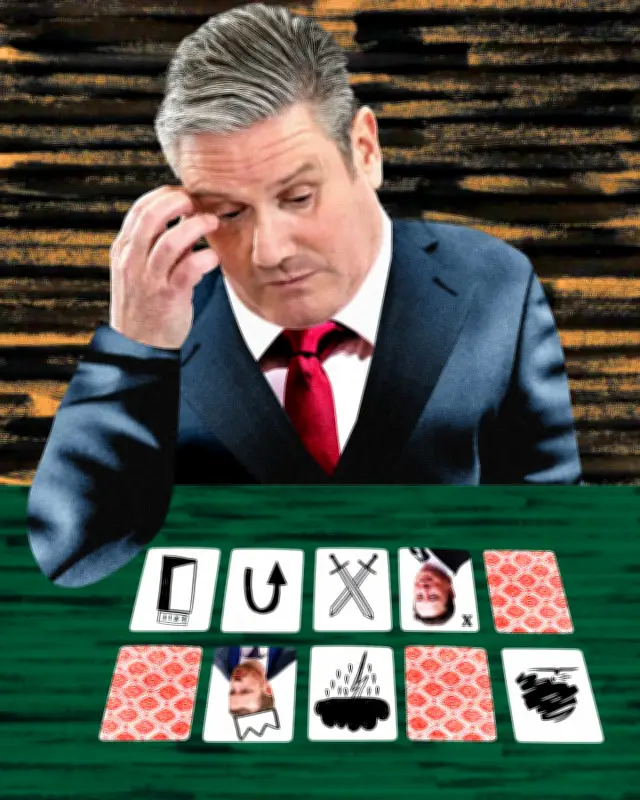
Historians will puzzle over the fall of Keir Starmer, who won a landslide victory in July 2024 only to be pushed out less than two years later. He started no illegal wars, triggered no grave economic crises, and was accused of no scandalous act of corruption. Yet he paid the ultimate political price, leaving few able to point to a single obvious political crime.
Starmer's undoing was a function of both the man and his times. Critics say he was not a politician and had no aptitude for politics, but that statement is absurd: no one rises to the top of a major party and wins a 174-seat majority by accident. His success came partly from being in the right place at the right time, but turning Labour into an acceptable receptacle for anti-Tory feeling was a significant achievement after the party's biggest drubbing since 1935 in 2019.
Weak Communication and Lack of Strategy
Starmer's most well-documented weakness was as a communicator. It was more than a mere absence of charisma; it was an inability to make a clear, compelling argument. Even his resignation speech felt like a recitation rather than an argument. The only moment of connection came when he spoke of his wife and children, his voice cracking.

Communication is essential to political leadership, enabling a leader to retain public support during tough times. Margaret Thatcher kept Britons with her by explaining that strong economic medicine would eventually bring recovery. Starmer could not craft a similar account. Few voters could tell you what the Starmer plan for Britain was; few Labour MPs could either.
This failing flowed from the fact that Starmer did not have a plan that could be easily summarised. Arriving in office without a blueprint meant valuable time was lost in the first months when a government's political capital is highest.
Misreading the National Mood
In that early period, Starmer made a crucial error: he moved fast to trample on any green shoot of optimism, warning that life was about to get worse. That killed the mood and had an economic effect, creating a feelbad factor when consumer confidence might have taken off. He could have left the gloomcasting to his chancellor while speaking of sunshine to come; instead, it was bad cop, bad cop.
Beyond that, he got the big picture wrong by sticking with chief adviser Morgan McSweeney, a brilliant factional streetfighter who had wrested control of Labour from the Corbynites. McSweeney was fixated on wooing Farage-curious “hero voters” in former heartlands, alienating urban, professional liberals and middle-class progressives who constitute much of Labour's core vote. Starmer gave a speech warning of Britain becoming an “island of strangers,” channelling the spirit of Enoch Powell, which he later walked back.
U-turns and Delegation Failures
Starmer made a habit of proposing changes only to abandon them—winter fuel payments, welfare reform, digital ID. Each U-turn shrank his authority and grew the sense of an administration that didn't know where it was going.
Observers of Whitehall noted his inability to adjudicate disputes between departments and colleagues. While he believed in empowering secretaries of state and delegating conflict resolution, this approach exacted a heavy price. He was swayed by McSweeney to send Peter Mandelson to Washington as UK ambassador, and the Guardian's revelation that Mandelson had failed security vetting did enormous damage.
Structural Disadvantages and an Impatient Electorate
Starmer inherited desperate circumstances: public services starved of cash and an anemic economy. One cabinet minister described him as suffering the fate of “the third plumber”—the one who cops all the rage built up from previous failures. After austerity, Brexit, and the Truss fiasco, wrath landed on Starmer.
Hemmed in by manifesto commitments limiting revenue-raising options, it would have taken an outrageously gifted communicator to persuade the country why Labour had to break promises. The electorate is now impatient, demanding almost instant results, intensified by social media. Labour canvassers found voters who harboured visceral loathing for Starmer, reacting to an invention promoted by Elon Musk and X.

Legacy and Lessons for Successor
In his resignation speech, Starmer highlighted his transformation of Labour, falling NHS waiting lists, lifting half a million children out of poverty, and workers' and renters' rights. Advocates say this record compares to the first two years of the 1945 government. He also boosted Britain's standing on the world stage, keeping the US engaged on Ukraine and staying out of Trump's war with Iran.
Yet, as one friend sighed: “This is not an age of substance, it's an age of sheen—and he was just not very good at that.” Andy Burnham or whoever steps next into No 10 will be the fifth prime minister in four years, facing the same struggling economy and impatient electorate. Keir Starmer is the latest victim; few would bet on him being the last.