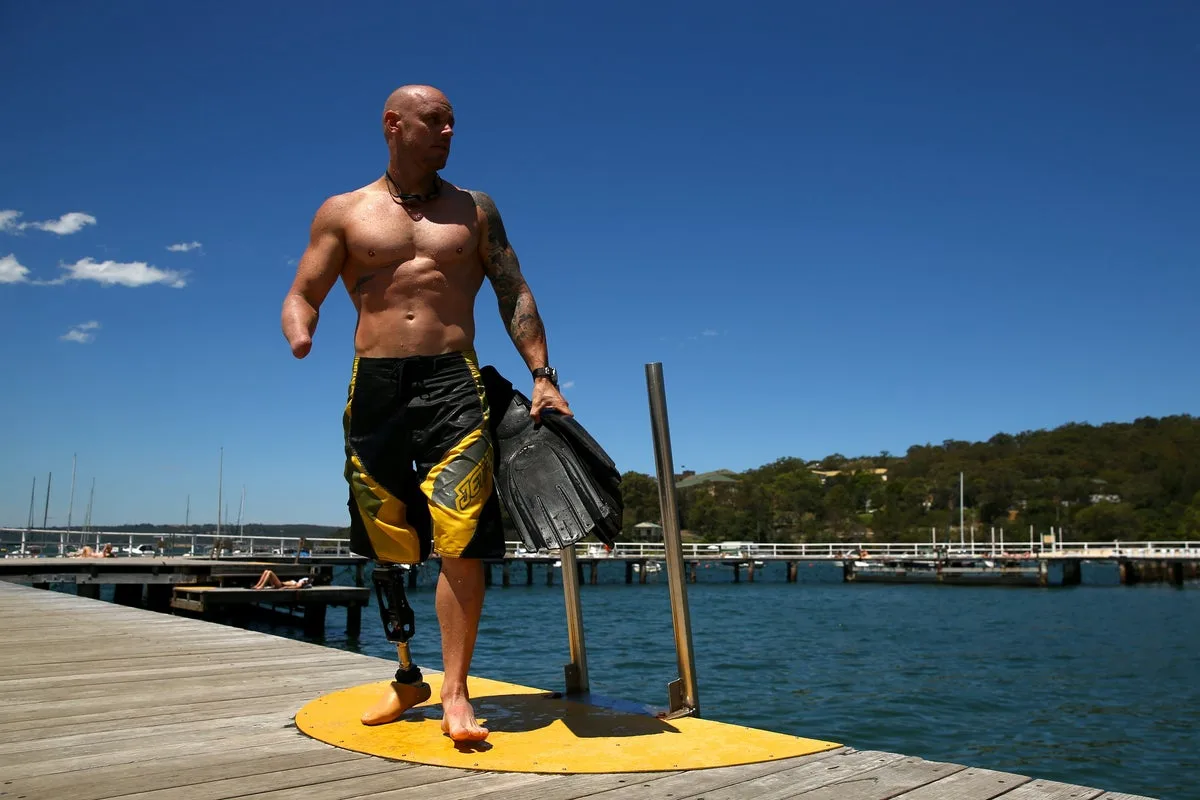
A former Australian Navy diver who survived a shark attack that cost him his right hand and leg has shared crucial advice for anyone who finds themselves face-to-face with a great white shark. Paul de Gelder, 47, lost his limbs in a 2009 attack in Sydney Harbour and now stresses the importance of staying calm.
"I know it goes against all natural instincts of preservation, not to panic, but that's the most important thing you can do," de Gelder told CBS Mornings. He explained that sharks often do not recognise humans as prey and are reluctant to fight if watched. "They know when you're watching, they don't want to attack you when you're watching," he said.
De Gelder advises against punching the shark unless absolutely necessary, as pushing can guide it away. However, touching a shark's snout can overstimulate sensitive pores called the Ampullae of Lorenzini, causing it to open its mouth reflexively. Instead, experts recommend aiming for the eyes and gills if the shark becomes aggressive, using a hard object if possible.
Despite the fear, shark attacks remain extremely rare. A 2015 Stanford University report found that surfers have a one in 17 million chance of being bitten, while scuba divers face odds of one in 136 million. Last year, only 28 unprovoked bites were reported in the US, below the 2023 total of 36.
To minimise risk, experts advise avoiding waters with lots of fish, not swimming alone, and staying out of the water at dawn or dusk when visibility is low. De Gelder, who appears in a new Discovery Channel special, believes his black wetsuit and fins may have made him resemble an injured seal to the shark that attacked him.