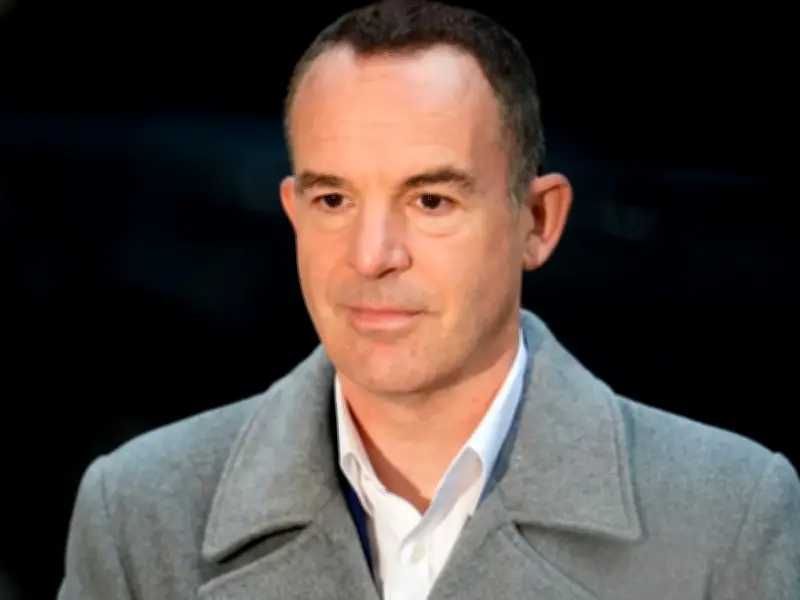
Money Saving Expert Martin Lewis has described today's Budget as "better than nothing" following his meeting with the Chancellor in Downing Street.
Mr Lewis told Radio 4's Today programme that he met John Healey this morning at 11 Downing Street, after it was announced the Chancellor will respond to calls, including from Mr Lewis, to scrap standing charges on gas bills.
Long campaign against standing charges
Mr Lewis said he had campaigned for the charges to be removed "because they're a moral hazard" and a disincentive for lower energy users to cut their bills. He described them as a "poll tax" on energy.
The charges are a fixed daily fee added to bills regardless of how much gas a customer uses, costing around £108 per year for a typical household.
The Treasury said Mr Healey will ask regulator Ofgem to remove standing charges "in 2027 or as soon as possible after".
Reaction to criticism
Mr Lewis was asked for his opinion on criticism that the measures announced so far help some groups but are not big enough to address the country's economic problems.
"What is going in the economy and what's going on with energy prices, which feeds into that, is an absolute nightmare but let's not poo poo doing some good on the side where we can. We've spent a long time with these smaller issues not being fixed, we need them to be done. I'm a fan of big issues being dealt with, I'm a fan of small issues being dealt with, and if we can only get half of them done, it's better than nothing," he said.
The big announcement ahead of the Budget, due at 12.30pm today (October 28), is that instead of gas standing charges, fixed costs will be paid on the unit rate. The Treasury said this could save 60% of households an average of £45 on their annual bills.
Electricity cut and timing
Mr Lewis said he asked Mr Healey whether he would look at an equivalent cut for electricity, and the Chancellor indicated he would be working on that in the next year.
"This is going to come in, this standing charge gas cut, they say in 2027, in reality because it's a cut on the price cap, they don't affect other tariffs, other tariffs are free to set their own rates, I think it'll come in on October 1, 2027 or January 1, 2028," Mr Lewis said.
Asked if that delay worried him given the geopolitical situation, Mr Lewis said this was about long-term fairness.
Mr Lewis said this is not the single measure to "materially" bring energy bills down. He noted the price cap rises in January mean a typical bill will go up £100 in the three months from then.
"I think there will have to be a support package put in place from January. I asked the Chancellor about that, I got a 'read between the lines' answer that yes he will be doing it," he said.
Mr Lewis suggested any scheme should be by council tax bands, with payments to those in Bands A to D, rather than an extension of the Warm Homes discount scheme.
The UK Government has already announced import tariffs are being cut on household items including gherkins and marmalade. The Chancellor is also poised to announce a pay rise of nearly 4% for low-wage workers in Wednesday's Budget, according to the FT.