The political and legal landscape for transgender Americans has shifted dramatically over the past decade, from the Obama administration's protective measures to a wave of state and federal restrictions under President Donald Trump. This transformation has been driven by a coordinated political strategy, according to advocates and legal experts.
From Obama-era protections to backlash
In 2016, then-Attorney General Loretta Lynch announced a federal lawsuit to block North Carolina's HB2, known as the "bathroom bill," which made it illegal for transgender people to use public restrooms not matching the sex on their birth certificates. Lynch compared the law to Jim Crow-era restrictions and directly addressed transgender Americans, saying, "But no matter how isolated or scared you may feel today, the Department of Justice and the entire Obama administration wants you to know that we see you; we stand with you; and we will do everything we can to protect you going forward."
HB2 was repealed within a year, and Shelby Chestnut, executive director of the Transgender Law Center, recalled thinking at the time, "Oh this is the next phase of protections for trans people." Instead, the past decade has seen the opposite, with ballot initiatives targeting transgender people passing even in Democratic strongholds like Washington and Colorado during the 2022 midterms.
State laws and political strategy
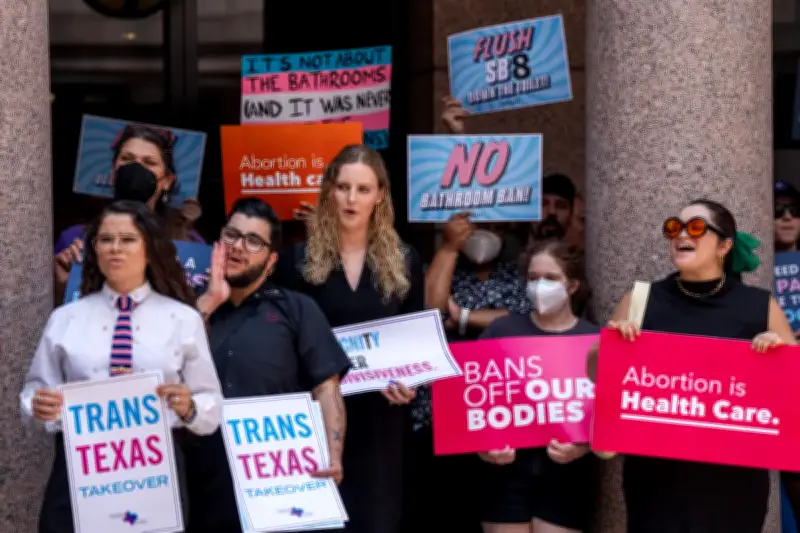
North Carolina faced mass boycotts in 2016, including almost 200 corporate leaders calling for repeal and the NCAA pulling seven March Madness games from the state. This year, Kansas and Idaho have passed similar bathroom bill laws without comparable outcry, though they face court challenges. In Idaho, a first offense for using a bathroom not matching sex assigned at birth is a misdemeanor punishable by up to one year in prison, while a second offense is a felony punishable by up to five years.
The shift is partly attributed to political strategy. Marie-Amélie George, a professor and legal historian at Wake Forest Law School, noted that after the 2022 midterms, the American Principles Project, a conservative thinktank, studied how Republicans could have fared better. The group's recommendations "framed the evolution of the anti-trans playbook," she said, adding that "voters of all demographics tended to support Republican positions on transgender issues."
Federal actions under Trump
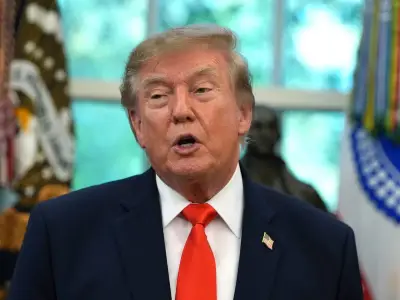
On his first day in office in 2025, Trump issued an executive order redefining "sex" as the genetic makeup of a person at conception. Elana Redfield, a federal policy expert at the Williams Institute at UCLA, said this was effective despite most medical experts calling it unscientific. "In other words, the president is saying that it is now the policy of the federal government not to recognize the existence of transgender people, non-binary people, or intersex people," she said.
The order immediately affected data collection, federal funding, and identity documents, stopping statistical gathering on transgender populations and cutting off grants to projects that acknowledge their existence. Within a month, Trump directed the Department of Health and Human Services to end gender-affirming care for minors via federal funding cuts, and issued an executive order titled "Keeping Men Out of Women's Sports," threatening Title IX violations and funding loss for states or organizations allowing trans athletes in women's sports.
Impact and public opinion
More than 40 hospitals with gender clinics have shut down or paused services for minors, even in blue states, often fearing loss of federal funding. The Supreme Court has ruled in favor of state laws banning trans athletes and gender-affirming care, rulings that may take years to overturn.
Public opinion has shifted, with Pew Research showing American sentiment for laws protecting trans people from discrimination down eight points between 2022 and 2025. Redfield noted a "sobering reminder from the passage of all these ballot initiatives that the discourse in the country has really negatively affected the lives of trans people and will continue to for some time."
Chestnut believes the attacks on trans people could be a testing case for broader discrimination. "I think trans people might be the testing case for a broader attack," he said. "What we're looking at is a complete restriction of bodily autonomy of all people that are not cis, white, Christian and conservative." He sees the future in building coalitions, adding, "We learned that if you want to come for immigrant communities and take them away from their homes and families, then you will lose elections."