Officials from Gulf states are bracing for the worst as they await Washington's response to an Iranian proposal that could reopen the Strait of Hormuz before the US midterm elections on Tuesday. Indirect talks in Doha have run into a third day, with Qatar attempting to negotiate the release of more than $6bn in Iranian assets, a move that could lead to the reopening of the strait and the restart of negotiations on Iran's nuclear programme.
Gulf concerns and mediation efforts
The United Arab Emirates envoy, Anwar Gargash, said another round of escalation was not in the interests of Iran or any of its neighbours, but added: "We are also, as we have shown before, braced for the worst." He also said: "Relations with Iran are essential, because Iran is our neighbour and we do not want to see it get caught up in a prolonged crisis."
Qatar's mediation continued despite unidentified missiles striking a Pakistan-bound Qatari LNG tanker near the Strait of Hormuz on Friday. The attack occurred even though the ship had received direct clearance and safe-passage approval from Tehran just hours earlier.
To address the lack of trust on both sides, Qatar has focused on reaching an agreement to compress the process by which the US lifts sanctions, followed by Iran reopening the Strait of Hormuz and starting nuclear talks. Iran has agreed to cut the timetable from seven to two days.
Iran's position and diplomatic signals
Iran's foreign minister, Abbas Araghchi, said he hoped the US would choose "diplomacy over other paths". He stated that Iran was ready for both defence and diplomacy, depending on Washington's "rationality". Araghchi noted there were currently no plans for direct talks with Washington. He has not attended the mediation in Doha and is due to go to Turkmenistan on Monday, though other Iranian diplomats are heavily involved.
Speaking to Al Jazeera on Saturday, Araghchi said Iran had offered to open the Strait of Hormuz within two days of the US acting to lift the blockade on oil ships, stop blocking the release of Iranian assets, and end sanctions on Iranian oil exports.
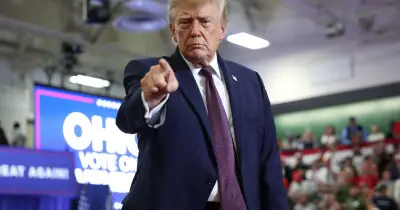
Donald Trump said on Saturday that the US had knocked out much of Iran's military but still had to "take care of" one or two targets, as Tehran warned of reprisals if attacked. Trump maintained that negotiations with Iran to end the war, which was started by the US and Israel in February, were "going fine but you know they're not very reliable".
US openness and Iranian responses
Earlier on Saturday, US secretary of state Marco Rubio said the US was open to a diplomatic solution. Iran's security chief, Mohsen Rezaei, disclosed that he had received a letter from US vice-president JD Vance seeking to revive talks. Rezaei noted what he described as a positive change in "tone" from the US side but said he had yet to respond.
Ali Nikzad, the deputy speaker of Iran's parliament, signalled that Tehran would be unwilling to discuss its nuclear programme, saying: "Our enemies must understand that the Iranian nation has made a decision not to negotiate on the nuclear issue under any circumstances or under any pressure. This great nation gave its enemies enough opportunity to negotiate in this area, but was faced with repeated breaches of promises and illegal bombing of part of peaceful nuclear facilities."
Rezaei claimed Trump was being hounded by a war that he said was having wider international repercussions than the Vietnam war. He told Iranian TV on Saturday: "Today, wherever Trump goes, he must answer why he started the war against Iran. There is no family in America that has not endured the pressure caused by the war in Iran."