Claire was in a dire state. She had been brought to the ward on a stretcher and hoisted onto a bed, lying curled in a ball. Unable to speak, her eyes flat and face expressionless, she could move her right arm slightly, but her left arm and both legs were immobile. Her life had changed dramatically many months earlier when a weakness in an artery at the base of her brain ruptured, spilling blood around her frontal lobe. Surgeons removed two side plate-sized pieces of bone from her skull to relieve pressure. She spent months in intensive care.
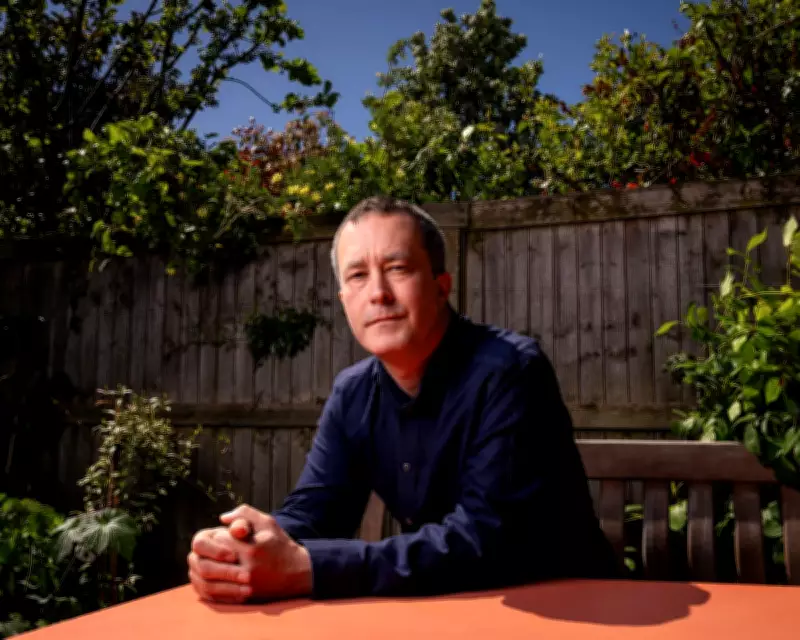
Can a patient with such profound impairment improve meaningfully, especially so long after the event? That was the question for Orlando Swayne, a consultant neurologist and co-lead of the pioneering neurorehabilitation unit at the National Hospital for Neurology and Neurosurgery in central London.
When Swayne first met Claire, she made eye contact but showed no other response. He knew she could write single-word answers, but these revealed signs of brain damage. When he asked if she had questions, she wrote: “Questions, questions, questions,” then trailed off into a wiggly line. This pathological repetition stems from a failure in the frontal lobe to keep actions moving in sequence.

“There are some patients who start off severely impaired – and I mean very severely impaired,” says Swayne. Claire was one such patient. If he had trusted only his medical school lectures, Swayne might have considered her beyond help. Dogma held that broken brains did not mend. A brief flirtation with neurosurgery did not dispel that view. “You see patients in a really terrible state and you think that’s them for life,” he says, “but you don’t see them for very long.”
Swayne decided against neurosurgery, partly because he felt clumsy, but mainly because he values relationships and human aspects. He moved into general medicine, then neurology and stroke medicine, and over 20 years began to see patients long after their original admission. “I began to realise that some patients were improving. And the ones improving were the ones working with therapists,” he says. “I thought: ‘OK, I didn’t realise that was a thing. How does it work?’”
The answer lies in neuroplasticity – the brain’s ability to make new connections and reorganise. In his new book, How to Use a Fork: Stories of Mending the Broken Brain, Swayne argues that recent discoveries have profound implications for therapy and care. He is not suggesting everyone can recover. His argument is that early, targeted, and intense therapy can bring about life-changing improvements, and society has a moral and economic obligation to provide it.
Stroke is a leading cause of adult disability in the UK. Of the 12 million people globally who suffer a stroke each year, one in five dies within 30 days. Many patients show small improvements in the first few weeks as swelling subsides, but old-school thinking held that was the limit. However, damage drives chemical changes that trigger neuronal growth processes. Surviving neurons are spurred to make new connections and work around dead tissue.
After such events, neuroplasticity ramps up for several months, making intense therapy most impactful. In one study, intensive therapy improved upper limb movement in patients 18 months after their strokes. Claire’s therapy focused on positioning, stretching, and mouth, tongue, and voice box exercises. Over time, her stamina improved, and she engaged more. She began to follow people with her gaze and sometimes moved her mouth to speak.
Her improvement accelerated with music therapy. She plucked guitar strings and shook maracas with her stronger right hand. Therapists noticed more spontaneous facial expressions, and she began pointing to instruments, making choices. For four months, she was drilled to make choices, identify objects, and engage her mouth and tongue. One day, Swayne passed her bay and she said: “What happened to your hair?” He stopped dead. “That was an amazing moment,” he says. “If you work with a patient who hasn’t spoken for a year, and you do an intervention and they start speaking, it’s got to be a response to therapy.”

Claire’s language came in single words, then phrases, then short sentences. She made progress with her right hand, playing Connect 4 with her boys and fellow patients. “She started communicating with her kids, and that was enormous,” Swayne says. “Her left side will always remain weak, but she started using her right arm to do things, like use a phone and a power chair. We had her cooking. She will always need help, but for quality of life it was transformational.”
Therapy after stroke is the most important determinant of recovery, yet most patients receive inadequate care. Every working day, UK stroke patients should receive 45 minutes each of physio, occupational therapy, and speech therapy. In 2020, an audit found most received only 14, 13, and seven minutes per day, respectively. “It’s shocking,” says Swayne. After discharge, community therapy networks were demolished by austerity, creating a postcode lottery. “It’s frustrating, having worked with these patients for months, to then send them into the wilderness,” he says.
Early intensive therapy pays for itself by reducing long-term care costs. Strokes cost the UK economy an estimated £27 billion a year, but only £3 billion is direct hospital care. By 2035, costs are predicted to more than triple to £75 billion. “People talk about the cost of interventions, but if you do the maths, an admission might cost £40,000. That sounds like a lot, but it pays itself back pretty quickly,” Swayne says. He calculated for one patient that care costs fell to £2,640 per week, offset within four months of going home, saving tens or hundreds of thousands in the long term.
Traumatic brain injury is also neglected. Over 1 million people in England and Wales attend emergency departments for head injuries each year. About 40,000 have evidence of traumatic brain injury. Many are discharged within two weeks, seemingly better, but often with cognitive changes not spotted. “You can see them walking down the street and they look fine, but they cannot function normally. There’s an invisible disability affecting relationships, employment, and leading to trouble with the police,” Swayne says.
Researchers are exploring ways to make therapy more effective and to reopen the window of enhanced neuroplasticity using drugs, brain stimulation, and virtual reality. For now, keeping the brain healthy is key. “We all know what to do for brain health,” says Swayne. “Exercise, stimulating environment, social interactions, no smoking, limited alcohol. By looking after your brain, you give yourself the best chance of recovery should you need it.”