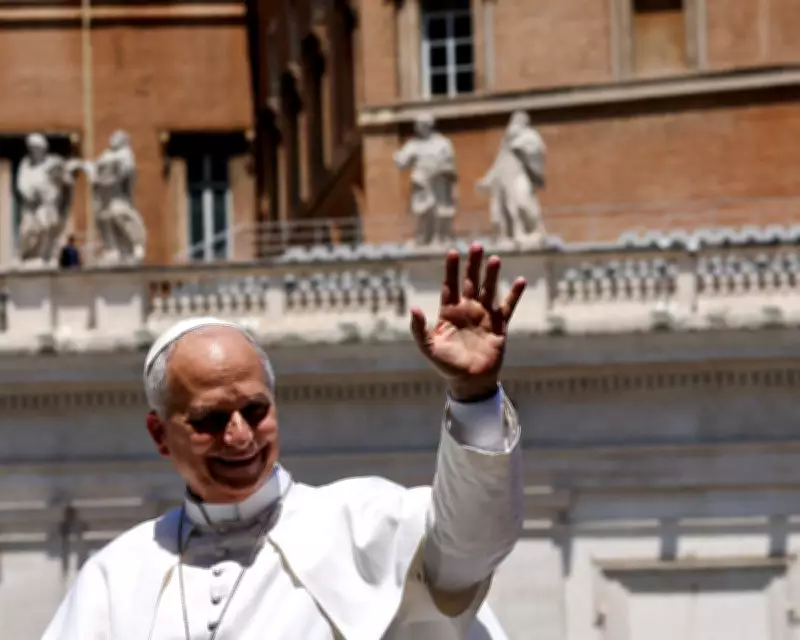
In Silicon Valley, some have suggested that the pope doesn't know what he's talking about. This reaction came after Pope Leo XIV issued his encyclical on artificial intelligence, Magnifica Humanitas: On Safeguarding the Human Person in the Time of Artificial Intelligence. Francine Prose, a novelist and former president of PEN American Center, expresses gratitude for this document, which she describes as a long, intelligent, and thoughtful warning about the uses and misuses of a rapidly developing technology.
The Encyclical's Core Message
The encyclical begins with a biblical reference to the Tower of Babel, framing humanity's choice as either constructing a new tower of confusion or building a city where God and humanity dwell together. It traces the evolution of papal views on labor, authority, government, science, power, and moral obligations, citing the Church's work in defending human dignity and freedom.
What AI Is Not
The third chapter, Technology and Dominance. The Grandeur of Humanity in Light of the Promises of AI, delivers a powerful definition of humanity. The pope states that so-called artificial intelligences do not undergo experiences, possess a body, feel joy or pain, mature through relationships, or know love, work, friendship, or responsibility. AI lacks a moral conscience and any guiding concern for the greater human good.

Threats of Profit-Driven AI
The encyclical addresses the greatest threat posed by AI: its potential to be programmed solely to maximize profit, leading to suffering for the many and benefit for the few. It warns against manipulation of privacy, misuse of information, and algorithmic control over employment, public services, credit, and personal reputation. Compassion, mercy, and forgiveness may become obsolete as necessary sacrifices are justified, burdening the most vulnerable. The pope cautions that if AI tools are placed in the hands of the wealthy and influential, they will be used to elevate the comfort of the privileged.
A Call to Faithful Resistance
Near its end, the encyclical calls on humanity to remain faithful to truth, invest in education, cultivate relationships, and live in justice and peace. It urges resistance to technologies that exploit the vulnerable, create new forms of slavery, and derive profit from conflict. The pope does not condemn AI outright but warns against its use as a tool of political repression and economic inequality.
Criticism and Silicon Valley's Dismissal
Some critics argue the encyclical does not go far enough, perhaps failing to use the metaphor of the golden calf to stigmatize AI as a form of idolatry. However, the document's vision of human nature, justice, empathy, and moral obligation is so beneficent and clear that it is hard to dismiss. Yet, Silicon Valley has pushed back. Jeremy Nixon, founder of AGI House, claimed the Church has not thought deeply about AI and does not understand it. There is a widespread belief that AI will become a new God or a convincing simulacrum.
Already Present Downsides
Prose notes that the downsides of AI are already evident. A friend's daughter, a college student majoring in advertising, was told by her adviser that by graduation, all advertising jobs will be taken by AI. If the masters of this technology fail to see the dangers the pope identifies, society is in deep trouble. The problem is not that a robot will write Anna Karenina; it is that no one will see the need for a novel that portrays the sufferings of a singular human being, unless it can be monetized by a tech bro to finance a bigger yacht, serviced by an underclass whose jobs have been stolen by AI.