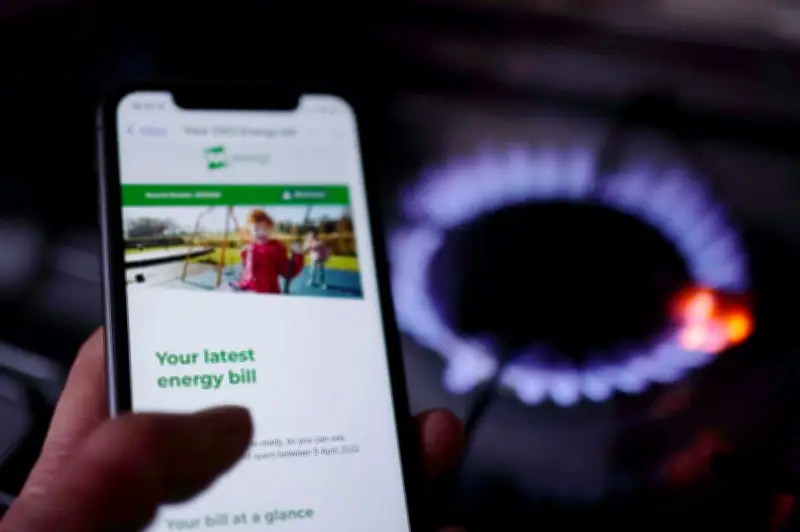
Removing standing charges from gas bills has been welcomed as a “broadly progressive” move, but experts warn it is unlikely to ease high costs this winter.
Cornwall Insight, which provides energy price forecasts, said the savings would be “small” in relation to recent bill rises, but the change could also give the transition to heat pumps a boost.
Timeline and impact on households
Dr Craig Lowrey, principal consultant at Cornwall Insight, said: “Scrapping the gas standing charge from as early as 2027 is a broadly progressive move that may help lower-income households who tend to use less energy.
“Given the timeline, it is unlikely to ease the high costs this winter, and the savings will be small compared with recent bill rises, but with the cost of living still hitting budgets, any reduction will be welcome when it comes.
“Shifting more of the cost onto each unit of gas could also give the energy transition a boost, making heat pumps a more attractive option against a gas boiler for higher-use households.”
Potential drawbacks and trade-offs
He added: “There are trade-offs, however, as the money still has to be recovered. Higher unit rates mean people in badly insulated homes, larger families or those who need to keep the heating on to manage a health condition, could end up paying more.
“Some of them are the same vulnerable households this policy is meant to help, so making sure that they see the intended benefits of this change will be essential.”
Dhara Vyas, chief executive of Energy UK, which represents firms, also welcomed the move as “good news” for many customers, but warned it would be important to support low-income households who could otherwise lose out.
She said: “Our latest report with Mitsubishi Electric on reducing the price of electricity relative to gas – also known as the spark gap – to accelerate electrification recommended moving the gas standing charge onto the unit rate from April 2028, and stressed that the change needed to be accompanied by a social discount scheme to protect low-income households who have no choice but to use a lot of gas.
“Standing charges cover the fixed infrastructure and operational costs required to keep homes connected to the energy system, regardless of how much gas or electricity is consumed.
“These costs need to be recovered elsewhere and as any change will create winners and losers, it needs to be introduced carefully. So it is critical the Government and Ofgem work closely with industry and consumer groups on implementation to avoid negative consequences.”
Consumer perspective and future outlook
Richard Neudegg, director of regulation at Uswitch.com, said: “Moving gas standing charges onto the unit rate is a sensible idea for the longer term.
“Paying a daily gas standing charge can grate for households that use very little gas, and can feel illogical over the summer or when homes have the heating off.
“Households that use less gas, such as those living in smaller homes, should benefit when this comes in. It will also give relief to those who have switched to electric heating but kept a gas connection and find themselves paying a standing charge for a service they don’t use for heating.
“But these costs won’t disappear. They’ll move into the price of each unit of gas, meaning that those using a lot of gas could be worse off.
“Based on current rates, a household using 7,000 kWh of gas a year could be about £40 better off under these changes, while a home using 14,000 kWh could be £25 worse off. A household using the typical 11,500 kWh shouldn’t see any change in what they pay.
“The Treasury says these changes will happen ‘in 2027 or as soon as possible after’. In the meantime, consumers face a difficult winter with further price cap increases on the horizon.”