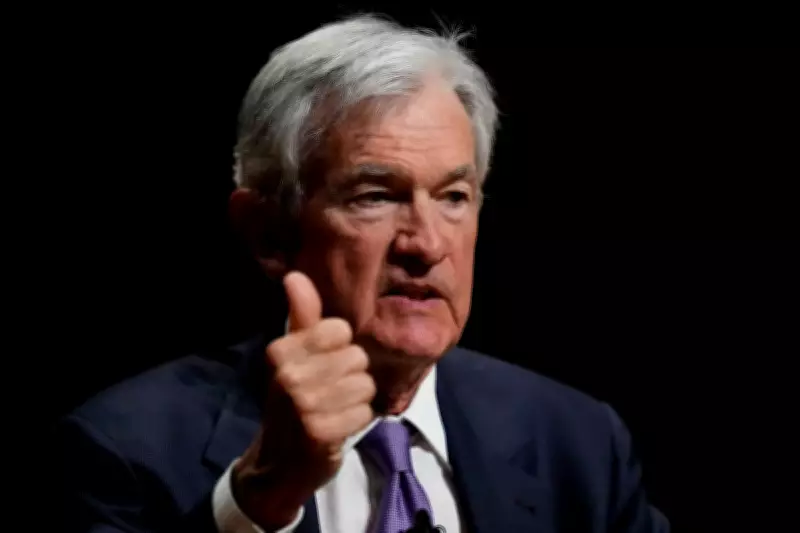
The Federal Reserve left its benchmark interest rate unchanged for the third consecutive meeting on Wednesday, while signaling that rate cuts could still materialize in the coming months. The decision drew the highest number of dissents since October 1992, underscoring deep divisions within the central bank's 12-member rate-setting committee.
Rates Held at 3.6% Amid Divergent Views
The Fed maintained its short-term rate at 3.6% and retained language in its statement suggesting that the next policy move would likely be a reduction. However, three officials dissented in favour of removing any reference to future cuts, while a fourth, Stephen Miran, dissented in support of an immediate rate reduction.
The dissenting voices highlight the growing rift within the committee as Chair Jerome Powell's term approaches its end on May 15. Earlier on Wednesday, the Senate Banking Committee approved Kevin Warsh, a Trump appointee, as Powell's successor in a party-line vote. Warsh has advocated for rate cuts, aligning with President Trump's demands.

Economic Uncertainty and Inflation Concerns
In its statement following the two-day meeting, the Fed noted: “Developments in the Middle East are contributing to a high level of uncertainty about the economic outlook. Inflation is elevated, in part reflecting the recent increase in global energy prices.” With inflation topping 3%, above the Fed's 2% target, Warsh's promised “regime change” at the central bank—including potential overhauls of economic models, communications strategies, and the balance sheet—may face obstacles in delivering the rate cuts Trump seeks.
The three officials who dissented against hinting at future rate reductions were Beth Hammack, president of the Federal Reserve Bank of Cleveland; Neel Kashkari, president of the Minneapolis Fed; and Lorie Logan, president of the Dallas Fed. Miran, appointed to the Fed's Washington board by Trump last September, was the fourth dissenter. Historically, regional Fed bank presidents are more likely to dissent, while Washington-based governors tend to support the chair.
Political Tensions and Powell's Possible Departure
The dissents could reignite tensions between the Trump administration and the regional bank presidents, who have previously faced criticism from White House officials. Powell likely presided over his last meeting as chair and is scheduled to hold a news conference on Wednesday afternoon. He may address whether he will take the unusual step of remaining on the central bank's board of governors after his chairmanship ends. Powell serves a separate term as a governor until January 2028. While chairs typically leave the board when their leadership terms conclude, Powell has signalled he might stay, which would be the first such occurrence since 1948.
If Powell chooses to remain, he would deprive Trump of the opportunity to appoint a replacement and fill another seat on the Fed's seven-member board. Currently, three of the seven governors are Trump appointees. However, staying could worsen tensions with the administration and create what some analysts call a “two Popes” scenario, with both a chair and a former chair on the board, potentially increasing divisions among policymakers.
Economic Crosscurrents Complicate Policy
The leadership turmoil comes amid an unusually murky economic outlook. Inflation has jumped to 3.3%, a two-year high, driven by sharply higher gas prices due to the war in the Middle East. This makes it harder for the Fed to reduce rates, as it typically leaves rates unchanged or raises them when inflation worsens. Simultaneously, hiring has slowed to a near halt, leaving job seekers frustrated. While the Fed usually cuts rates to spur spending and hiring during weak labour markets, layoffs remain low as employers follow a “low-hire, low-fire” strategy. Many Fed officials argue that as long as the unemployment rate stays low—it declined to 4.3% in March from 4.4%—the central bank does not need to cut rates.