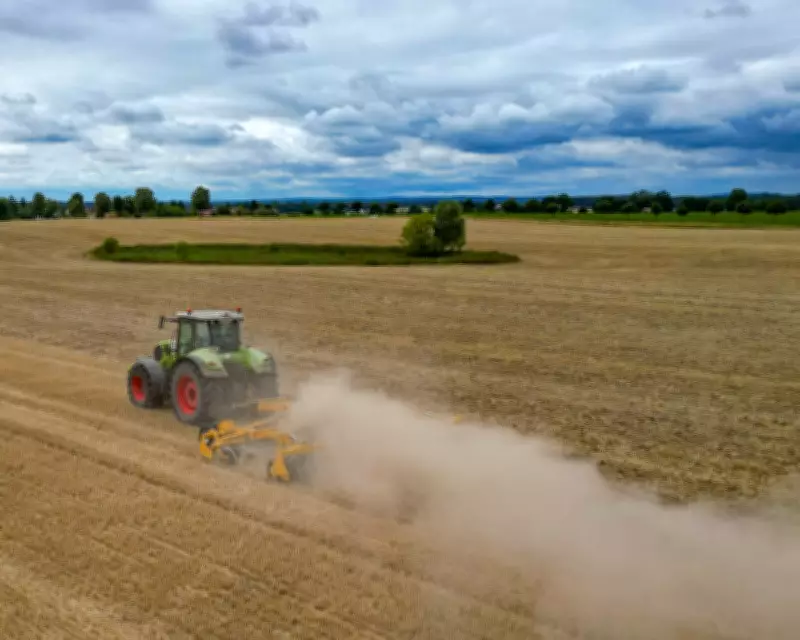
The European Union is set to provide subsidies covering up to 70% of the additional fuel and fertiliser expenses incurred due to the Iran war for farmers, fishing enterprises, and road haulage operators. This forms part of a broader emergency support package designed to alleviate financial pressures on these sectors.
Emergency Financial Support for Businesses
Individual companies can claim up to €50,000 each between now and the end of the year, with minimal paperwork required. The EU anticipates this measure will counteract what it views as an existential threat to hauliers and farmers. Energy-intensive industries, such as steel, chemicals, and even rail firms, will be eligible to claim up to 70% of the additional electricity costs for their qualifying consumption.
Announcing the measures on Wednesday, European Commission Vice-President Teresa Ribera stated that they could be the deciding factor between "survival or giving up" for many businesses. "I want to reassure European citizens, national governments and European institutions are monitoring and are ready to react in cases when it is needed," she added.

Impact of the Iran War on Prices
Oil and gas prices surged during the US-Israeli war against Iran that began in February, with fertiliser prices spiking by 61% in March alone after supplies of urea and fuel were choked off by the blockage of the Strait of Hormuz. The French fossil fuel multinational TotalEnergies reported a 51% increase in net profit for the first quarter of the year, reaching $5.8 billion, drawing criticism from politicians, climate advocates, and consumer groups.
French Prime Minister Sébastien Lecornu stated that the company must find a way to redistribute the substantial profits it has made from the oil crisis triggered by the Iran war. "TotalEnergies must, one way or another, take a stance on how to distribute, and potentially in the most effective and rapid way possible," he said.
Antoine Bouhey, campaign coordinator at Reclaim Finance, commented: "TotalEnergies' war profits highlight our persistent dependence on fossil fuels, whose soaring prices once again benefit shareholders at the expense of consumers." Greenpeace France denounced what it called "cynical logic" while "households pay the high price at the pump."
Scope and Conditions of the Aid
The EU stated that the loosening of state aid rules is an emergency measure aimed at helping those in agriculture and fisheries, including aquaculture, as well as transport sectors covering road, rail, inland waterways, and intra-EU short sea shipping. No relief has been offered to airlines and airports regarding jet fuel, but potential future intervention has not been ruled out.
Individual member states can configure the state aid they offer businesses according to local conditions, but small hauliers, farmers, and fishers will be able to claim a fixed amount of up to €50,000 with minimal administrative burden. For instance, they will not need to provide receipts for fuel at petrol pumps. Although the scheme raises the risk of fraud, the EU believes that the problems facing small- and medium-sized businesses after the sharp rise in costs since the war on Iran necessitate a light-touch approach.
Temporary Framework and Future Outlook
The European Commission said the Middle East Crisis Temporary State Aid Framework (METSAF) would be a "targeted and temporary framework to address the crisis in some of the most exposed sectors in the economy." It will be in place until 31 December, reflecting assessments in Brussels that even if the US and Iran struck a peace deal today, oil and gas prices would remain high for many months.
Last week, Energy Commissioner Dan Jørgensen stated that the crisis could last up to two years, the time it would take Qatar, for example, to rebuild bombed gas plants. Some concerns have been raised that the subsidies in the form of grant aid could increase demand for fossil fuels and compromise the EU's target to transition to renewables.

Ribera defended the move, pointing out that the measure is short term. "Achieving a clean economy is what will shield us from the energy crises of the future. The energy transition remains the most effective strategy for Europe's autonomy, growth and resilience," she said. "Nevertheless, the recent spikes in energy prices require an immediate response. The METSAF allows for easily applicable solutions that will sustain the continuous development of core EU sectors such as agriculture, fishery and transport, by cushioning the effects of the crisis."