

Cartel Violence Near Mexican Stadium Sparks World Cup Safety Concerns
President Claudia Sheinbaum has insisted there is "no risk" for fans attending the upcoming FIFA World Cup tournament, despite a recent surge in cartel violence near a stadium slated to host matches. The comments come after gunfire and explosions erupted just outside the home of Hugo Alejandro Pérez, a restaurant owner living a few miles from the stadium in Guadalajara, Mexico.
Local Resident Voices Deep Skepticism
Pérez, a 53-year-old Guadalajara resident, expressed profound doubts about his city's capacity to host the international sporting event. "I don't think they should host the World Cup here," he stated firmly. "We have so many problems, and they want to invest in the World Cup? With all the violence, it's not a good idea." His skepticism stems from what he views as government failures to address basic infrastructure issues, such as providing reliable water service, combined with persistent cartel violence in Jalisco state.
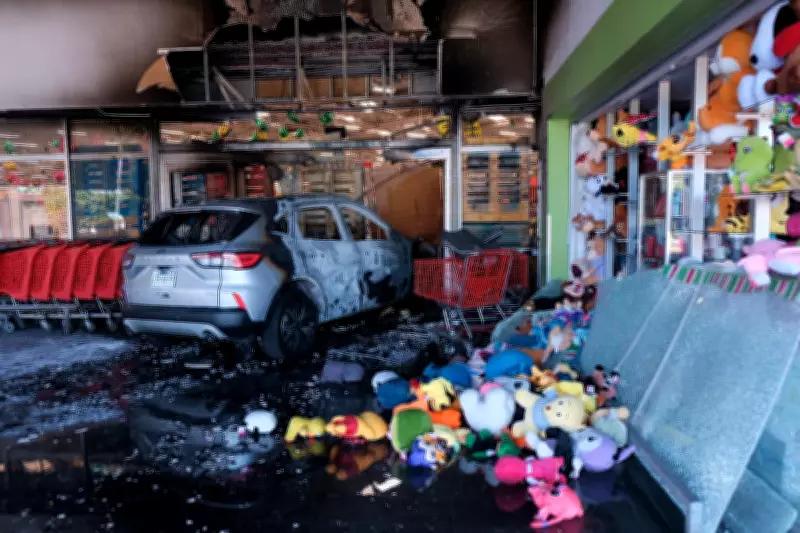
The recent bloodshed followed the Mexican military's killing of Nemesio Oseguera Cervantes, known as "El Mencho," the powerful leader of the Jalisco New Generation Cartel (CJNG). The operation and subsequent waves of violence resulted in 70 deaths, with cartel gunmen setting cars ablaze to block streets across Jalisco and other states, engaging in fierce clashes with Mexican forces through Monday.

Government Offers Assurances Amid International Scrutiny
At her daily news briefing, President Sheinbaum was asked what guarantees exist for World Cup matches in Jalisco. She responded with "every guarantee" and reiterated that fans face no risk. Jalisco Governor Jesús Pablo Lemus added that he had spoken with local FIFA officials, who have "absolutely no intention of removing any venues from Mexico." The three Mexican venues remain unchanged.
However, international concern is mounting. The Portuguese soccer federation announced it is "closely monitoring the delicate situation" in Mexico. Portugal's national team is scheduled to play a friendly against Mexico on March 28 at the newly renovated Azteca Stadium in Mexico City, which will also host the World Cup opening match on June 11.
Root Concerns About Escalating Violence
Jalisco has faced intense scrutiny due to stark examples of cartel violence in recent years, including the discovery of a cartel killing site at a ranch last March and an ongoing crisis of disappearances. The death of El Mencho has raised fears that the "kingpin strategy" could backfire, potentially sparking internal cartel conflicts and territorial grabs by rival groups.
Vanda Felbab-Brown, an academic at the Brookings Institution, noted that while immediate cartel revenge acts may be unlikely, the future remains highly uncertain. "If there is no clear line of succession in CJNG, we might see a lot of fighting within the cartel, its breakup, and there are a lot of scenarios," she explained.
During Sunday's firefights, Pérez allowed people on the street to scramble into his home for cover as gunmen burned a car just feet from his property. The fighting raged for an hour, reinforcing his doubts about hosting the World Cup. He expressed skepticism that any economic benefits from the games would reach working-class neighborhoods like his, despite being just a ten-minute drive from the stadium.
Economic Stakes and Divergent Local Perspectives
The World Cup is projected to be a $3 billion economic engine for Mexico, according to the Mexican Soccer Federation. Yet, tensions simmer among residents. Some foreign tourists trapped in violence in Puerto Vallarta took to social media to warn others, with several stating they do not plan to return.
Despite the turmoil, Guadalajara showed signs of returning to normal on Tuesday. Many businesses reopened after two days, streets filled with traffic, and workers continued preparations at the soccer stadium. Heavily armed police and National Guard members patrolled the city, which some interpreted as a sign of government control.

Juan Carlos Pila, a 55-year-old taxi driver, dismissed media reports as overplaying the violence. "People should come, man. Everyone is welcome," he asserted. In contrast, Maria Dolores Aguirre, who runs a small corner store in the mountain town of Tapalpa where El Mencho was killed, voiced deep concerns. Her family business, spanning over 50 years, depends on tourist flow. "It's going to affect us. It's collateral damage," she lamented. "The entire world just saw what happened and, of course, people are going to think twice about coming."
As Mexico steps up its offensive against cartels—partly in response to demands from U.S. President Donald Trump—the White House confirmed providing intelligence support for capturing El Mencho and praised Mexico's army. The CJNG remains one of the fastest-growing criminal networks in Mexico, adding layers of complexity to security preparations for the World Cup.





