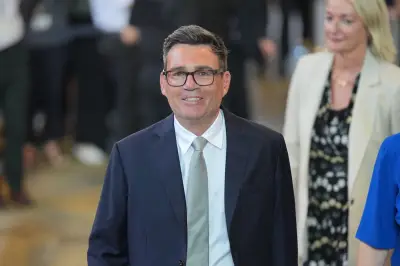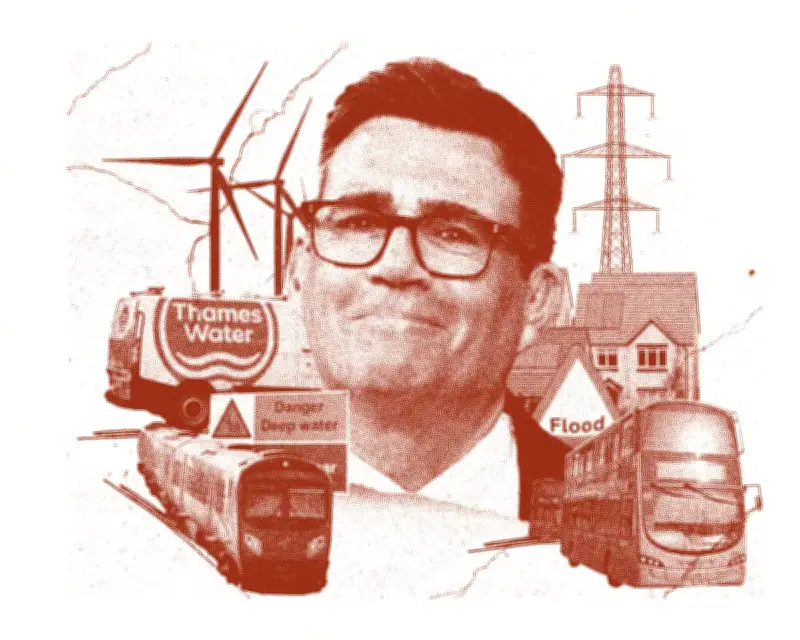
Andy Burnham, the newly elected MP for Makerfield and widely seen as the next prime minister, faces critical decisions on expanding state control over essential services. In a recent byelection victory speech, Burnham emphasised the need for "public control" over water, energy, transport, and housing, citing the Bee Network of buses and trams in Greater Manchester as a successful model. He is expected to elaborate on his economic priorities in a speech on Monday.
Choosing a Chancellor: A Test of Radicalism
Burnham's choice of chancellor is viewed as a key indicator of his commitment to nationalisation. Advocates of an economic reset, including nationalisation, see Ed Miliband as the only candidate willing to confront industry lobbying. In contrast, Wes Streeting, the bookies' favourite for the role, focused on EU alignment, planning deregulation, and North Sea exploitation in his recent speech on "progressive capitalism," without mentioning public ownership.
Neal Lawson, director of the progressive thinktank Compass, highlights the distinction between public control—which could mean tougher regulation—and full public ownership. "Does Andy Burnham think he can go for 'control,' when all of the evidence suggests these things are uncontrollable, and can only be managed in the public interest by being owned in some innovative way by the public sector?" he asks.

The Productive State: A Radical Vision
A policy paper by Mat Lawrence, director of the Common Wealth thinktank, published under Burnham's campaign vehicle Mainstream, outlines a radical vision for public ownership. Lawrence argues that essential sectors like transport, energy, water, social care, and housing have become too expensive due to shareholder extraction, leading to higher inflation and interest rates. The paper, titled The Productive State, eschews the term "nationalisation" but calls for public corporations operating with clear mandates, insulated from Treasury short-termism and shareholder demands.
Cat Hobbs, founder of the We Own It campaign, stresses the democratic aspect: "We're talking about natural monopolies. We don't have choice as consumers, and so what we've argued is that we need accountability as citizens."
Thames Water: An Early Test Case
The future of Thames Water is seen as an early test for Burnham's government. The heavily indebted company may collapse into the state's special administration regime (SAR) or be taken over by bondholders. Shareholders have been wiped out, and creditors have offered a discount. SAR could lead to temporary insolvency, with an administrator negotiating with lenders. Advocates of nationalisation argue ministers could instead mandate Thames becomes a public corporation.
Lawrence urges caution, noting state capacity must be built slowly. "This is not against markets, or dynamism, or entrepreneurialism; it's about fixing some of those sectors that are not working to provide the affordable foundations for dynamic businesses to thrive," he says. He estimates that in the remaining three years of a Labour administration, Thames might be the only utility nationalised.
Fiscal Constraints and Quick Wins
The government's fiscal position is strained, with debt-to-GDP ratio tripling to 96% in 20 years and a debt interest bill of £137bn due this year. Lawrence suggests focusing on quick wins: metro mayors could use franchising powers for integrated transport networks, Great British Railways could coordinate routes and fares, and development corporations with borrowing powers could kickstart housebuilding. Rachel Reeves has already announced a development corporation for Greater Cambridge.
Another vehicle is Great British Energy, which advocates argue could be scaled up to enter energy generation. Burnham's rhetoric on an expanded state role will be closely watched as he announces his top team, determining whether he is ready to "go big," as Ed Miliband's book title suggests.