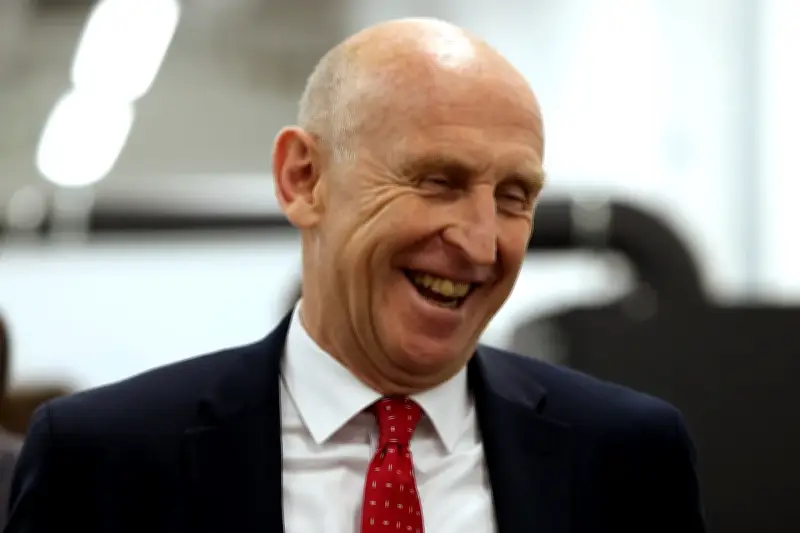
Chancellor John Healey is widely expected to target the Square Mile in his October 28 Budget as he seeks to raise cash to ease the cost of living for millions of less well-off households, despite last-minute calls to ditch a mooted £2 billion tax hit on banks.
Banks are braced for a new tax blow being called for by union chiefs, and the markets appeared to have already factored in such a raid.
Former Bank of England chief economist urges restraint
Former Bank of England chief economist Andy Haldane, who advised Andy Burnham before he became Prime Minister, urged the Government to resist the temptation of higher levies on banks.
“My hope is that this is a Budget for business and for bond markets, in other words the Government signals voluntarily restraint on Government spending and chooses voluntarily not to raise taxes on households or on businesses,” he said as Mr Healey finalises details of his first Budget on October 28.
“That would be the best thing they can do to get growth going. That is my hope. It is not my expectation.
“My expectation is that we will see some further borrowing through dipping into headroom… “We will see some further tax rises, and neither of those, I think, are good news from a growth perspective.
“Or put in a nutshell, I expect a Budget for the backbenchers rather than for business or the bond markets.”
Potential reversal of bank surcharge cut
Mr Healey has described banks as part of "the crown jewels" of Britain’s economy. Yet he seems intent on raking billions more out of them in the Budget.
Labour MPs are pushing him to do so after the biggest four banks - HSBC, NatWest, Barclays and Lloyds Banking Group - collectively made around £15 billion profit in the first half of this year.
The simplest way for the Chancellor to squeeze more out of the Square Mile is to reverse a cut in the surcharge that banks pay on corporation tax, from 8% to 3%, made three years ago by then Conservative Chancellor Jeremy Hunt.
Such a move would rake in an extra £2 billion-a-year or so for the Treasury.
TUC General Secretary Paul Nowak stressed: “The Treasury has already lost £6 billion in revenue from the Tories’ senseless bank tax cut – now it’s time to make sure banks pay their fair share.”
Other tax measures under consideration
But the International Monetary Fund argued that the Chancellor should cut spending rather than impose more tax rises.
Mr Healey is also said to be considering a £1 billion “office tax” raid which would hit hardest on skyscrapers and other expensive work buildings in London.
However, he has ruled out hiking capital gains tax, despite some of Mr Burnham’s allies having advocated bringing this levy closer to the level of income tax.
The Chancellor has been warned that imposing new wealth taxes could drive more entrepreneurs and investors to leave London and other parts of the UK for countries with more favourable tax regimes.
He is also determined not to frighten the markets with his Budget, which could drive up the cost of Government borrowing and mortgage rates for homeowners if they got the jitters, repeatedly stressing that he will stick to fiscal discipline.
His plan for Britain’s economy is expected to be far lower key than that of his predecessor Rachel Reeves who imposed higher taxes on businesses of tens of billions of pounds, widely blamed for hitting growth.