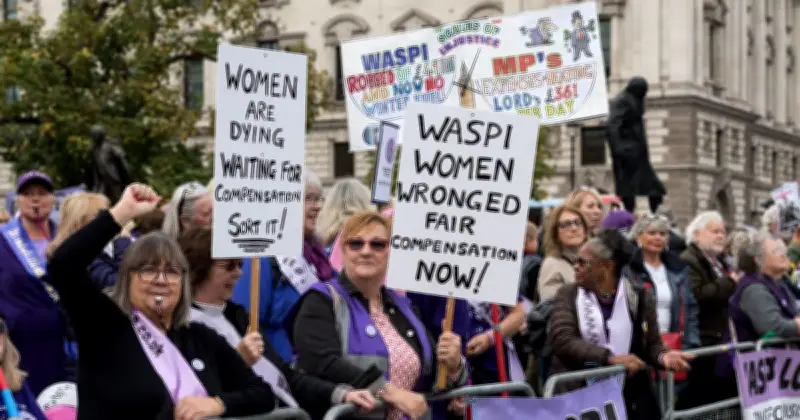
The Women Against State Pension Inequality (WASPI) campaign has launched a blistering attack on the Department for Work and Pensions (DWP) over its plans to improve communication of future state pension age changes, describing the proposals as deeply disappointing.
WASPI Chair Condemns DWP Action Plan
Angela Madden, chair of WASPI, expressed frustration at the DWP's long-awaited action plan, which she said shows contempt for the women affected by previous failures. The DWP released a paper detailing lessons learned from its inadequate communication towards women born in the 1950s, whose state pension age was increased from 60 to 65 under changes made in 1995.
Madden stated: "The DWP's long-awaited action plan is deeply disappointing. The Government seems to believe that writing to people before their State Pension age changes is a new idea, but WASPI women received letters just one to two years before their pension age changed. Even now, letters are being sent to women born a decade later only one to three years before theirs changes. This is not progress."

She added: "It also reveals the DWP's contempt for the women it failed and its resistance to meaningful reform. The Parliamentary Ombudsman knew the DWP would not accept its findings, which is precisely why it took the extraordinary step of laying its report before Parliament, leaving MPs to decide the fate of WASPI women harmed by the DWP's failures."
Compensation Demands Rejected
The WASPI campaign argues that 3.6 million women born in the 1950s should be compensated for receiving inadequate notice of the pension age change. A report by the Parliamentary and Health Service Ombudsman (PHSO) recommended compensation of between £1,000 and £2,950 per woman, which could total more than £10 billion. However, the government confirmed in January that it will not pay compensation to the group.
Madden emphasised: "Any attempt to learn lessons is no substitute for compensation which the Parliamentary Ombudsman has recommended ministers to pay."
DWP's New Communication Strategy
The DWP said it wants to create a new communication strategy for "effective, timely and modern communications" on the state pension, aiming to reduce the likelihood of similar issues arising again. A DWP spokesperson stated: "Following the PHSO investigation, we want to establish a new communication strategy for effective, timely and modern communications on the State Pension, which will form part of the action plan."
The department added: "Several actions in this plan build on improvements that we have already put in place or are continuing to progress. Although the focus of the action plan is on state pension age, we are considering wider State Pension communications, including reflecting on best practice, lessons and insight, adapting our approach as appropriate."
The PHSO investigation found that while communication of the changes between 1995 and 2004 met expected standards, the Government ought to have carried out a targeted campaign after that date, writing to affected women. The DWP's new plan aims to address these shortcomings, but campaigners remain unconvinced.