Why the Tory-Reform Split Is Maddening and How Uniting Could Transform Britain
Tory-Reform Split Maddening; Unity Could Transform Britain

Last Monday, I found myself standing with Kemi Badenoch at a private dinner. Eager to hear her plans for the country, I chose my question carefully: what would Britain look like after ten successful years under your leadership? I asked this specifically because I am fed up with slogans, 'missions' and bloodless management-consultant phrases generated by exhausted government departments.

Like the majority of British voters, all I want to see is tangible change. Will our high streets feel safer? Will energy become cheaper? Will we be able to build reservoirs, nuclear plants and railway lines without requiring 18 years of consultations, judicial reviews and 'therapeutic stakeholder engagement'? Kemi's answer was, admittedly, more managerial than I had hoped. But she talked about education, employment and immigration in a cogent and polished manner.

And as I pondered on her response, I started to consider what Reform leader Nigel Farage might say if I asked him the same question. I suspect their answers would be almost identical.

Wide Pickt banner — collaborative shopping lists app for Telegram, phone mockup with grocery list

Fascinating new analysis shows that if this month's local election results were transferred to a general election, neither the Tories or Reform would achieve a majority in the Commons. The projection by polling firm Rallings & Thrasher suggested Farage would win around 284 seats, shy of the 326 required to govern alone. The Tories would lose 25 seats, leaving them with 91: a far smaller loss than previously forecast. Together, the two parties could form a comfortable majority of 77 in coalition. But at the moment they're tearing lumps out of each other.

Both parties want the same things. Controlled borders. Cheaper energy. Safer streets. Less bureaucracy. More housing. More industry. Faster planning. Functional policing. A country capable of physically building things again. Which is why the ongoing fragmentation of the British Right is so maddening. Increasingly, it looks less ideological – and more psychological. Kemi Badenoch has described Nigel Farage variously as an 'opportunist', a 'populist' and someone who wants to 'destroy the Conservative Party'. But she knows perfectly well that Reform is also mopping up millions of voters who increasingly feel left behind by the Tories – and Reform's frontbench is populated by ex-Tories.

The bitter rift between the Tories and Reform is not about differing visions for the country: it's about inflated egos, historical grudges and the endless narcissism of our political class.

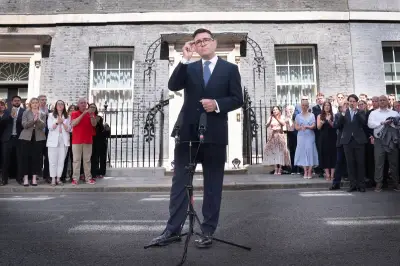
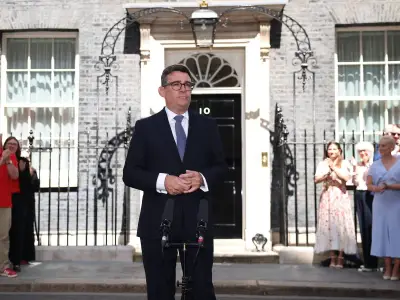
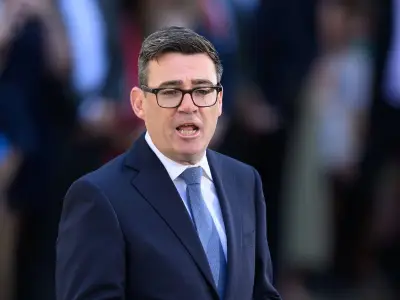
Yesterday, Jacob Rees-Mogg called for the Conservatives and Reform UK to 'work together' to defeat Andy Burnham in the upcoming Makerfield by-election. The former Cabinet minister said the contest marks a 'golden opportunity for the Right to unite' and the Tories should make a pact with Reform to give the Labour Party a 'nasty surprise'. Rees-Mogg himself has long identified the ideological similarities between both parties. In 2024, he even joked Reform had 'stolen all his best policies'.

But our first-past-the-post electoral system works only when there are two main parties of Left and Right. In a fractured system, it distorts political reality. Take Starmer's 'loveless landslide' of 2024, in which Labour won a huge majority on just 33.7 per cent of the national vote. Labour's current dominance rests not on any actual popularity, but partly because the Right is split into multiple tribes, even though they broadly agree on most things.

The success of Reform in the local elections, in which they gained over 1,400 seats, did not reveal a terrifying outbreak of 'far-Right extremism', despite the increasingly hysterical language of much of the commentariat. The vote revealed something far simpler and far more dangerous for the establishment: millions of ordinary people no longer believe the political establishment is acting in their interests. People feel they are working harder, paying more tax, obeying more rules and carrying more risk while successive governments have made the state larger, slower, less competent and more self-protecting.

Pickt after-article banner — collaborative shopping lists app with family illustration

While the healthcare budget has doubled in real terms since the late 1990s, polls last year showed only 21 per cent of British adults were satisfied with the NHS. On all major performance metrics, hospitals are substantially worse than in 2019/20. Backlogs in Crown courts, too, are at an all-time high and our prisons are fit to bursting. Meanwhile, migrants and asylum seekers are arriving on our shores in their thousands every week.

Modern Britain feels like a giant ecosystem of politicians, regulators, quangos, consultants, NGOs and public-sector managers all working to protect themselves, while the country deteriorates.

Ordinary voters are not demanding revolution. They simply want the state to work for them again. They want to believe that if they work hard, raise a family, contribute to society and pay their taxes, they will be left with enough prosperity, security and autonomy to build a decent life. That is not extremism. It is the foundation of every stable civilisation that has ever existed.

Wanting safe streets is not fascism. Wanting affordable energy is not extremism. Wanting functioning borders, competent policing, lower taxes and a state that works is not authoritarianism. It is what normal societies expect as baseline competence.

In this context, Makerfield is crucial. In the 2024 election, Labour retained the constituency with a majority of 5,399 over Reform. The Tories won 11 per cent of the vote. The most recent polling, taken before Burnham announced his intention to stand, suggests Reform would command a 46 per cent share of the vote, pushing Labour into second place. So if Reform and the Tories can cut a deal to keep Labour out, that should serve the interests of both those parties. And the situation in Makerfield is complicated further by the fact that another Right-wing party, Restore Britain – led by ex-Reform MP Rupert Lowe – is fielding its own candidate who may well split the vote further still.

For the sake of the country, this division on the Right – reminiscent of the 'Judean People's Front/People's Front of Judea' split of Monty Python – cannot go on. If even partial consolidation occurred between the Tory and Reform worlds around borders, taxation, energy, industrial rebuilding and state competence, the electoral map could change with astonishing speed.

The Conservatives still possess much of the institutional machinery: councillors, associations, donors and campaign infrastructure. Reform increasingly possesses insurgent energy and growing support precisely in the working-class and post-industrial areas where Labour once enjoyed tribal loyalty. Combine the two and one is no longer discussing a protest movement – but a governing coalition capable of politically redrawing England, and ending the Left-wing lunacy that has so impoverished our country.