

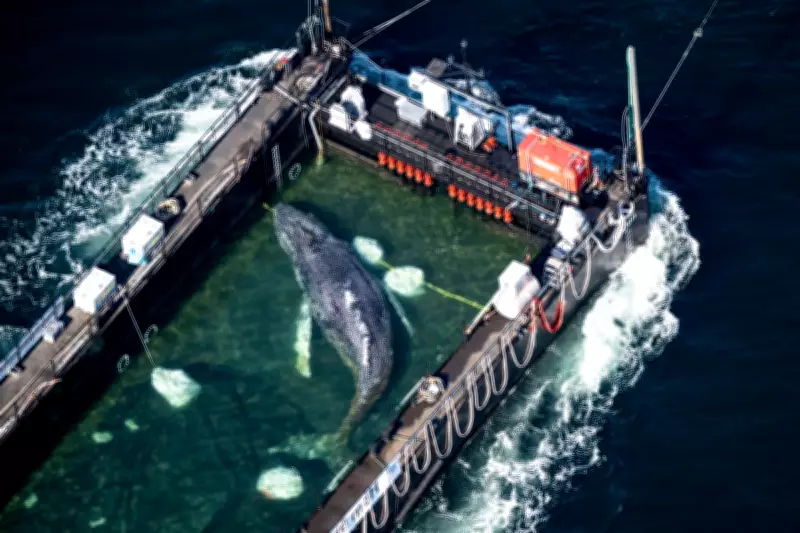
A young humpback whale, nicknamed Timmy by German media, has been presumed dead after a privately funded rescue mission ended in failure. The operation, which cost an estimated €1.5 million (£1.3 million), involved transporting the whale in a flooded cargo ship towards the North Sea. However, the tracker meant to monitor his progress malfunctioned, and the animal is now lost at sea.
Background of the Stranding
Timmy, a juvenile male, had repeatedly stranded on the Baltic coast, capturing the attention of millions on social media. Videos and images showed him hovering between life and death, prompting public demands for action. Despite warnings from conservationists and scientists, a private rescue effort was launched. Many experts had argued that the whale was already weak from repeated strandings and low salinity waters, and that euthanasia might have been the most humane option.
Conservation vs. Animal Rights
The case has exposed deep tensions between animal rights activism and conservation. Professor Amy Dickham of the University of Oxford noted that the focus on a single animal at great cost comes during a time of severe funding shortages for wildlife conservation. She questioned whether the funds could have been better spent on issues affecting larger numbers of whales, such as ship collisions and fishing gear entanglements.

The International Fund for Animal Welfare stated that the rescue should give everyone pause, highlighting the challenges of social media-driven wildlife management. Marine mammal biologists faced online hostility despite working in the whale's best interests. The organization emphasized that the most compassionate choice is not always the most dramatic one.
Lessons for Conservation
Humpback whales have made a strong recovery from historical hunting and are classified as a species of least concern on the IUCN Red List. However, they still face threats from climate change and ocean pollution. Experts argue that the resources spent on Timmy could have had a greater impact elsewhere. Dickman warned against the trend towards social media-driven wildlife management, where public pressure may lead to hasty decisions that are not in the animal's best interest.
The botched rescue serves as a teachable moment for those who want to see biodiversity recover. Conservation often requires difficult choices that prioritize the overall health of ecosystems over individual animals. While animal rights activism has achieved important welfare protections, it can sometimes do more harm than good despite good intentions.






