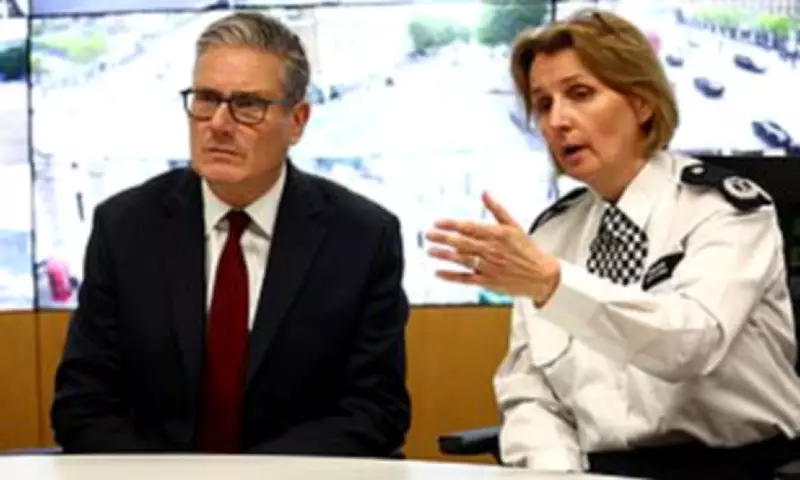
Prime Minister Keir Starmer has barred eleven individuals he describes as 'far-right agitators' from entering Britain to attend Tommy Robinson's Unite the Kingdom rally in central London on Saturday. The move comes as the Metropolitan Police gears up for an 'unprecedented' policing operation involving thousands of officers, armoured vehicles, horses, dogs, drones, and helicopters.
Starmer's Stance on National Unity
Speaking after visiting the Met's operation room alongside London Mayor Sadiq Khan, Starmer declared: 'We're in a fight for the soul of this country, and the Unite the Kingdom march this weekend is a stark reminder of exactly what we are up against. Its organisers are peddling hatred and division, plain and simple.' He emphasised that the government will block those seeking to incite hatred and violence, and warned that anyone attempting to cause havoc or intimidate others will face the full force of the law.
Banned Individuals and Controversies
Among those barred are Polish MEP Dominik Tarczynski, Belgian politician Filip Dewinter, anti-Islam influencer Valentina Gomez (who filmed herself burning a Quran), US commentator Joey Mannarino, Spanish personality Ada Lluch, Dutch anti-immigration activist Eva Vlaardingerbroek, and US podcaster Don Keith. Tarczynski has threatened to sue Starmer personally, calling the ban 'communism in the 21st century.' Former Prime Minister Liz Truss described the move as 'shocking.'

Massive Policing Operation
More than 100,000 attendees are expected for the rally, which coincides with a pro-Palestine Nakba Day march and the FA Cup final at Wembley. Met Police Deputy Assistant Commissioner James Harman stated the operation is 'unprecedented in recent years,' costing £4.5 million, with 4,000 officers on duty, including 660 drafted from other forces. Live facial recognition will be used for the first time at a protest. Heavy restrictions aim to keep rival groups apart, with concerns that football fans may join the Robinson event.
Legal and Security Measures
The Home Secretary has revoked entry permissions for those deemed not conducive to the public good. Police will monitor slogans and have consulted prosecutors on language that could lead to arrests, including phrases like 'death to the IDF' and 'globalise the intifada.' The terrorism threat level remains severe, and authorities cite increased hate crime and recent attacks as factors heightening concern.