
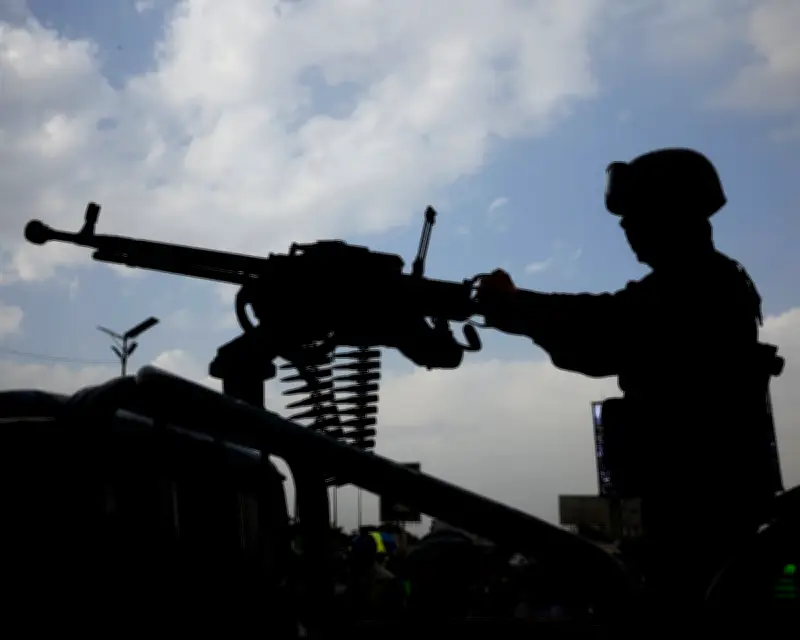
Despite a recent US-Iran deal aimed at curbing Tehran's influence, analysts and Western security officials believe Iran is likely to increase support for its proxy forces across the Middle East, including Hezbollah, Hamas, and the Houthis. Meanwhile, Israel and the US continue to rely on allied militia, perpetuating a shadow war that undermines state authority and fuels instability.
Iran's Proxy Network: Hezbollah and Beyond
Hezbollah remains the cornerstone of Iran's coalition of allied groups, despite suffering heavy losses in clashes with Israel in 2024 and 2025. The group failed in its primary strategic role of deterring an Israeli direct strike, but Tehran remains committed to its regeneration. "The Iranians see this as a temporary bad phase and believe Hezbollah will regenerate," said Hanin Ghaddar, senior fellow at the Washington Institute for Near East Policy. "It is absolutely vital for the Revolutionary Guards to rebuild their proxies around the region and to control their decisions."
The Houthis in Yemen, who have close ties to Tehran, demonstrated their ability to target Israel and threaten Red Sea shipping during the recent conflict. However, they remain more independent. "The [Houthis] are very hardcore and were useful during the war but have their own decision-making processes that don't involve the Iranians," Ghaddar noted.
Iraqi Militia and Kurdish Efforts
In Iraq, Shia militia backed by Iran for over two decades flexed their muscles but avoided full-scale escalation. They launched dozens of drone and rocket attacks against US assets and targeted Kuwait, but domestic politics and retaliatory airstrikes made leaders wary. "They are more risk-averse than perhaps the Iranians would like," said Michael Knights, an expert at Horizon Engage.
At the conflict's outset, the US and Israel attempted to mobilize armed groups among Iran's ethnic minorities, including Arabs and Baloch, but the efforts failed. "There were general contacts but they did not develop," said Michael Milshtein, a former intelligence officer at Tel Aviv University. A longstanding US plan to deploy Kurdish fighters into Iran, supported by US special forces and air power, also stalled due to insufficient readiness, Kurdish wariness after a perceived US betrayal in Syria, and Turkish opposition from President Recep Tayyip Erdoğan.
Israeli-Backed Militia in Syria and Gaza
Israeli intelligence has reportedly supplied cash, intelligence, and arms to a new Druze militia in Syria, the Military Council, which aims to protect the minority but also resists Syrian government consolidation, serving Israeli interests. In Gaza, Israel has built up Palestinian militia to fight Hamas, but these groups have limited popular support and tactical impact. "They will in no way change the strategic situation in Gaza," Milshtein said. "They have zero popular support and cannot be an alternative to Hamas."
Regional Instability and the Proxy Dilemma
Across the region, there is a push to disarm militia and reinforce state authority to offset instability, but the temptation to use proxies remains strong despite the risks. "You can't rely on proxies. They are not just useless," Milshtein concluded. "They cause damage." Recent conflicts in Syria, Libya, and Sudan have seen extensive use of proxy forces, highlighting the enduring nature of this shadow war.




