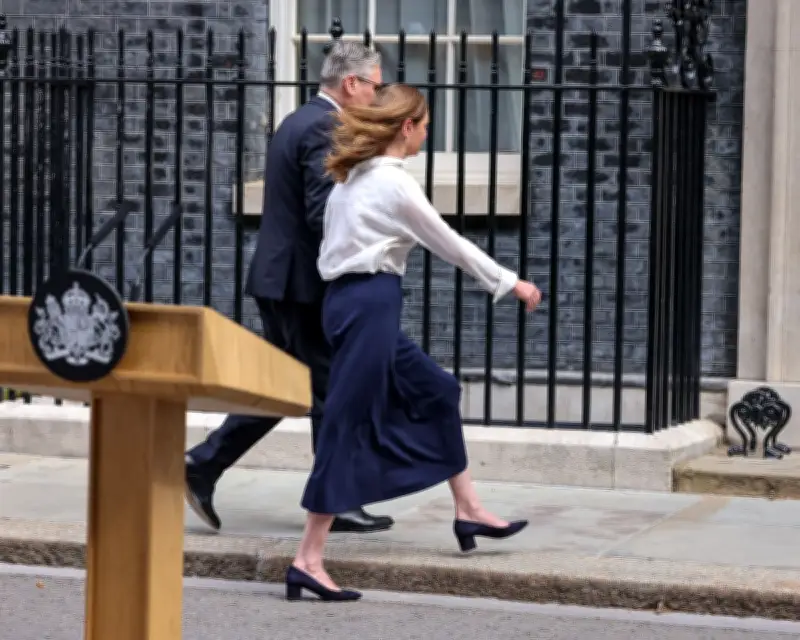
Keir Starmer, the former prime minister, resigned on 22 June 2026, leaving Downing Street with his wife Victoria. In his resignation speech, he claimed Labour was 'politically and morally bankrupt' when he took over. However, columnist Owen Jones contends that Starmer's tenure was marked by broken promises, factionalism, and a lack of principle.
Broken Promises and Deception
Starmer, who served in Jeremy Corbyn's shadow cabinet and declared himself '100% behind' Corbyn, later suspended and expelled him from the party. He had promised tax hikes for the top 5%, public ownership of utilities, and abolition of tuition fees, but failed to deliver. When asked about nationalisation, he denied ever committing to it, despite telling the BBC it would be in the manifesto.
Gaza and Foreign Policy
Starmer, a human rights lawyer, asserted Israel's right to cut off power and water to Gaza. Labour refused to back a ceasefire for nearly 20 weeks, as Israel killed tens of thousands. One Labour official bragged about 'shaking off the fleas' as Muslim councillors resigned. It took six months to officially support a ceasefire.

Authoritarianism and U-Turns
Starmer's government scrapped universal winter fuel payments, then partially reversed after backlash. Disability benefits were targeted, forcing another retreat. He built one of Europe's harshest asylum systems, claiming immigration risked turning Britain into an 'island of strangers'. ILGA-Europe's Rainbow Index rated Britain's trans rights record as among the worst in Europe, narrowly above Russia.
Internal Crackdown and Scapegoats
Starmer suspended Labour MPs for criticising Israel or opposing the two-child benefit cap. His machine blocked leftwing candidates. Thousands were arrested for holding placards after Palestine Action was proscribed as terrorists. He appointed Peter Mandelson as US ambassador despite links to convicted sex offender Jeffrey Epstein, prioritising faction over country.
Jones concludes that Starmer's failure was not due to bad luck but a lack of belief in anything beyond his own advancement, warning that his premiership may have paved the way for Nigel Farage's hard-right agenda.