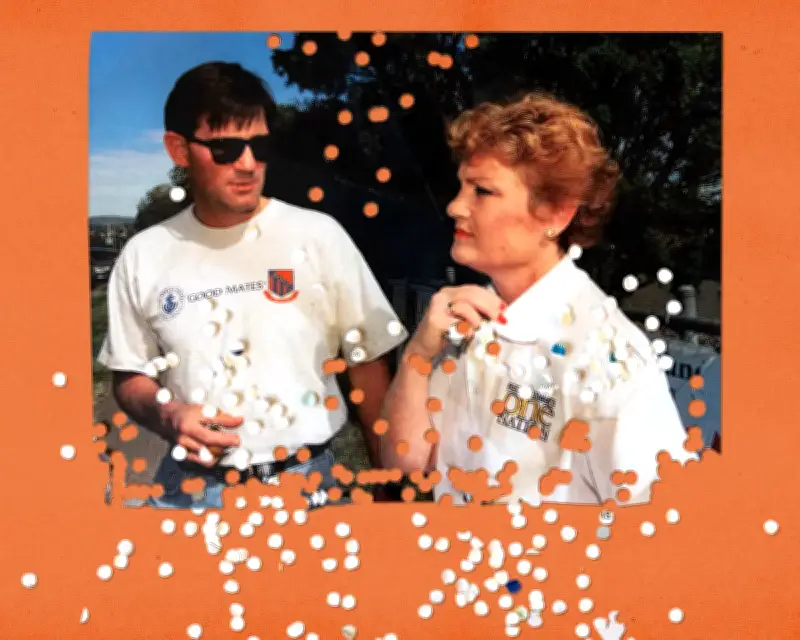
David Oldfield, co-founder of One Nation, says the party's stunning success at the 1998 Queensland election nearly delivered it minority government. The rightwing nativist party, which he founded with Pauline Hanson and the late David Ettridge, won 11 seats and secured nearly 23% of the primary vote in its first campaign—higher than the National and Liberal parties, which directed preferences to the new party in an attempt to retain power.
Yet as the historic results came in, Oldfield felt disappointment—even “distress”—because the plan to form minority government did not materialise. Instead, the role of kingmaker fell to a newly elected independent from a previously Nationals-held seat, who backed the Labor leader, Peter Beattie, into office.
Near miss and internal strife
Beattie says Oldfield's plan, which came “within a whisker” of fruition, could have proved “an absolute watershed”. “Had Peter Wellington not backed us, God knows what would have happened,” he says. Had Labor failed, Beattie himself—and his hardline stance against One Nation—would have faced severe internal recriminations. “Everyone will deny it now,” he says, “But there were sections of the Labor party who thought we should exchange preferences [with One Nation].”
According to Beattie, had Rob Borbidge been reinstalled as premier on the back of One Nation support, the Nationals leader would have supported the 11 One Nation MPs in their electorates and given them the opportunity to play a constructive role in government. Borbidge says if he had won the 1998 election he would have accepted confidence and supply from One Nation, but that any minority government formed with that crop of MPs would probably have been “short lived”. “They were not what you would call mainstream people,” he says. “They would have been incredibly difficult, if not impossible, to work with.”
Oldfield believes the conservative parties came agonisingly close to power in Queensland. He says his plan for One Nation preferences to help the Coalition hold two seats south of Brisbane—Springwood and Mansfield—were frustrated by One Nation candidates who rejected his suggestion that they direct preferences to the Liberal incumbents. Both seats fell narrowly to Labor, with the latter the most marginal seat in the state, won by 83 votes, giving Beattie a path to form government. “Had we been able to [influence the results in those seats], then One Nation would have held the balance of power in Queensland in that election,” he says.
Oldfield and Hanson: a fractured partnership
Oldfield and Hanson have not spoken in more than a decade. But his public assessment of her character and intellect in the decades since she booted him from the party has at times been scathing. In 2019 he appeared on a Channel Seven chatshow to promote his memoir, Being David, in which he wrote that Hanson had “failed miserably, day after day”. The One Nation leader was “frustrating to work with”, he said, because she would not take “any type of constructive criticism”—“or, quite frankly, read anything”. On the campaign trail, the rightwing firebrand would “talk about crazy ideas for policy”, ideas that “were just not even jurisdictionally possible”. “So I'd have to come up with pretend policies—and then she'd forget about it the next day,” Oldfield said. “And so it wouldn't matter.”
Seven years later, with Hanson and One Nation resurgent in opinion polls, Oldfield strikes a different tone. In April he created a social media account to offer his opinions on matters “socio-political”. Among them is his contention that “modern people” in western nations are being replaced by “millions of savages”. Also that, as prime minister, Hanson would usher in “quite extraordinary” change—change that he would “certainly vote for”. After being booted unceremoniously from the party, Oldfield says: “For me, there is a level of hope that One Nation can now achieve federally what it might have achieved decades ago. Change the landscape potentially forever.”
Former insiders see parallels and advantages
Jeff Knuth, the party whip when One Nation swept Queensland in 1998, quit within seven months and joined the short-lived City Country Alliance. He says the media and political establishment placed “a target on our faces” but does not absolve Hanson of the disaster that followed. “We had a very angry Pauline—she didn't take anyone's advice and then she took her anger out on us,” he says. “It was just doomed.” Today, from his home in Townsville, the semi-retired industrial chemist is “proud of Pauline” and “happy for her”. “We hugged and kissed. We made up and everything's cool between us,” he says. Knuth sees strong parallels between Queensland in 1998 and today but says One Nation in 2026 has a major advantage: “Pauline is the same Pauline as back then but just wiser and smarter—and she's got the joys of social media.”
Bill Feldman, who led One Nation in the Queensland parliament in 1998, also sees advantages today. The problems that plagued it then, he says, were “all internal party stuff”—issues related to branches, its fledgling constitution and “the two Davids”—Oldfield and Ettridge. But the retired police officer from Woodford says labels including “racist and homophobe and xenophobe” conspired to “drive a lot of people and a lot of support back underground”. “They're wearing names like that these days, mate, as a badge of honour,” he says. “Those things just don't wash any more.” His social media feed is full of anti-Labor and pro-One Nation posts. “All I hope and pray now is that Pauline and her staff have a better vetting procedure for people that are selected as her candidates—that's all they need.”
On this, Feldman strikes a chord of agreement with Beattie, his old political foe. Because while 1998 could have been the year in which One Nation “established themselves”, the former premier says this was ultimately cruelled because it was a party of individuals—all against something but not for anything. “Disunity killed them in Queensland,” he says. “And, to be honest, I think it will kill them again.” But Beattie says history cannot be counted on to repeat. A focus on attacking Hanson will only weld on her support, he says. Instead, the major parties must recognise that “the overwhelming percentage of her supporters are actually good Australians who are doing it tough”. “They are looking for answers for their kids,” he says. “That was exactly [the same] in Queensland in 1998.”
Borbidge also sees “history repeating itself”—but this time, he says, “it's One Nation on steroids”. “This time One Nation is a bigger threat to all the major parties, simply because it is smarter, it is better resourced and its campaigning techniques are far more sophisticated,” he says. “It's very much a recurring nightmare.”