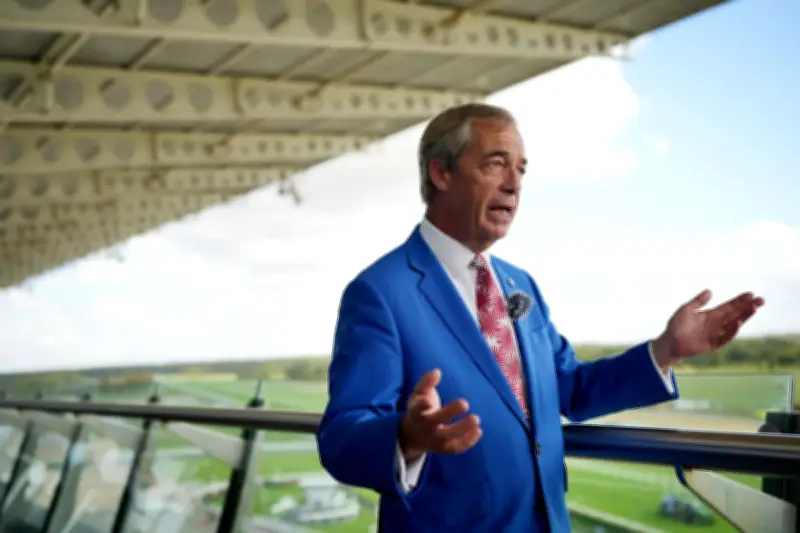
Nigel Farage has said Andy Burnham has “opened the door to Reform in the most extraordinary way” after the Prime Minister reignited the Brexit debate.
The Reform UK leader said Mr Burnham “has made a very big political mistake” by promising to look at options for Britain’s future relationship with the European Union.
Contradictory positions
Ahead of a speech in Doncaster on Thursday, Mr Farage – a key proponent of Brexit ahead of the 2016 referendum – said the Labour leader’s positions on Brussels and devolution were at odds.
“This is the pro-devolution prime minister,” Mr Farage told reporters.
“To even consider rejoining the single market, the customs union, let alone the European Union itself, is the opposite of devolution – a massive transfer of huge powers up to an authority, whereby there’s nothing Parliament could do to change any of it.
“So I find the whole thing totally contradictory.”
When it was put to him that the majority of the public supported rejoining the bloc, the Reform leader suggested they would change their mind once they knew the costs and other implications.
He said: “I actually think that Burnham has made a very big political mistake.”
Mr Farage also told Sky News: “Here in Doncaster and across the north of England, I think what he’s done is open the door to Reform in the most extraordinary way.”
Brexit options and electoral reform
The Prime Minister promised in his first Labour Party conference speech in Liverpool on Tuesday to set out options on the country’s ties to Brussels around the time of a UK-EU summit later this year.
He later acknowledged this could include an option to go “all the way” and rejoin the bloc if that is what public opinion favoured. He did not rule out putting a pledge to rejoin in Labour’s next election manifesto.
Mr Burnham also used his speech to announce an adjustment of the state pension triple lock to pay for social care, and a potential change in the UK’s electoral system.
A national commission will investigate overhauling the first-past-the-post voting system.
Mr Farage said he was supportive of “a degree of proportionality”, but that electoral reform was not a priority.
“I always thought a degree of proportionality in British politics would be useful because what it would mean is significant minority views would at least get a voice in Parliament. As to where you draw that line and how you do it, I don’t know.”
He said he backed proposals in the 1998 Jenkins Commission, including that “the man or woman that represents the area still continues to get elected by first past the post”.
“But is it a priority right now? No.”
Changing the voting system would “take years”, Mr Farage said, arguing that politicians should focus on more urgent issues such as migrant boat arrivals and soaring borrowing costs.
On Mr Burnham’s plan to break the triple lock’s automatic link with increases in average earnings, the Reform leader said pensioners were the “wrong target”.