Crimea Declares Emergency Amid Ukrainian Aerial Attacks
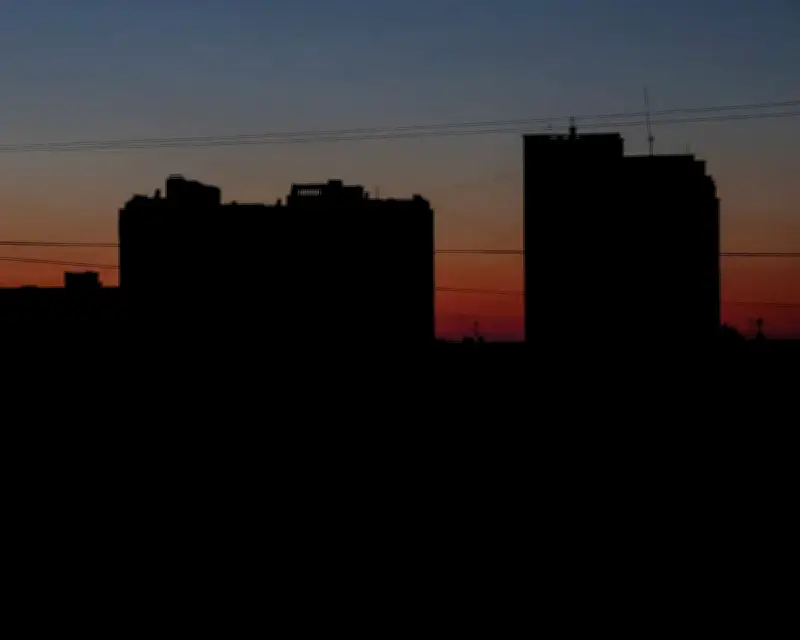
Authorities in Russian-annexed Crimea have declared an “emergency situation” to mitigate the fallout from increasing Ukrainian aerial attacks on the peninsula. The announcement on Friday came amid fuel shortages and power cuts triggered by Ukrainian strikes on logistics chains and oil facilities across Crimea, other parts of Russian-occupied Ukraine, and southern Russia.
Kyiv describes its stepped-up air attacks as fair retribution for Russia’s near-daily barrages on Ukraine. President Volodymyr Zelenskyy stated on social media: “We are doing everything to force Russia to end the war and restore justice. And it is Crimea that is at the centre of this policy of ensuring justice.”
Restrictions Imposed in Sevastopol and Across Crimea
The Russia-installed governor of Sevastopol said emergency crews had worked to ease power cuts but urged residents of Crimea’s largest city to use appliances sparingly to avoid overloads and shortages. Crimea authorities have already suspended fuel sales to private motorists, and Sevastopol introduced restrictions on operating hours for public transport, shops, cafes, and street lights.

These restrictions coincide with Russian air defences shooting down 660 Ukrainian drones overnight, including over Moscow and Crimea, according to the defence ministry on Friday—one of the highest figures since the war began. Zelenskyy remarked: “Today, Ukraine is depriving Russia of this launchpad and drawing a line under its attempts to normalise war.”
NATO Flank Warnings and Russian Drone Strikes
Two countries on NATO’s eastern flank have warned that Russia is preparing a possible “provocation” in the Baltic states or Poland to test the cohesion of the western military alliance, reports Dan Sabbagh. Western sources also fear danger ahead as the Kremlin faces pressure from Ukraine’s long-range attacks on targets near Moscow and St Petersburg.
A Russian drone strike on Friday killed two passengers aboard a minibus in Ukraine’s south-eastern Dnipropetrovsk region and one person in the border Sumy region, regional officials said. Dnipropetrovsk’s regional governor reported two dead and 12 injured, including two children, in the strike in Nikopol. Sumy’s regional governor said a drone strike killed a man in a village outside the main regional centre, also called Sumy.
Shadow Fleet Tanker Seized; Ukraine AI Plans
An oil tanker suspected of being part of Russia’s “shadow fleet” was taken to waters near Marseille on Friday, a day after it was seized by France’s navy near Sicily, local authorities said. The vessel, the Deliver, is one of nine ships seized across Europe since the start of 2026, all believed to have been used by Russia to evade Western sanctions on its oil trade. The Russian embassy in France called the seizure “piracy”.
Ukraine plans to build domestic computing capacity for artificial intelligence with Kyivstar, the company said on Friday. Kyivstar signed a memorandum of understanding with the economy ministry at the Ukraine Recovery Conference in Gdansk, while parent VEON will provide financial backing for a first phase that Kyivstar CEO Oleksandr Komarov said could need at least 3-5 megawatts of capacity and tens of millions of dollars. “The biggest consumer of Ukrainian AI right now is the military,” Komarov told Reuters. “You cannot run military computing somewhere outside. It is a matter of national security.”
Prisoner Exchange and Death of Former Russian Minister
Ukraine and Russia swapped 160 captured soldiers on Friday, Moscow and Kyiv said, the latest prisoner of war exchange in the war. Zelenskyy said the Ukrainians had all been held captive since 2022 and posted pictures on social media of the men wrapped in Ukraine’s blue-and-yellow flags, smiling and embracing each other. After the release, Russian human rights commissioner Yana Lantratova said she and her Ukrainian counterpart Dmytro Lubinets had agreed to jointly visit prisoners of war and had exchanged lists of soldiers being held by both countries, Russia’s state RIA news agency reported.

Former Russian defence minister Sergei Ivanov, once seen as a possible successor to President Vladimir Putin, has died at the age of 73. Ivanov was a key member of the group known as the “siloviki”, or strongmen, who, like Putin, had risen through the ranks of the Soviet KGB security service and wielded huge influence after Putin took power at the turn of the millennium. The Kremlin said in a statement on Friday that Putin “expressed his deepest condolences” to Ivanov’s family and friends. Ivanov helped shape Russia’s post-Soviet security state and later framed NATO’s expansion as a strategic concern for Russia.