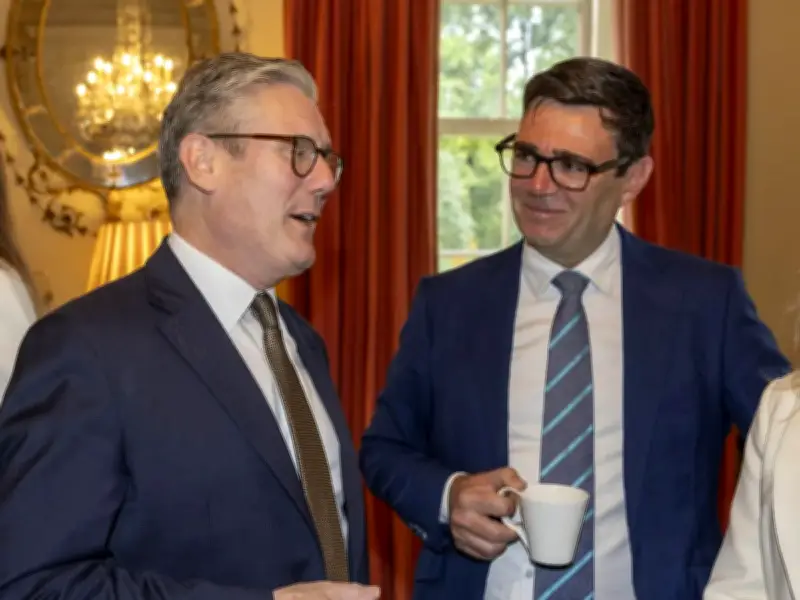
During the Makerfield by-election campaign, a joke about Andy Burnham was doing the rounds: a Blairite, a Brownite and a Corbynite walk into a bar, and the barman asks, “What’ll you have, Andy?” Even Burnham acknowledged it, telling an ally, “That joke says more about the people that tell it than it does about me.” But now, should ‘Starmerite’ be added to the list?
High Street Crackdowns and Mental Health Expansion
For all the talk of a new era in Labour politics—or ‘circuit breaker’ as Burnham calls it—many of his policies look less like a rejection of Keir Starmer’s government and more like an extension. On the high street, Burnham announced councils will get powers to restrict vape and betting shops on ‘hollowed out’ high streets. The Starmer government had already planned similar measures in September 2025, as part of the £5.8bn ‘Pride in Place’ programme, giving councils powers to prevent unwanted businesses and tackle derelict premises. Burnham is turning up the volume, wanting tougher action against damaging businesses while supporting pubs, clubs, and music venues.
On mental health, Burnham announced ‘a major expansion of NHS mental health services’ with 100 new community mental health centres where patients can walk in without a referral. Yet Starmer’s 10-Year Health Plan already aimed to shift care closer to home through neighbourhood health services, explicitly including mental health. Burnham’s plans are an expanded version of that approach.
Subscription Rules and Asylum Hotels
Burnham’s changes to subscription plans also mirror Starmer’s. Last week, he said it will be easier to cancel subscriptions and companies must make auto-renewals at higher prices clear. The plans were announced under Sir Keir in April but are being brought forward to January 2027, originally expected in spring 2027. The prime minister also wants to outlaw ‘pretend prices’ that trick shoppers.
Even the asylum hotel policy is not a complete break. Burnham’s government confirmed 13 hotels would no longer house asylum seekers, including The Britannia Ashley Hotel in Hale, which had attracted protests. However, Starmer’s government had already committed to ending the use of asylum hotels altogether.
Bus Caps and Devolution
In some cases, Burnham pushes policies further. The £2 bus cap is an example. Under Starmer, the England-wide cap rose to £3, but Burnham declared most bus fares will be capped at £2 from January, slashing single ticket prices by a third until end of 2027. This builds on his Greater Manchester Bee Network model.
Devolution is another example. Burnham’s ‘No 10 North’ in Heron House, central Manchester, marks a visible shift of decision-making away from London. Critics question his mandate, but Burnham points to Labour’s 2024 manifesto. Starmer’s government introduced the English Devolution and Community Empowerment Bill in 2025, promising to ‘widen and deepen devolution across England’.
Homelessness, Housing, and Business Rates
On homelessness, Starmer invested £3.5 billion over three years. Burnham has set a more dramatic objective—ending rough sleeping nationally—with an additional £340m, expected to provide 1,200 homes and ‘intensive support’ for at least 3,000 people over five years. On housing, Burnham wants ‘the biggest council house building programme since the post-war period’, though details are lacking. Starmer pledged 1.5 million new homes and £39bn for 300,000 ‘social and affordable houses’ over 10 years, largely allocated to housing associations. Burnham wants regional mayors to play a key part.
On business rates, Starmer introduced 15 per cent relief for pubs and live music venues. Burnham proposes a 20 per cent cut, saving companies around £1,100 next year. The difference is less about the basic idea than the scale of intervention.
So is Burnham a Starmerite? Not quite. Burnham is more comfortable with public ownership, puts more weight on regional government and mayors, and his economic programme is more interventionist. But the idea of a clean break is harder to sustain when policies line up. Burnham gets credit for policies Starmer announced but received scant praise for, possibly due to communication styles. Health Secretary Yvette Cooper suggested Burnham is better suited for ‘a world of social media’. Burnham’s first week was about grabbing attention, whereas Starmer focused on long-term solutions over ‘short-term sticking plasters’. That might be the biggest difference—not what Burnham wants to do, but how quickly and loudly he does it. Perhaps the answer to the old joke is now: “A bit of Starmer too.”