Ninety years after the Battle of Cable Street, the family of a bricklayer who joined the anti-fascist protest is preparing to take part in commemorative events in London this weekend. Harry Reardon, one of ten children raised in poverty, was a teenager in October 1936 when he heard about a planned march by the British Union of Fascists led by Sir Oswald Mosley and decided to act.
An estimated 100,000 demonstrators flooded the East End with the message 'They shall not pass', in what became known as the Battle of Cable Street. His daughter, Helene Reardon Bond, from Kentish Town, north London, said: “Dad was a self-deprecating man who loved his garden and was proud of his family, but what happened at Cable Street remained with him all his life. He knew it showed the importance of communities standing together and what can be achieved with solidarity. That’s as important today as it was in 1936.”
Fascism and division in the East End
In 1936, the East End was one of the country’s poorest and most densely populated areas, with high unemployment and poor housing. It was home to diverse communities, including those from Jewish and Irish backgrounds. The British Union of Fascists, founded in 1932 by Mosley, promoted nationalism, antisemitism and authoritarian politics, with uniformed Blackshirts using intimidation and violence.
Writer and educator David Rosenberg, 68, who runs guided walks around the Cable Street area, said: “There were 500 branches of the BUF countrywide by 1934, but there was a particular focus on the East End. Mosley tried to win the Irish population over, by telling them it was the fault of the Jewish people that living and working conditions were so bad. It was blatant propaganda, but if you’re in economic hardship it can be easy to believe.”
The stand-off and its aftermath
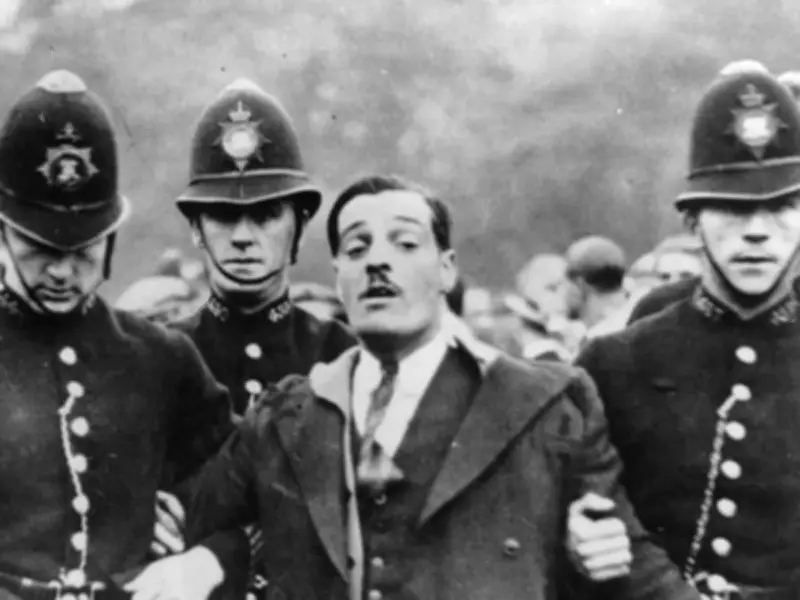
When news of the planned march broke, a petition with tens of thousands of names was presented to the Home Secretary, Sir John Simon, in a bid to ban it, but the application was turned down. On October 4 1936, around 5,000 of Mosley’s supporters massed in the area, with an estimated 100,000 anti-fascists determined to keep them from marching. Around 7,000 police were deployed.
Anti-fascists, including trade unionists, Irish dockers, Jewish organisations and local residents, banded together. Barricades were put up and, as marchers approached, people living in shops above rained down kitchen contents and chamber pots. The slogan “They shall not pass” was chanted. Police retreated and told Mosley he had no hope of getting through.
Rosenberg explained: “Mosley complied, because he didn’t want to get arrested - he was due to marry Diana Mitford in Berlin two days hence and Hitler would be a guest. He and his Blackshirts had suffered a big defeat, it was a humiliation and the exact opposite of what he had wanted. Instead of driving communities apart, the Battle of Cable Street, as it became to be known, united them. It was a people’s victory and a pivotal moment.”
In direct response, Parliament passed the Public Order Act, which banned the wearing of political uniforms like the Blackshirts and gave police powers to ban public marches. By the late 1930s, support for the BUF had dropped sharply. Mosley was arrested and interned in 1940, and died in 1980, aged 84, at his home near Paris.
Commemorating the battle today
A major march is planned for Sunday October 4, 90 years to the day since the battle. Rosenberg said: “It’s so important to recognise and remember what happened. In many ways we are living through it again with the rise of the far right today - we’re hearing some of the same rhetoric. But we can learn from history.”
Joe Rollin, senior organiser at the union UNITE, who has helped organise some of this weekend’s commemorative events, said: “We need to remember that fascism is always there. under a rock. It’s up to us working class people to call out the far right. Otherwise, we could be doomed to repeat the mistakes of the past.”
Helene and her family are preparing to join Sunday’s march to remember the battle and the part her dad, Harry, who died in 1997, played in it. She said: “I’m very proud of him. Dad always said ‘if you can do somebody a good turn, then do it.’ I don’t think there’s a better phrase by which to live.”
Executive Mayor of Tower Hamlets Lutfur Rahman said: “Cable Street is a reminder of what can happen when people from different communities come together to stand up to hatred and division. But this is not simply a story from the past. Tower Hamlets continues to be shaped by people from different backgrounds making their homes here, building communities and contributing to the life of the borough. That spirit of community remains today.”
The commemorative march will set off on Sunday 12 noon from Tower Hamlets Town Hall. An exhibition, the Battle of Cable Street, has opened at Tower Hamlets Local History Library and Archives.