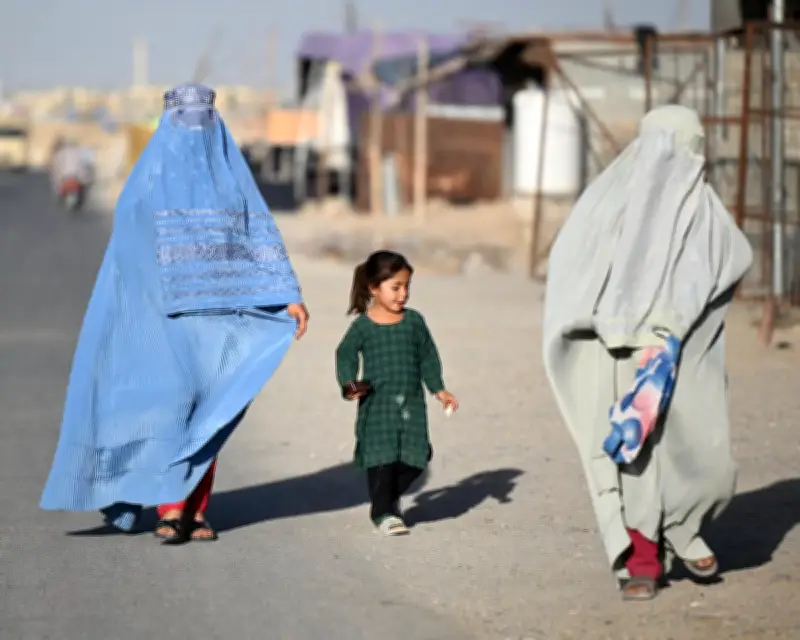
The European Union is facing fierce criticism after hosting a Taliban delegation in Brussels for the first time since the group returned to power in 2021. Rights campaigners and Members of the European Parliament (MEPs) have warned that the meeting risks normalising a regime that has banned girls from school beyond the sixth grade and sought to erase women from public life. The Taliban delegation includes two senior leaders subject to International Criminal Court arrest warrants for crimes against humanity related to the persecution of women and girls.
Details of the Visit
A spokesperson for the Afghan foreign ministry, Abdul Qahar Balkhi, confirmed that a Taliban delegation travelled to Brussels after the Belgian foreign ministry issued five single-day visas. Tuesday's agenda included discussions on the possible resumption of consular services for Afghans in the EU, consular presence, and "the need for trust-building measures," Balkhi said in a statement. The European Commission confirmed weeks ago that it had been in talks with the Taliban since January to discuss scaling up the deportation of Afghan migrants.
Outrage from Campaigners and MEPs
The visit was denounced by campaigners who said building ties with the Taliban flew in the face of the EU's values. Nobel peace prize laureate Malala Yousafzai, who was shot by Pakistan Taliban militants at age 15, said she was "shaken and deeply disturbed" by the EU's invitation. "The Taliban have erased women and girls from public life," she said.
Socialist MEP Juan Fernando López Aguilar expressed outrage: "I'm appalled. It's absolutely an outrage and a total loss of faith and the credibility of the European Union that it can hold such a double standard." He accused the EU of allowing far-right immigration rhetoric to set the agenda, stating, "Migration is not a threat, not even a crisis. It's a constant fact of the history of mankind."
Humanitarian and Human Rights Concerns
Since the Taliban returned to power, hundreds of thousands of Afghans have sought asylum in Europe. About 40% of Afghanistan's population is affected by hunger, according to the International Rescue Committee. Women face systematic barriers to education, employment, and healthcare. Lisa Owen, the organisation's Afghanistan country director, said: "Deporting Afghans back to a country where almost half of the population cannot feed themselves is not a migration policy; it is a decision that could cost lives."
An open letter from 83 Afghan and international human rights groups stated: "Afghanistan is currently one of the most dangerous places in the world to be a woman, and forced return would expose many to persecution, violence and severe deprivation of rights."
Risks of Normalisation and Deportations
Shagofah Ghafori of the Centre for European Policy Studies warned that the EU is offering "something more insidious: normalisation. And normalisation doesn't require a signed treaty. It happens incrementally, through granting visas, meeting rooms and the quiet replacement of principle with transaction."
A 2024 UN report found that many Afghans returned to the country experienced arbitrary arrest, detention, torture, and ill treatment. A charter flight from Germany in August 2024 carrying 28 Afghan citizens illustrated the risks: "Once a plane lands, there's no credible oversight and reports indicate that returnees were detained and interrogated, with at least one later killed," Ghafori said. Germany is believed to have deported more than 100 since August, and Austria has also begun deportations.
Reshad Jalali of the European Council on Refugees and Exiles warned that deportation could expand: "The real risk is that once deportation is normalised and resumed between the EU and the Taliban de facto authorities, this would create a path for a wider deportation of Afghans without criminal convictions." An investigative report by German broadcaster ZDF alleged that deportations had also targeted single Afghan men who had not broken any laws.
Strategic Mistakes
German Green MEP Hannah Neumann called the deportations a strategic mistake: "If Europe returns young Afghan men into poverty and hopelessness, many will end up dependent on the only structures still offering shelter and food: Taliban networks and madrassas." She added: "By deporting people into desperation, we are not weakening the Taliban. We risk strengthening the very structures that keep them in power."