
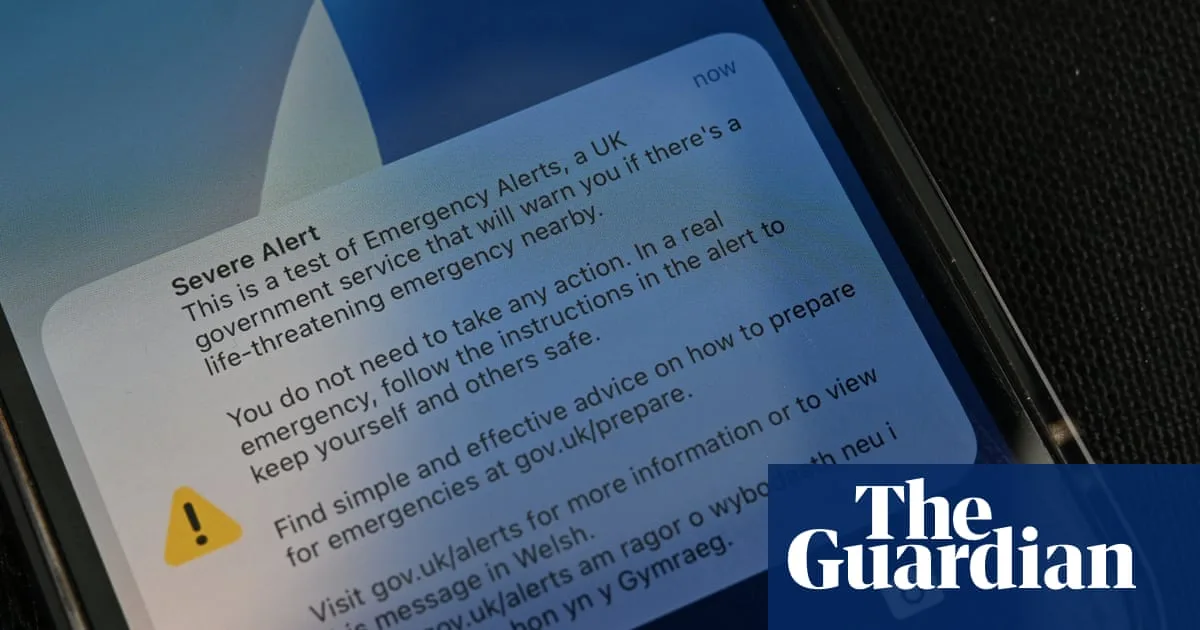
Millions of phones across the UK sounded a siren and vibrated on Sunday afternoon as the government tested its national emergency alert system. The alarm, which lasted 10 seconds, was accompanied by a message confirming it was only a test.
The system is designed to warn the public of life-threatening emergencies such as extreme weather, terrorist attacks, or major incidents. The piercing alert overrides normal volume settings to ensure it is heard even in noisy environments.
Not all devices received the alert. Older models, phones not connected to 4G or 5G networks, and those switched off or in flight mode were excluded. People could also opt out, which the government noted is particularly important for domestic abuse survivors who keep a concealed phone.
The test forced adjustments across sport, with football and rugby kick-offs delayed and England's cricket match briefly paused. The government said such drills are vital, with Work and Pensions Secretary Pat McFadden calling the alerts a “national fire alarm” that requires regular testing.
The system was first tested nationwide in April 2023, and has since been used five times in real emergencies. These include the evacuation of homes in Plymouth after a wartime bomb discovery in February 2024, and alerts sent to millions during Storm Darragh in December 2024 and Storm Éowyn in January 2025.




