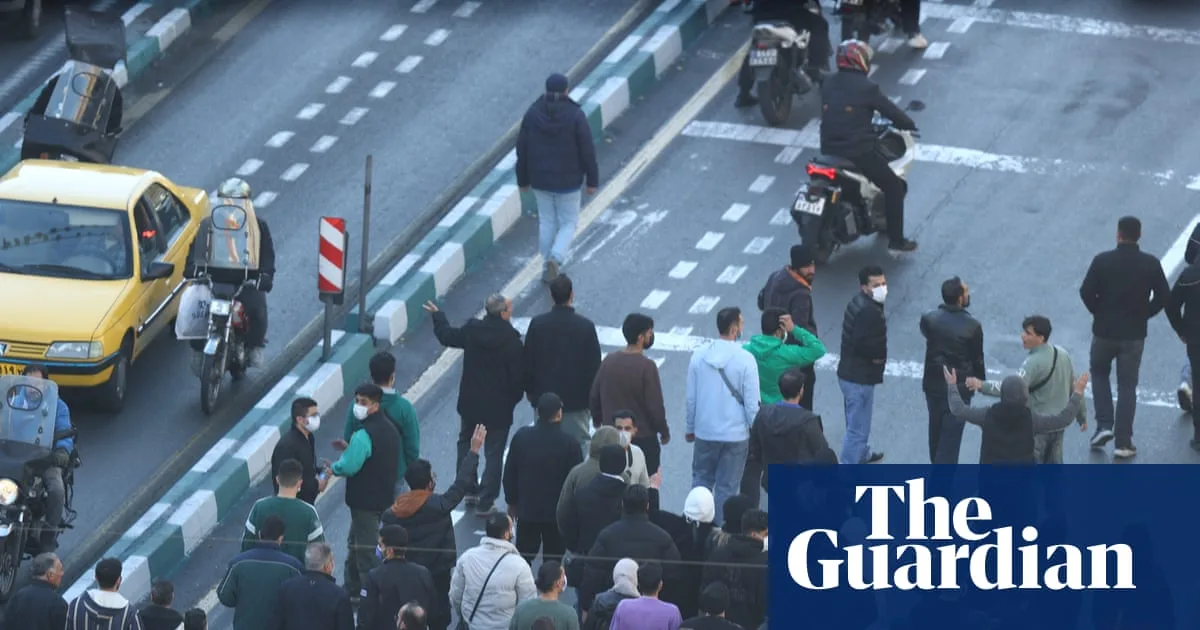
Iran Protests: Two Dead as Economic Unrest Turns into 'Battlefield'
Two dead as Iran protests escalate into violent clashes

Iran has been plunged into a fifth day of widespread and violent unrest, with state-affiliated media confirming at least two fatalities as protests over dire economic conditions escalate. The demonstrations, which began in Tehran on Sunday, have now spread across the country, with security forces reportedly responding with increasing brutality, including the use of live ammunition.

A Nationwide Outcry Meets a Violent Response

The protests, the largest seen in Iran for three years, were initially sparked by the catastrophic collapse of the national currency, the rial. Shopkeepers and traders took to the streets of the capital, but the movement has rapidly expanded, with citizens in numerous cities now chanting for economic justice and demanding an end to the current regime. An eyewitness described the scene to the Guardian as a "battlefield," stating that security forces were "firing mercilessly" at demonstrators.

Videos circulating on social media depict chaotic scenes of crowds fleeing through smoke-filled streets and apparently injured individuals being carried away. The Oslo-based Hengaw Organisation for Human Rights reported that one of those killed had been struck by live ammunition and died before reaching medical care. Both confirmed deaths are reported to have occurred in the southwestern city of Lordegan.

Wide Pickt banner — collaborative shopping lists app for Telegram, phone mockup with grocery list

Economic Despair Fuels Popular Anger

Analysts point to a deep-seated economic malaise as the core driver of the unrest. Roya Boroumand of the Abdorrahman Boroumand Center for Human Rights in Iran stated that Iranians are living in increasing poverty with little hope for improvement. "They are angry at the state’s mismanagement and corruption, and policies that are causing misery inside the country," she explained. The dramatic devaluation of the currency has sent the cost of living soaring, pushing basic necessities out of reach for many.

Ebrahim Eshaghi, an Iranian wrestler from Lordegan now based in Germany, appealed for international support, saying, "We ask all the people of the world to be our voice. The Islamic Republic is the enemy of us all." His comments underscore the anti-government sentiment that has characterised the protests.

A Pattern of Crackdowns and Executions

The violent response to these economic protests follows a grim year in Iran. Human rights groups recorded over 1,500 executions in 2025, the highest annual total since 1989. Amnesty International's Hussein Baoumi condemned these executions, noting they follow "grossly unfair trials held behind closed doors, amid widespread patterns of torture and forced confessions." Activists argue the state uses capital punishment and violent suppression to instil fear and crush any form of dissent.

With the law offering little space for legal protest, experts warn that these "popular outbursts" and subsequent deadly crackdowns are becoming a tragic pattern. As security forces continue their harsh response, the international community watches closely, with concerns mounting over further loss of life in the face of Iran's profound economic and political crisis.

Pickt after-article banner — collaborative shopping lists app with family illustration




