

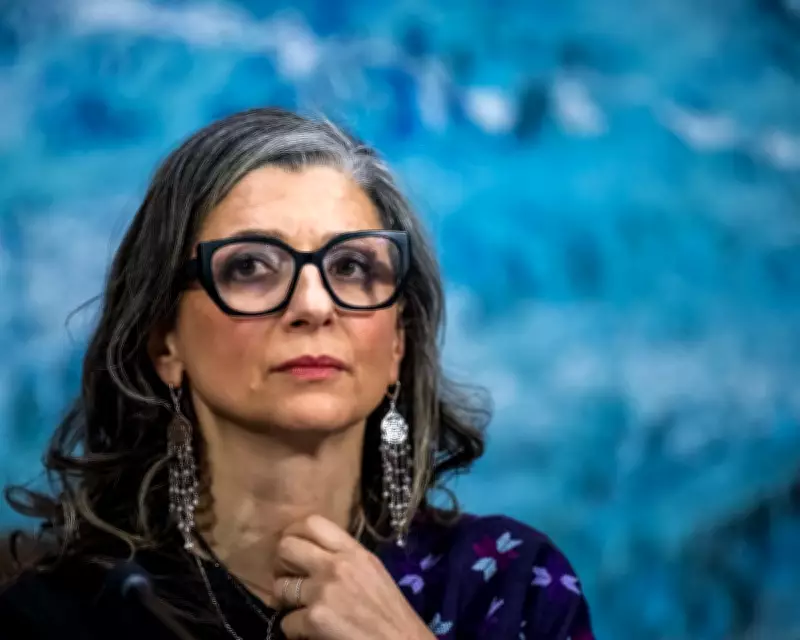
Trump's Retribution Against UN Expert Raises Alarms Over Free Speech Erosion
The Trump administration's recent sanctions against Francesca Albanese, a United Nations human rights expert, represent a dangerous escalation in efforts to stifle dissent and critique of Israel's actions in Gaza. As North American university professors and human rights lawyers, we are deeply concerned that these measures are undermining the very foundations of free speech and democratic values in the United States.
Overwhelming Evidence of War Crimes in Gaza
Israel's military campaign in Gaza has resulted in catastrophic human rights violations. Estimates indicate that approximately 20,000 children, including over 1,000 infants, have been killed in two years of conflict. Israel has employed starvation and thirst as tactical weapons, leading to widespread famine that disproportionately affects civilians. The blockade on medical supplies has denied access to critical treatments, including cancer care, neonatal services, and basic antibiotics, effectively dismantling Gaza's entire healthcare infrastructure, including reproductive health facilities and its largest fertility clinic.
Dehumanizing rhetoric from high-level Israeli officials, referring to Palestinians as "human animals" and "children of darkness," has accompanied these systematic attacks. In January 2024, the International Court of Justice ordered Israel to prevent acts of genocide, an order that has been largely ignored. Since then, numerous reputable organizations, such as Amnesty International, B'Tselem, and the International Association of Genocide Scholars, have concluded that Israel is committing genocide against the Palestinian people.

The Targeting of Francesca Albanese
Francesca Albanese, appointed by the UN to monitor human rights in the occupied Palestinian territories, recommended that the International Criminal Court issue arrest warrants for Israeli Prime Minister Benjamin Netanyahu and Defense Minister Yoav Gallant. She also advocated for investigations into companies complicit in war crimes. In response, the Trump administration imposed severe sanctions on Albanese, effectively imposing a "civil death" by restricting her ability to open bank accounts, sell property, or receive salaries from American institutions.
These sanctions have had a ripple effect, extending beyond Albanese to her family and associates. An executive order signed by Trump threatens criminal prosecution for anyone providing "funds, goods, or services" to designated figures, including Palestinian human rights organizations. This vague terminology has already led a Maine university to cancel an academic conference where Albanese was scheduled to speak via Zoom, highlighting the broader chilling effect on academic freedom and discourse.
The Chilling Effect on Free Speech and Academic Freedom
On university campuses across the United States, faculty and students are increasingly fearful of criticizing Israel, concerned about potential job loss or public censure. Our ability to share research and analysis on Israel's human rights violations with entities like the ICC or Albanese is now constrained by the threat of legal penalties. This environment mirrors what courts describe as a "chilling effect" on free speech, where the mere threat of sanctions can deter expression as effectively as the sanctions themselves.
As recognized by the US Supreme Court decades ago, such threats violate both the Constitution and international human rights law. In response, we have filed a friend-of-the-court brief supporting a lawsuit by Albanese's husband and daughter against these unconstitutional measures. No individual should be silenced for opposing official narratives, especially in contexts involving potential genocide.
Broader Implications for Democracy and Liberty
Trump's retribution against Albanese should concern not only those focused on Israel's human rights record but anyone who values free speech. Today, the target is a UN expert; tomorrow, it could be journalists, scholars, peaceful protesters, or ordinary citizens challenging authority. When governments claim the power to police ideas, everyone's liberty is at risk. This case underscores the urgent need to defend democratic principles and protect the right to dissent in the face of escalating authoritarian tendencies.






