
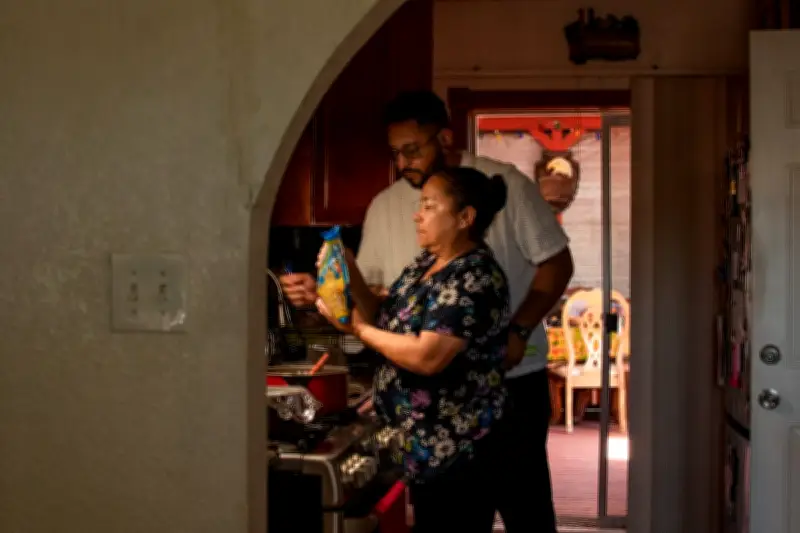
The Trump administration's revocation of Temporary Protected Status (TPS) for Honduras and other countries has forced thousands of healthcare workers out of their jobs, upending their lives and worsening staffing shortages in an already fragile US healthcare system. Among those affected is Janeth, a 50-year-old nursing assistant from Honduras who worked for 23 years at a Kaiser Permanente hospital in the San Francisco Bay Area. After winning a prestigious national nursing award seven times, she lost her job in September 2024 when TPS for Honduras ended. She and her 85-year-old mother moved in with her daughter because she can no longer pay her mortgage. “I just want my job back, I just want my life back. I want to take care of my patients again,” she said.
Impact on Patients and Colleagues
Janeth’s absence is deeply felt. A nurse who worked with her for eight years said Janeth could turn “difficult patients” into her “biggest fans,” recalling a patient with alcoholism who only wanted her after one shift. “That kind of skillset you can’t ever replace,” the nurse said. John Jacoby, whose mother Dolores was treated by Janeth for acute myeloid leukemia, credits Janeth with extending her life. “She injected life into my mom,” he said. Dolores was given three months to live but survived three years. When John learned Janeth had lost her job, he said, “They need to take her back for the patients.”
Jhony Silva, another TPS holder from Honduras who came to the US at age three, worked as a nursing assistant at Stanford hospital. Senior nurse Renee Yee requested he be made permanent in her cardiac surgery unit because of his skill with complex patients. After TPS ended, he lost his job and had to drop out of nursing school. He now washes his hospital scrubs regularly, hoping to return. Silva became a lead plaintiff in a lawsuit challenging the TPS revocation.
Scope of the Crisis
About one in six hospital workers directly involved in patient care is an immigrant, and an estimated 4% are not naturalized citizens. FWD.us estimates that as of early 2025, nearly 1.3 million people in the US were on TPS, with at least 50,000 working in healthcare. Amina Dubuisson, vice-president of clinical services at Ventura Services Florida, which oversees nine nursing homes, said 20% to 30% of their workers are TPS holders. “They do a lot of the jobs that Americans don’t want to do,” she said, such as nursing assistants who clean and feed patients.
The Trump administration has ended or attempted to end TPS for 13 of 17 countries, including Honduras, Venezuela, Syria, and Haiti. The policy is tied up in lawsuits, with a Supreme Court decision expected this month on whether the government can immediately end TPS for Haitians. In December 2024, a federal court ruled the termination for Honduras, Nepal, and Nicaragua was unlawful because the Department of Homeland Security (DHS) did not consult other agencies or review country conditions. However, the Ninth Circuit Court of Appeals upheld the revocation in February 2025, and plaintiffs did not take the case to the Supreme Court.
Broader Immigration Policy Changes
In June 2024, the Trump administration also ended a humanitarian parole program for Cubans, Haitians, Nicaraguans, and Venezuelans (CHNV), which had allowed nearly 500,000 people to enter. FWD.us estimates 30,000 healthcare workers came under that program. Dr. Joseph Durandis in Miami lost a medical assistant who had been a doctor in Cuba and was “not replaceable.” Since then, patients wait longer, and satisfaction is dropping. Rachel Blumberg, CEO of Sinai Residences in Boca Raton, Florida, had to let nine staff members go when CHNV expired, giving each $2,000. “It felt like I had to do the dirty work of the government,” she said.
For Haitian TPS holders, uncertainty persists. Maryse Balthazar, a home health aide caring for 96-year-old Esther Birnbaum in Palm Beach County, said, “There is no plan B. This is where my life is.” Marie Esther Duval, who runs an adult family home in Spokane for four young women with mental illness, fears telling her patients she might lose her status. “They won’t be able to handle this news,” she said.
The DHS defended the terminations, stating that TPS was never designed to be permanent and that ending it is a “return to commonsense policies.” However, critics argue the administration is not following legal procedures. In June 2025, lawyers for Haitian TPS holders filed a motion to dismiss the Supreme Court case, citing newly released emails showing DHS did not analyze conditions in Haiti or consult the State Department before terminating TPS for Haiti.
Kimberly Pierce Burke, executive director of the Alliance of Independent Academic Medical Centers, said, “Just because we are stopping immigration pathways and banning people from these countries doesn’t mean we can ban patients, too. They continue to come to hospitals and nursing homes, except now there is a shortage of people who can attend to their needs.”




