
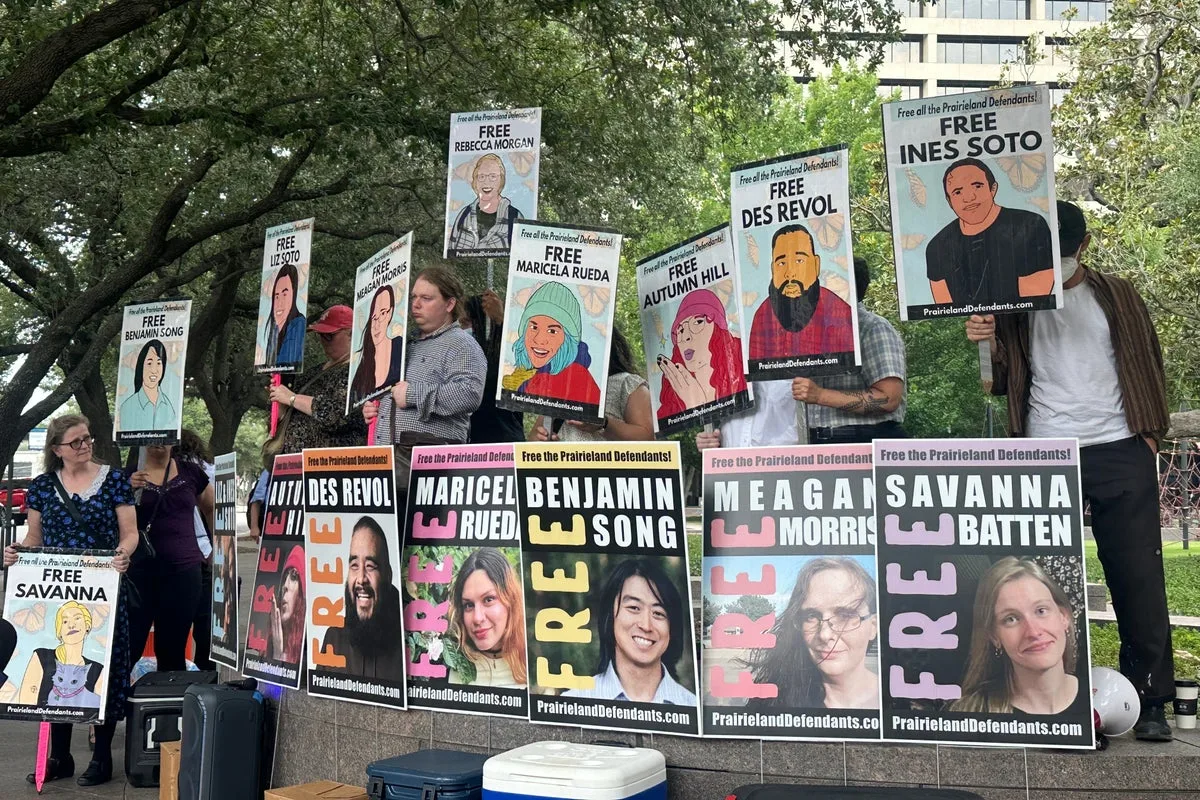
A US Marine who shot and wounded a police officer outside an immigration detention centre in Texas has been sentenced to 100 years in federal prison. The case is part of a landmark prosecution of more than a dozen protesters accused of Antifa-linked terrorism.
Seven other demonstrators received prison terms ranging from 30 to 70 years during sentencing hearings on Tuesday. Another group of convicted protesters could face similar sentences next week. The charges are among the first against anyone accused of being a member of Antifa, a movement that former President Donald Trump’s administration sought to crack down on.
US District Judge Reed O’Connor said the sentences would “send a message to anyone who shares a similar ideology.” Benjamin Song, the Marine convicted of attempted murder, said in a statement that he tried to stop the officer from shooting a “running, unarmed protestor.” He described the sentences as “mass punishment” and “guilt by association.”
The case involves 22 people charged after a demonstration in solidarity with detainees at the Prairieland ICE Detention Center in Alvarado, Texas, on July 4, 2025. Prosecutors accused the group of launching a premeditated terror attack. Song and six others were convicted of rioting, providing material support to terrorists, and conspiracy to use explosives. Song was also convicted on three counts of discharging a firearm.
Antifa, short for antifascist, encompasses individuals and loosely affiliated groups rather than a specific organisation. The Justice Department has opened a wider investigation into the movement, which Trump and prosecutors have called a criminal “enterprise.” Critics fear this is an attempt to criminalise political opposition itself.
Last autumn, Trump signed an executive order designating Antifa as a domestic terrorist organisation, even though there is no domestic equivalent to the list of foreign terror organisations. First Amendment advocates said the order could be used to justify broad and unconstitutional investigations, creating a chilling effect against political opposition.




