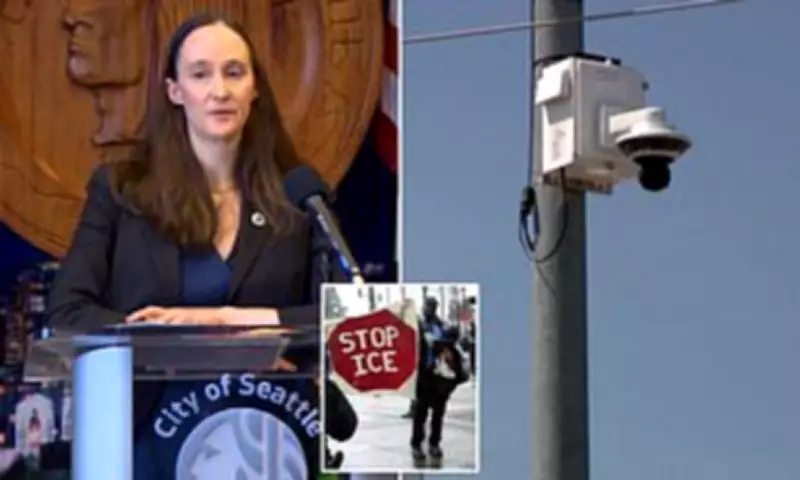
Seattle Mayor Pauses Police CCTV Expansion Over Immigration and Privacy Fears
Seattle Mayor Katie Wilson has announced a temporary halt to a planned expansion of police-operated CCTV cameras throughout the city, citing significant concerns that the surveillance technology could be misused to target undocumented immigrants or infringe upon civil liberties. During a press conference held on Thursday, the Democratic mayor stated that the city will conduct a comprehensive data and privacy audit while the camera rollout remains suspended.
Balancing Crime Prevention with Civil Liberties
"There is no doubt that these cameras make it easier to solve certain crimes, including serious offenses like homicides," Wilson acknowledged. "However, cameras are not the singular solution to ensuring neighborhood safety. On the other hand, there are legitimate and pressing concerns regarding privacy, surveillance overreach, and the potential for misuse of these technologies."
Mayor Wilson, who is less than three months into her term, referenced escalating immigration enforcement actions in other American cities such as Minneapolis. She vowed to disable all surveillance cameras in Seattle if federal Immigration and Customs Enforcement (ICE) agents initiate similar activities within the city limits.

Sanctuary City Policies and Federal Tensions
Seattle operates as a sanctuary city, meaning municipal agencies are mandated to limit their cooperation with federal immigration authorities. Under existing policy, city employees and police officers are prohibited from inquiring about an individual's immigration status and cannot grant ICE access to local detention facilities without a court order.
"While it is already established policy that the Seattle Police Department may not share information with ICE absent a judicial order, I am also directing SPD to immediately inform the mayor's office and city council if we become aware of any information sharing with ICE of any nature, even if that information is unrelated to the CCTV program," Wilson emphasized.
Political Tightrope and Community Pressure
Mayor Wilson, who self-identifies as a democratic socialist, faces considerable pressure from her progressive base, which has urged her to dismantle more surveillance infrastructure to prevent potential misuse by federal authorities. Seattle has been a focal point for some of the nation's most vocal anti-ICE protests, with demonstrators frequently gathering outside the federal building since the Trump administration's mass deportation initiatives.
Conversely, law enforcement agencies and local business owners have advocated for the camera expansion, arguing that reducing surveillance would result in more unsolved crimes. Business improvement districts, including the Downtown Seattle Association and the Sodo Business Improvement Area, had recently submitted a letter to Mayor Wilson advocating for the expansion with robust safeguards.
"By deploying new technology with stringent protective measures, the City of Seattle can further strengthen a balanced, accountable, and community-centered approach to public safety," the business leaders wrote.
Compromises and Specific Actions
In a move that may disappoint some of her privacy-focused supporters, Mayor Wilson declined demands to deactivate all 62 CCTV cameras currently operational in Seattle, recognizing their critical role in criminal investigations. However, she ordered the immediate disabling of one specific camera directed toward a clinic providing reproductive health services and a facility offering gender-affirming care.
"I have confirmed that SPD's current practice involves masking or blurring those specific locations, but until we complete a comprehensive security audit and implement stronger safeguards, I do not believe it is prudent to assume that risk," Wilson explained.
World Cup Preparations and License Plate Readers
Despite the broader pause, Mayor Wilson confirmed that additional security cameras will be installed in the stadium district ahead of the upcoming World Cup events this summer. These cameras, however, will remain inactive unless a "credible threat" emerges, though the administration has not yet defined specific criteria for such threats.

In a related move, Wilson announced the city will disable automated license plate reader (ALPR) technology currently installed on approximately 400 police patrol and parking enforcement vehicles. This decision follows recent state legislation that restricts ALPR use to felony investigations and mandates the deletion of most collected data within 21 days.
"Until the city can fully comply with the new regulations, which are expected to be signed by Governor Bob Ferguson shortly, existing ALPR systems must be taken out of service," Wilson stated, underscoring her administration's commitment to aligning local practices with updated legal standards.