
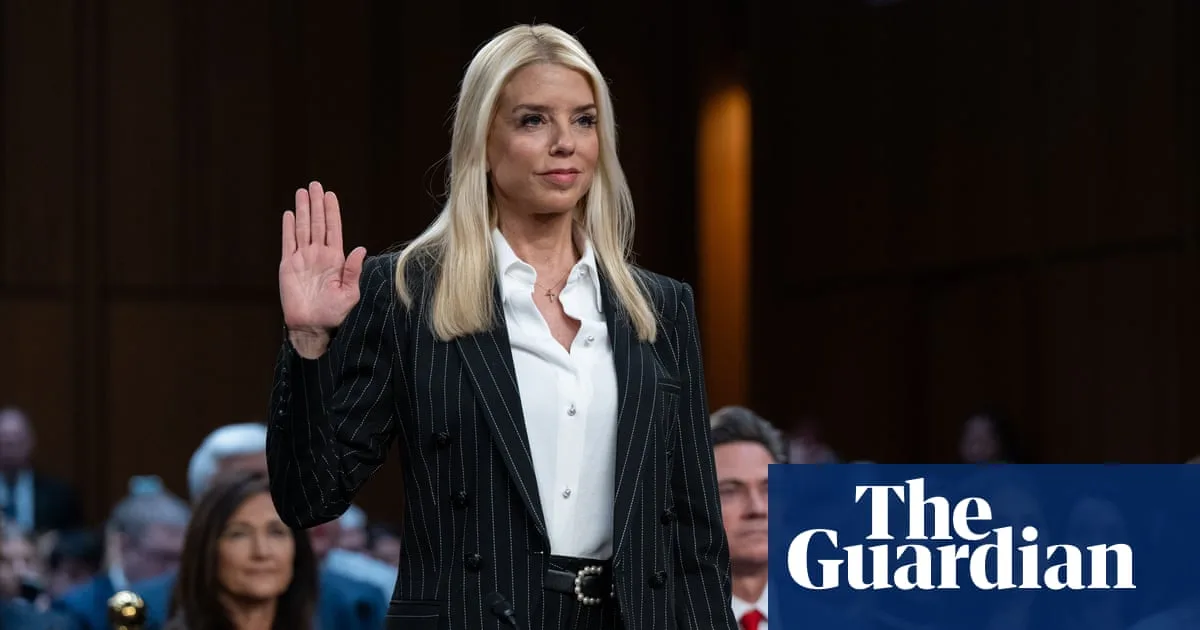
As Pam Bondi awaits Senate confirmation as US attorney general, her nomination has drawn criticism from an unexpected corner of Donald Trump’s coalition: second amendment activists.
Bondi, a longtime ally of Trump, served as Florida attorney general when 17 people were killed in the 2018 Parkland school shooting. In response, she banned gun sales to under-21s and introduced a red flag law allowing courts to temporarily confiscate firearms from individuals deemed a threat. These measures have earned her the distrust of groups including the National Rifle Association, Gun Owners of America and the National Association of Gun Rights.
Democrats, meanwhile, have raised concerns about Bondi’s loyalty to Trump and her past lobbying work for Amazon and Uber, as well as the possibility she might use the justice department to target his political opponents. However, at her 15 January confirmation hearing, no Republican senator questioned her about gun control or her post-Parkland policies.
Stephen Gutowski, founder of the gun news site The Reload, described her relationship with gun rights groups as “a mixed bag”. He noted that Republicans did not even seek assurance she would not pursue similar measures nationally. Still, he said it “doesn’t necessarily mean that Bondi is going to be a gun control advocate as attorney general”, pointing out that her positions largely align with Trump’s own mixed record.
Trump banned bump stocks after the 2017 Las Vegas massacre, supported red flag laws after later shootings, and signed a bill resuming federal gun violence research. But he also backed school hardening and arming trained teachers, and appointed conservative judges whose 2022 Bruen decision expanded the right to carry guns in public.
The only gun-related question at the hearing came from Democratic Senator Alex Padilla of California, who asked about universal background checks and a national red flag law. Bondi replied: “I would be glad to meet with you and review any legislation that you have, senator.” Padilla later voted against advancing her nomination but said her position offered “glimmers of potential agreement”.




