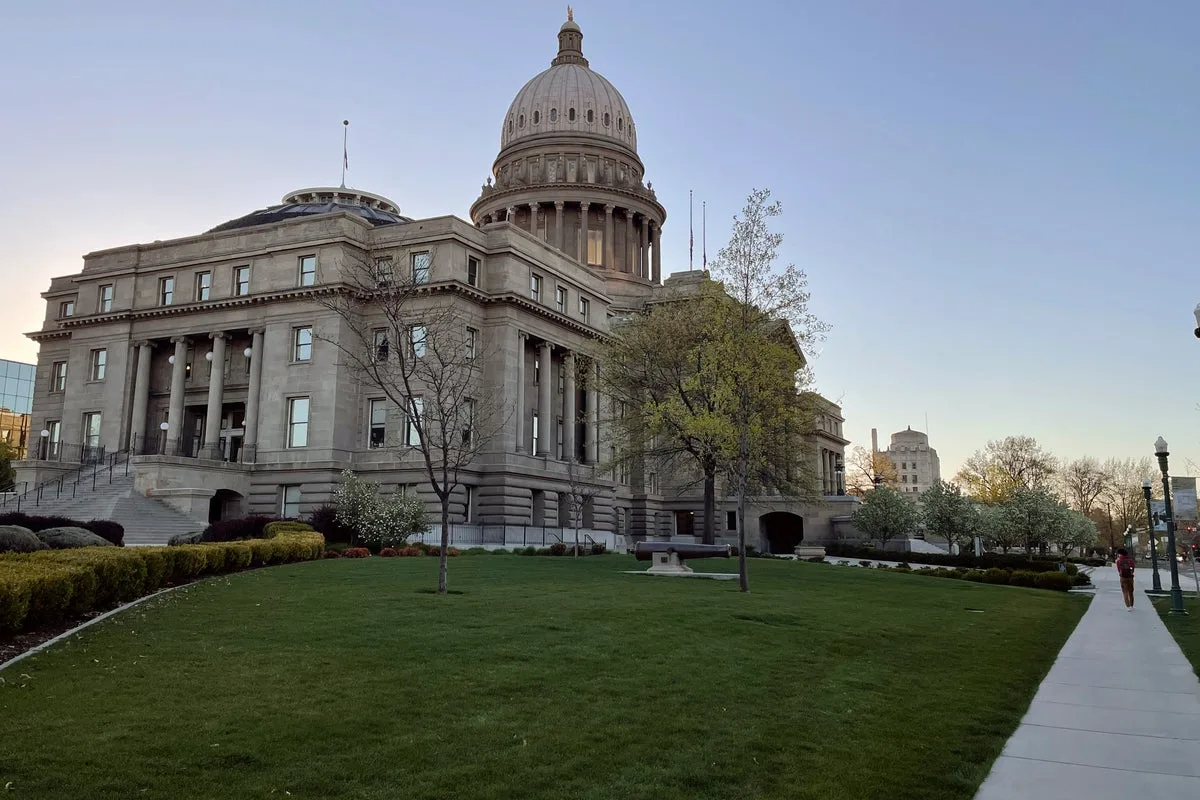
Idaho Enacts Nation's Strictest Transgender Bathroom Legislation
Idaho lawmakers passed a sweeping bathroom bill on Friday, creating the strictest such ban in the United States. The legislation makes it a criminal offense for transgender individuals to use restrooms, locker rooms, or changing areas that align with their gender identity, even within privately owned businesses.
Severe Penalties and Broad Application
If signed by Republican Governor Brad Little, the bill would subject violators to significant legal consequences. A first offense could result in a misdemeanor charge with up to one year in jail, while a second offense may be classified as a felony carrying a prison sentence of up to five years. The law applies to any "place of public accommodation," broadly encompassing facilities serving the public, which distinguishes it from similar measures in other states.
At least nineteen states, including Idaho, already have laws restricting transgender bathroom access in schools and some public spaces. However, only Florida, Kansas, and Utah have criminalized violations in certain circumstances. None extend as comprehensively to private businesses as Idaho's new bill.
Legislative Intent and Opposition
Republican Senator Ben Toews, the bill's sponsor, defended the legislation as a measure to protect women and children from sexual predators, rather than targeting specific groups. "All of what we're trying to solve here is not targeting any one group or person, it's dealing with sexual predators and very real issues," Toews stated. "This isn't criminalizing someone for who they are."
Opponents, including law enforcement groups like the Idaho Fraternal Order of Police and the Idaho Chiefs of Police Association, argue the bill unfairly criminalizes transgender people for simply existing. They expressed concerns about the impracticality of officers visually determining someone's biological sex or assessing "dire need" exceptions, which include scenarios like janitorial work, emergency responses, assisting children, or urgent restroom requirements.
Democratic Senator James Ruchti drew historical parallels, comparing the bill to now-repealed provisions in Idaho's Constitution that disenfranchised Native Americans, Chinese residents, and Mormons. "This is the first one I can think of where we've set up a crime for who somebody is," Ruchti remarked, noting that even Jim Crow-era laws typically provided "separate but equal" facilities.
Veto-Proof Support and Human Rights Concerns
The bill passed the Senate 28-7, with only one Republican, Senator Jim Guthrie, voting against it. Guthrie highlighted the impossible situation faced by transgender individuals, such as a transgender man with masculine features who would violate the law regardless of which bathroom he uses. "They're human beings just like us, and what are they supposed to do?" Guthrie questioned.
With supermajority support in both chambers—the House passed it 54-15 earlier this month—the legislature is likely able to override any gubernatorial veto. The American Civil Liberties Union of Idaho condemned the bill, urging Governor Little to veto it and labeling the punishments "extreme and unnecessary."
Impact Beyond Arrests
Heron Greenesmith of the Transgender Law Center noted that while arrests under bathroom laws are exceptionally rare nationwide, such policies embolden vigilantes to persecute people based on appearance. Logan Casey from the Movement Advancement Project emphasized that Idaho's bill is the first to specifically target public accommodations so broadly, unlike other states where criminal charges require additional steps, such as refusing to leave after being asked.
The only widely reported arrest related to transgender bathroom restrictions occurred during a protest in Florida last year, underscoring the rarity of enforcement but the profound societal impact of these laws.






