

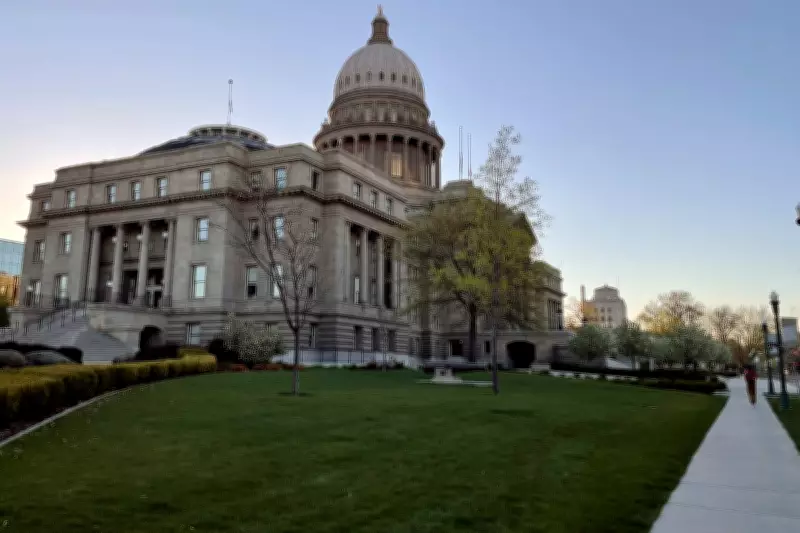
Idaho Lawmakers Propose Sweeping Transgender Bathroom Restrictions
Idaho legislators are advancing a controversial bill that would criminalise transgender individuals using bathrooms aligning with their gender identity, extending to privately owned businesses. The proposed legislation, which is expected to face a vote in the Republican-controlled Senate this week, represents one of the broadest such measures in the United States.
Broad Scope and Severe Penalties
The bill applies to any "place of public accommodation," encompassing all businesses and facilities serving the public. Under its provisions, entering a bathroom or locker room designated for the opposite sex could result in a misdemeanor charge with up to one year in jail for a first offence. A second offence would be classified as a felony, carrying a potential prison sentence of up to five years. Notably, these penalties exceed those for first-time drunk driving convictions or displaying offensive sexual material publicly in Idaho.
Republican Senator Ben Toews, advocating for the bill, emphasised that protecting sex-separated spaces like restrooms and changing areas is a "matter of safety" and "decency." He argued that individuals in these vulnerable settings have a "reasonable expectation of privacy and security." The legislation does include exceptions for athletic coaches, emergency responders, custodians, those supervising inmates, people assisting children, and individuals in "dire need" when no other reasonable option is available.

Law Enforcement Opposition and Practical Concerns
Several law enforcement groups, including the Idaho Fraternal Order of Police and the Idaho Chiefs of Police Association, have voiced opposition to the bill. They contend it would place officers in untenable positions, requiring them to visually determine someone's biological sex or assess their level of "dire need." The Idaho Sheriff's Association proposed an amendment requiring people to ask suspected violators to leave before contacting authorities, but lawmakers rejected this suggestion.
Heron Greenesmith, deputy policy director at the Transgender Law Center, criticised the "dire need" exception as particularly difficult to assert and dehumanising. "How does one prove that one was going to poop on the floor?" they questioned, highlighting the impracticality of the provision.
Impact on Transgender Community and Broader Implications
Transgender individuals and advocates warn the bill could lead to increased profiling and vigilantism. John Bueno, a transgender student at the University of Idaho, expressed concern that it promotes a culture of "narcing on one another" and "transvestigating," potentially deterring queer individuals from remaining in the state.
Nikson Matthews, a transgender man, testified that the bill would force him into women's restrooms, where his masculine appearance could provoke aggression. He argued the legislation criminalises presence rather than harmful conduct. Boise resident Laura Volgert added that it could impede employment opportunities, as transgender workers cannot reasonably be expected to avoid using bathrooms during eight-hour shifts.
Proponents like Suzanne Tabert maintain the bill is about "maintaining clear, enforceable boundaries" to protect women and children from harassment and sex crimes. She insisted it "upholds a universal standard of privacy" without targeting the transgender community.
National Context and Related Restrictions
This bill emerges amid a broader trend of restrictions on transgender rights. At least 19 states, including Idaho, already limit transgender bathroom use in schools and public places, with Florida, Kansas, and Utah imposing criminal penalties in some circumstances. However, none apply as extensively to private businesses as the Idaho proposal.
Additionally, at least 25 states bar transgender women and girls from certain sports competitions, and at least 27 states restrict or ban gender-affirming care for minors. Expanding such policies is a priority for President Donald Trump, reflecting a national political divide on transgender issues.
The only widely reported arrest for violating transgender bathroom restrictions occurred during a protest in Florida last year, underscoring the enforcement challenges and societal tensions surrounding these laws.






