Hong Kong Bookstore Staff Reportedly Arrested for Selling Jimmy Lai's Biography
Hong Kong authorities have reportedly arrested a bookstore owner and several staff members on suspicion of selling seditious publications, including a biography of jailed pro-democracy activist Jimmy Lai. This development has sparked renewed concerns about the erosion of civil liberties in the city, which was promised certain freedoms when it returned to Chinese rule in 1997.
Arrests and Searches at Independent Bookstore
According to local media reports, including from broadcaster TVB and the South China Morning Post, independent bookstore owner Pong Yat-ming and three staffers at his shop, Book Punch, were arrested on Tuesday. The reports, citing unidentified sources, indicate that national security police searched the bookstore and seized publications, with "The Troublemaker," a biography of Jimmy Lai, among the items in question.
Police have not officially confirmed the arrests, stating only that they "will take actions according to actual circumstances and in accordance with the law." The bookstore remained closed on Wednesday, with a notice on its door citing "an unexpected situation" and apologizing for any inconvenience. Book Punch and its owner have not provided immediate comment on the matter.

Background on Jimmy Lai and Apple Daily
Separately, officials ordered the removal of three companies linked to Lai's now-shuttered newspaper, Apple Daily, from the city's companies registry. A government statement declared that Apple Daily Limited, Apple Daily Printing Limited, and AD internet Limited were dissolved and became "prohibited organizations." The statement warned that anyone associating with these entities would violate the national security law introduced in 2024.
Lai and the three companies were convicted in December of conspiracy to collude with foreign forces to endanger national security, as well as conspiring to publish seditious materials under a separate sedition law. Last month, Lai was sentenced to 20 years in prison, and the companies were each fined over 3 million Hong Kong dollars (approximately $384,000).
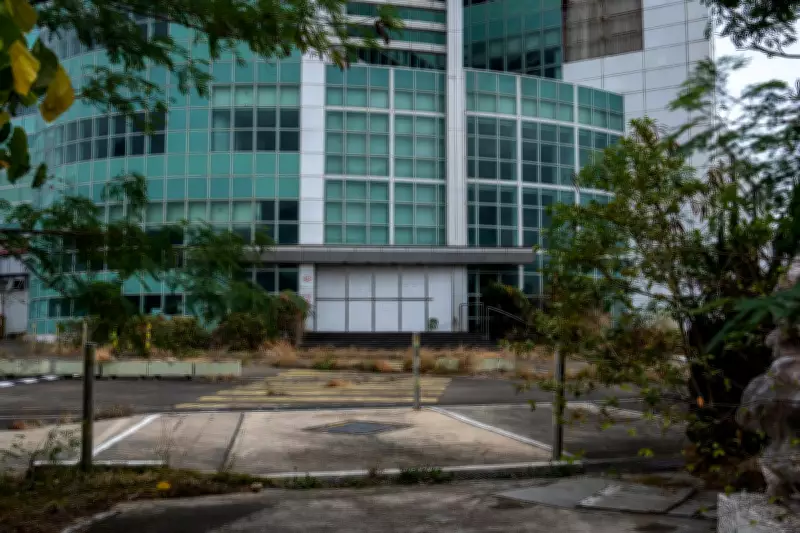
Apple Daily, founded by Lai and known for its critical coverage of both Hong Kong and Beijing governments, shut down nearly five years ago following arrests of top management under a national security law imposed in 2020 to quell anti-government protests. Some local media outlets reported that police entered the idled office site of Next Digital, Apple Daily's parent company, on Wednesday.
Challenges for Independent Bookstores
Independent bookstores in Hong Kong, often seen as spaces offering politically sensitive books not easily found in public libraries or mainstream stores, face multiple operational challenges. Pong has previously been charged for activities at another bookstore, pleading not guilty in January to allegations of running an unregistered school by allowing a Spanish class at his store.
Another independent bookseller, Hunter Bookstore, has noted frequent visits from authorities over complaints about issues like hosting events without a license. In a social media post, Hunter questioned how booksellers could differentiate which books are considered seditious under the national security law. The bookstore called for the government to provide an online list of prohibited titles, pledging not to sell any seditious materials if they were clearly named.
"Books and publishing are not independent enterprises. They are the cultural foundation of the entire society," Hunter wrote, highlighting the broader implications of these regulatory actions.
International Criticism and Government Response
Lai's sentencing has drawn international criticism, with many critics arguing that the national security case reflects a decline in press freedom in Hong Kong. City officials, however, maintain that the case has nothing to do with a free press and that the security laws are necessary for stability.

In a related move, authorities amended the implementation rules to the 2020 security law this week, signaling efforts to step up the national security crackdown. The new rules grant customs authorities the power to seize items suspected of carrying seditious intent and allow police officers to request passwords or decryption methods in investigating national security offenses. Those who refuse could face up to a year in prison and a fine of 100,000 Hong Kong dollars (about $12,800) if convicted.
Secretary for Security Chris Tang told lawmakers on Tuesday that the new rules do not permit police to randomly ask for mobile phone passwords. He emphasized that officers must first secure court warrants based on national security reasons before searching electronic devices.
Critics argue that these latest moves, including the arrests and company dissolutions, send further chills through Hong Kong, undermining the civil liberties once promised. The situation continues to evolve as authorities tighten controls in the name of national security.