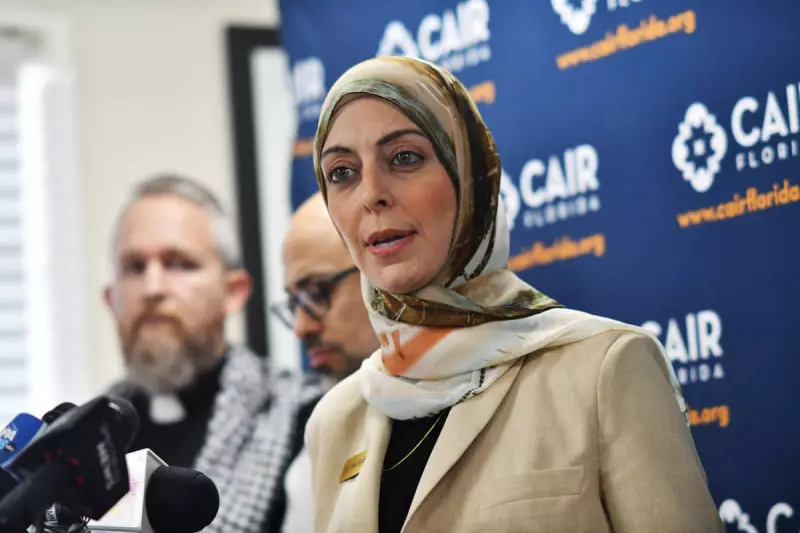
A prominent Muslim civil rights organisation has launched a major legal challenge against the state of Florida, arguing a new law championed by Governor Ron DeSantis unconstitutionally singles out Muslim groups for discriminatory treatment.
Legal Challenge Against 'Foreign Agents' Registry
The Council on American-Islamic Relations (CAIR) filed the federal lawsuit on Monday, December 16, 2024. The suit targets Florida Senate Bill 1718, a piece of legislation that requires certain individuals and groups deemed "foreign agents" to register with the state.
CAIR's legal team argues the law's language and intent are dangerously vague and broad. They contend it is designed to target and stigmatise Muslim advocacy organisations by compelling them to register as agents of a foreign government, a designation they firmly reject.

The lawsuit names Florida's Secretary of State, Cord Byrd, as the defendant, representing the state's enforcement apparatus.
Allegations of Unconstitutional Targeting
At the heart of the complaint is the accusation that the Florida law violates both the First and Fourteenth Amendments of the U.S. Constitution. CAIR asserts the statute infringes upon freedoms of speech, association, and exercise of religion, while also denying equal protection under the law.
The group specifically highlights that the law could force them to publicly list their members and donors, a requirement they say would have a severe chilling effect on their legitimate advocacy and charitable work. CAIR maintains it is an independent, domestic non-profit organisation and is not directed or controlled by any foreign entity.
"This legislation is a solution in search of a problem," argued CAIR's litigation director. "It uses a broad brush to paint American Muslim civil rights groups with the stain of disloyalty, which is both false and profoundly damaging."
Political Context and Wider Implications
The law was signed by Governor Ron DeSantis in May 2023 as part of a wider legislative package. At the time, DeSantis framed the measure as a necessary step to increase transparency and counter foreign influence, particularly from what he termed "malign" state actors.
However, critics, including CAIR, have consistently argued that the law's practical effect is to demonise and isolate Muslim communities and their representative bodies. They see it as part of a broader pattern of policies under DeSantis's administration that they view as hostile to minority groups.
The outcome of this lawsuit could have significant ramifications beyond Florida's borders. A ruling in favour of CAIR could set a precedent limiting similar legislation in other states, while a ruling for the state could empower further laws of this kind across the country.
Legal observers expect the case to focus intensely on the definitions within the law and whether its application constitutes viewpoint discrimination against a particular religious minority. The state of Florida is yet to file its formal response to the litigation.