

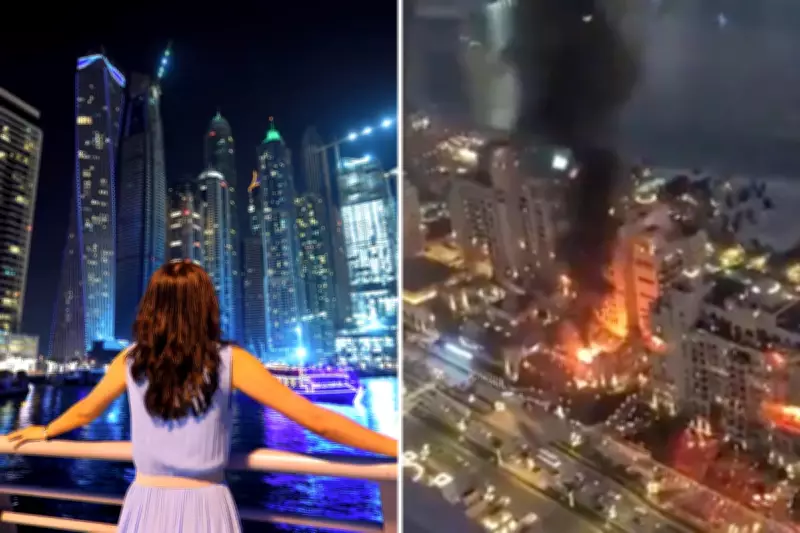
Dubai's Social Media Crackdown: The End of the Influencer Dream?
Once celebrated as the influencer capital of the world, Dubai now faces a stark reality as Iranian missiles strike the United Arab Emirates' most glamorous city. The UAE government has responded with a severe crackdown on social media, arresting residents for sharing or sending photos of the attacks, even to family members. This dramatic shift raises serious questions about the future of Dubai's carefully curated online image.
"Arresting First, Asking Questions Later"
Radha Stirling, founder of legal assistance organization Detained in Dubai, describes the situation as "really Orwellian." Authorities are "arresting first, asking questions later" in what she calls an unprecedented approach. "We've never seen people rounded up as they have in this current climate," Stirling explains, detailing how police visit people's homes after explosions to examine their phones.
The case making headlines involves three survivors of a drone strike on their apartment building who were allegedly arrested after privately sharing a photo with family members to confirm they were alive. "They scroll through your messages, see that you sent a photo to your mum or something like that, and suddenly you're arrested," Stirling says, noting these images had already appeared in international media.

Broad Cyber Crime Laws
A 60-year-old British tourist faces charges under cyber crime laws for allegedly filming Iranian missiles over Dubai, one of more than 20 people charged together according to Detained in Dubai. Stirling emphasizes that UAE laws around freedom of speech and expression are among the world's strictest, with cyber crime legislation criminalizing content seen to harm the state's reputation.
"The rules are broad, grey, subjective and open to any interpretation," Stirling argues. "I think they're designed that way to give maximum freedom and flexibility to the authorities to charge people with whatever they want." She cites the 2023 case of Craig Ballentine from Northern Ireland, arrested at Abu Dhabi airport over a negative Google review about a former employer.
Influencers Receive Special Treatment
While ordinary residents face detention, high-profile influencers and celebrities receive different treatment. "They're not going to get into any trouble," Stirling explains. "The problem is these influencers are being nurtured as though they're members of the government. They're being treated as government staff, and they've got all the privileges of that."
When top-tier influencers posted videos of explosions, Stirling says they were likely "asked politely by the police to come down to the station, asked to delete that video and then go on to make a replacement video" promoting government messages. This protection contrasts sharply with the experience of regular citizens.
Coordinated Social Media Campaigns
Since missiles began landing in the Emirates, eerily similar posts have appeared on Instagram and TikTok featuring near-identical phrases. Videos typically start with influencers asking "You live in Dubai, aren't you scared?" before cutting to footage of Sheikh Mohammed with the message: "I know who protects us."
The BBC analyzed 129 posts from Dubai-based influencers during the conflict's early days, finding many contained language stressing "stability," "safety" and "strong leadership," often uploaded within minutes or seconds of each other. While difficult to prove coordination, Stirling notes the government historically directed traditional media and appears to be applying "that same directional media control" to social media.
The British Exodus
Despite relocation firm John Mason International Movers reporting a 420 percent increase in British enquiries about moving to Dubai over five years ending in 2024, some high-profile residents are leaving. The Apprentice star Luisa Zissman, who moved to Dubai late last year, told Instagram followers she had "faith that UAE defence will keep us all safe" before returning to the UK, insisting this was planned.

Zissman now plans to fly her six horses home at an estimated cost of £25,000 and has offered a free private jet flight to anyone willing to bring back her dog Crumble from Dubai. This exodus contrasts with the continued influx of migrants attracted by sunny weather, lack of income tax, and Dubai's safe society image.
Creating Fear Among Expats
The "vast majority" affected by the social media crackdown are "long-term workers and expats, and they're really patriotic about the UAE," Stirling says. Many were unaware they were breaking rules. While the UAE government has warned against spreading content "intended to incite public disorder," authorities continue arresting people for actions before these warnings.
"Sometimes they are waiting seven to nine days before they turn up at someone's house to arrest them," Stirling claims. "I haven't seen it as widespread and draconian as this, and I think that environment is creating a lot of fear for people."
The Influencer Academy Strategy
The UAE tourism department recently launched an "influencer academy" to attract creators who will draw followers with glamorous portrayals of the city. This strategy depends on maintaining Dubai's carefully crafted image, making the government reluctant to target influencers who promote it.
Stirling notes aspiring content creators have incentive "to also play the game, amplify the message, get on the bandwagon" to upgrade their status. However, she cautions that the UAE's usual approach of "pretending something bad that they're doing is not happening" through influencer armies "usually doesn't work – it actually backfires."
"I don't think that does very well for the country," Stirling concludes, "when you've got people just outright lying that it's totally safe here. No, it's not." As Dubai navigates this conflict, the tension between maintaining its influencer paradise image and controlling wartime narratives creates an increasingly precarious situation for residents and content creators alike.





