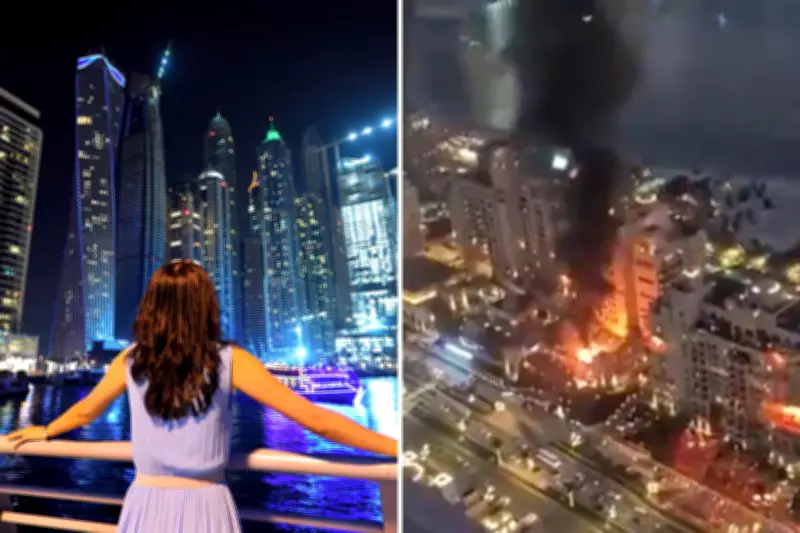
Dubai's Information War: Arrests for Sharing Missile Attack Photos
Dubai, the United Arab Emirates' most glamorous city and a global influencer hotspot, is facing a severe information crackdown as Iranian missiles strike the region. Authorities are arresting residents for sharing or sending photos of missile attacks on social media, creating what legal expert Radha Stirling describes as an "Orwellian" situation.
The 'Dubai Dream' Under Fire
Once touted as one of the world's safest cities and a photogenic playground for the wealthy, Dubai's facade is cracking under the reality of conflict. The Iranian-backed Islamic Resistance in Iraq claimed responsibility for 23 drone attacks in 24 hours on a US base, with missiles now falling on Dubai itself. In response, the UAE government has launched an unprecedented crackdown on anyone sharing images of these attacks.
Meanwhile, content creators continue posting uncannily similar content praising the city's "strong, stable leaders" while ordinary people face detention for sharing reality-based photos. "We've never seen people rounded up as they have in this current climate," says Radha Stirling, founder of Detained in Dubai, an organization providing legal assistance to foreigners facing injustice in the UAE.

Survivors Arrested for Confirming They're Alive
Stirling highlights a particularly disturbing case where three survivors of a drone strike on their apartment building were allegedly arrested after privately sharing a photo with family members simply to confirm they were alive. "They scroll through your messages, see that you sent a photo to your mum, and suddenly you're arrested," Stirling explains. "That's not down to national security. Those images had already been in international media."
A 60-year-old British tourist has also been charged under cyber crime laws after allegedly filming Iranian missiles over the city. He was one of more than 20 people charged together, according to Detained in Dubai. Stirling notes that often "people are grouped together after just interacting with something that's been published by someone else." Even forwarding a video or interacting with an Instagram post could result in detention.
Stringent Laws and Selective Enforcement
Despite wanting to attract Western visitors, the UAE has some of the world's strictest laws around freedom of speech. Any criticism of the government, state policies, or the royal family is strictly prohibited. Cyber crime legislation effectively criminalizes posting or sharing any content seen to harm the state's reputation.
"The rules are broad, grey, subjective and open to any interpretation," Stirling argues. "I think they're designed that way to give maximum freedom and flexibility to the authorities to charge people with whatever they want." She cites the 2023 case of Craig Ballentine from Northern Ireland, who was arrested at Abu Dhabi airport after posting a negative Google review about a former employer in Dubai.
Influencers vs. Ordinary Residents
While ordinary residents face detention, high-profile influencers receive special treatment. "Influencers are being nurtured as though they're members of the government," Stirling explains. "They're being treated as government staff with all the privileges." When top-tier influencers posted videos of explosions, they were likely "asked politely by police to come down to the station, delete that video, and make a replacement video."
The tourism department recently launched an "influencer academy" designed to lure creators to the region, making it unlikely authorities would turn against them. Meanwhile, a slew of eerily similar posts have appeared on Instagram and TikTok featuring near-identical phrases about safety and strong leadership.
Coordinated Messaging and Backlash
The BBC analyzed 129 posts from Dubai-based influencers in the conflict's first days and found many contained language stressing "stability," "safety," and "strong leadership," often uploaded within minutes of each other. Stirling notes that historically, "the government has had their communications office basically instruct the newspapers what to say," and they appear to be applying "that same directional media control" to social media.

"They're hoping to market it as a trend rather than a government propaganda ad," she says. However, Stirling cautions that this strategy often backfires. "I don't think that does very well for the country when you've got people just outright lying that it's totally safe here. No, it's not."
The "vast majority" of people impacted by the social media crackdown are "long-term workers and expats who are really patriotic about the UAE," many simply unaware they were breaking rules. Despite warnings from both UAE authorities and the British Embassy, Stirling says authorities are "still going back and arresting people for things done before those big warnings were put out," sometimes waiting seven to nine days before making arrests.
This environment is "creating a lot of fear for people" in what Stirling describes as the most "widespread and draconian" crackdown she has witnessed in the region.