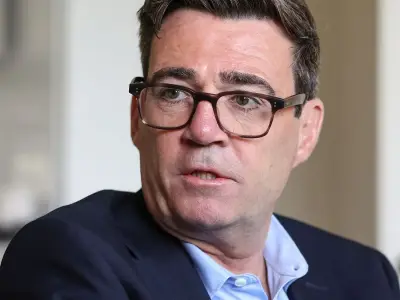
Andy Burnham has dropped his support for a political funding cap aimed at curbing mega-donors, a move that has drawn criticism from letter writers who argue it undermines promises to reform politics and return power to the people.
U-turn on donation cap
Writing in a letter to the Guardian, Paul Sawbridge of Ealing, London, said that despite widespread support for hard caps on political donations and years of affirming support for such measures, a whisper of opposition from the union lobby had produced a screeching U-turn. He argued that it is no use promising to return power to the people via devolution and employee ownership while refusing to address the power of the big beasts of the politics of yesteryear.
Sawbridge urged Burnham to immediately support Stella Creasy's amendment and to commit to a national commission on electoral reform, stating that reversing the effects of Thatcherite neoliberalism requires more resolve.

Union influence questioned
Marcus Hallside of Radlett, Hertfordshire, raised the question of when legitimate defence of an organisation's interests becomes defence of a political system that gives that organisation disproportionate influence. He noted that trade unions have a legitimate role in politics but argued that political finance should be governed by the democratic interests of citizens, not organisations, and that the same principle must apply to wealthy individuals and corporations.
Hallside cited the 2010 Labour leadership election, where the GMB backed Ed Miliband against his brother David. David led decisively among Labour MPs and party members, but Ed won overwhelmingly in the union section and became leader by 50.65% to 49.35%. Hallside said the unions did not single-handedly determine that result, but their mobilisation was crucial, and asked whether the GMB has reflected on the consequences of using its organisational power to influence Labour's political direction.
He pointed out that Ed Miliband's leadership was followed by Labour's defeat in 2015, the return of Conservative government, years of austerity, and the political sequence that culminated in the Brexit referendum. While saying it would be simplistic to claim the unions caused these outcomes, he argued that pretending their intervention had no consequences would be equally misleading.
Calls for a balanced cap
Martin Knott of Edinburgh expressed support for both empowering unions and capping donations, noting that the objectives of union donors differ widely from those of mega-rich donors. He argued that unions aim to enable a society where workers' rights are upheld and fair wages are earned, while the mega-rich seek self-enrichment. He suggested capping donations at around £1m to enable unions to donate and curb the excessive influence of the mega-rich.