

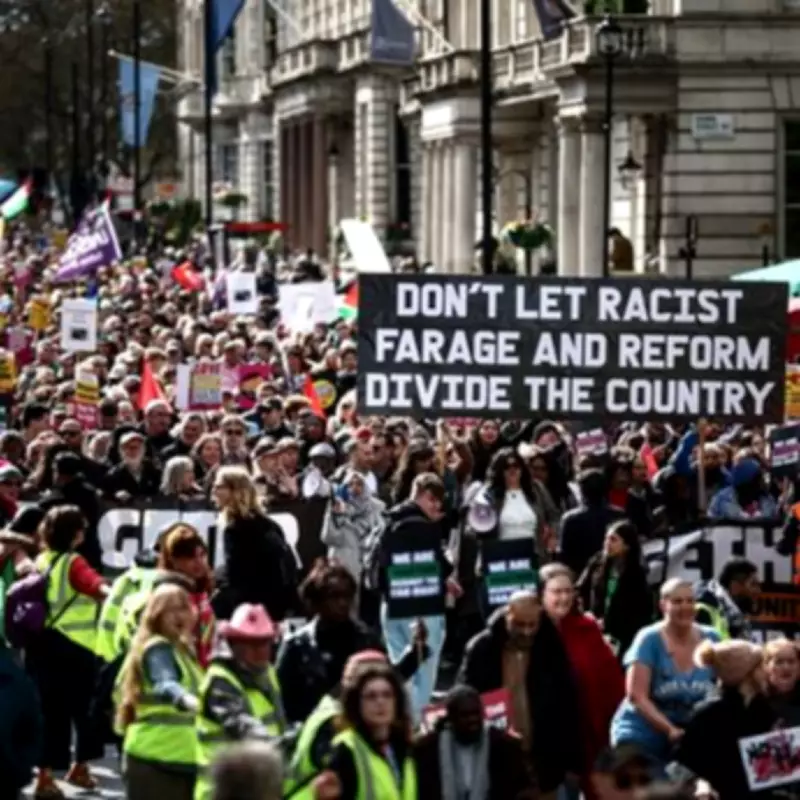
Massive Anti-Far-Right March Draws Half a Million to London Streets
In a powerful display of public sentiment, approximately 500,000 Britons took to the streets of London on Saturday to protest against far-right ideologies. The demonstration, organized by the Together Alliance, saw participants from across the country converge on the capital, carrying placards with messages such as "No to racism, no to Trump" and "Refugees welcome." The march proceeded through central London to Whitehall, with a significant police presence lining the routes to ensure order.
Unprecedented Turnout and Diverse Participation
Organizers claimed this was the largest national demonstration against the far-right in UK history, with police estimates, though typically more conservative, still indicating a massive turnout. Marchers of all ages and from various regions, including groups from Chesterfield, Cornwall, Nottingham, and St Albans, filled the streets. The procession stretched for miles, with early arrivals reaching Nelson's Column in Trafalgar Square while others waited near Hyde Park to join. The event highlighted a broad coalition of voices united against hatred and division.
Creative Protests and Symbolic Actions
The march featured a range of creative expressions, including the "Singing Resistance," a collective of choirs that performed songs learned from anti-ICE protesters in the United States. Lyrics like "the power of love will rise above the love of power" echoed through the crowd, accompanied by placards from groups such as the London Sea Shanty Collective. Notably, Extinction Rebellion's "Red Rebels" walked silently in red robes with painted white faces, adding a visual element to the protest. Papier-mâché heads depicting figures like Donald Trump were also displayed, underscoring the international context of the demonstration.

International Solidarity and Local Impact
The event coincided with similar protests in the United States, part of the third No Kings march, fostering a sense of global solidarity against common enemies like fear and scapegoating. In London, the march passed under police helicopters and past barricades, with no counterprotests from far-right activists, such as Tommy Robinson's followers, noted. A poignant moment involved a young girl on her father's shoulders holding a sign that read "Be Nice, Don't Fight," symbolizing the hope and unity at the heart of the demonstration. Ultimately, this massive gathering represented a collective choice for hope over division in Britain.






