New Videos Challenge DHS Account of US Citizen's Fatal Shooting by Immigration Agent
Newly released videos depicting the fatal shooting of a U.S. citizen by a federal immigration agent in Texas last year have cast significant doubt on assertions made by the Department of Homeland Security. The agency had claimed that the driver intentionally rammed an agent with his car immediately prior to the shooting, but the visual evidence tells a different story.
Footage Contradicts Official Narrative
The videos, which include officer body camera recordings, provide the first visual account of the shooting of Ruben Ray Martinez, a 23-year-old man, during a beach trip in March 2025. Hours of footage and other law enforcement records were released on Friday following public records requests from The Associated Press and other news outlets. Martinez's death marks the earliest of at least six fatal shootings by federal agents since President Donald Trump initiated a nationwide immigration crackdown in his second term. This case is among several where video evidence has challenged the administration's initial explanations.
According to records from the Texas Department of Public Safety, the Texas Rangers concluded their investigation into the March 15, 2025, shooting after a grand jury declined last week to file any criminal charges against Homeland Security Investigations Supervisory Special Agent Jack Stevens, who fired the fatal shots. In a written statement included in the files, Stevens stated he fired to protect his fellow agents, police officers, and the public from what he feared was a potential terrorist attack aimed at causing mass casualties. A DHS spokesperson reiterated last month that the HSI agent fired defensive shots after the driver "intentionally ran over" his colleague, resulting in the agent being on the hood of the vehicle.

Body Camera Evidence and Witness Testimony
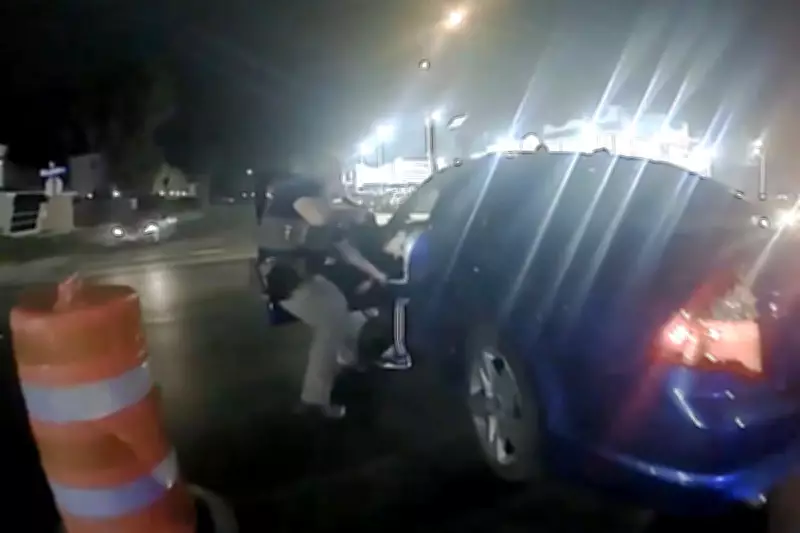
However, the newly released body camera videos, captured from behind Martinez's car, do not clearly show the vehicle striking an agent. Another video features Joshua Orta, who was riding in the car with Martinez, telling investigators that his friend had not intended to harm federal officers. Orta explained that Martinez "panicked" because he feared arrest for driving while intoxicated. "He didn't know what to do. Like he definitely didn't want to go to jail," Orta said. "But as far as like running over an officer ... he wouldn't do that." Spokespersons for DHS did not respond to requests for comment regarding the videos.
Detailed Account of the Incident
While local media initially reported the shooting involved a police officer, DHS did not publicly disclose its agents' involvement until after the AP and other outlets reported it last month. Martinez, just days past his 23rd birthday, had driven with Orta from San Antonio to South Padre Island, a popular spring break destination. After drinking and smoking marijuana, they were returning when they encountered a scene where South Padre police officers were directing traffic around a two-car collision at a busy intersection. Three HSI agents from a maritime border security task force, redirected for immigration enforcement, were also present.
In body camera footage from two island police officers, Martinez's car is seen slowly approaching the intersection, appearing to go straight as vehicles were instructed to turn left. The car slows to a crawl—nearly a full stop—for pedestrians in the crosswalk. Once clear, it slowly pulls into the intersection before stopping again as HSI agents approach, shouting for the driver to halt. Special Agent Hector Sosa moves in front of the car, while Stevens is on the driver's side, reaching toward the door. Officers can be heard shouting, "Get him out, get him out."
Martinez's car begins slowly moving forward and turning left, with Stevens keeping pace and leaning toward the open driver's side window. As officers yell for Martinez to stop, Stevens pulls his weapon and fires three shots through the window before backing away. "Shots fired, shots fired," one officer yells into his radio. The entire incident unfolds in about 15 seconds.

Aftermath and Autopsy Findings
The blue Ford quickly stops, and Martinez is pulled from the vehicle and handcuffed by multiple officers, with Orta also handcuffed. Martinez remains cuffed and unmoving on the ground for about a minute before paramedics provide aid. An autopsy report reveals all three shots hit Martinez, with bullets traveling through his left arm before entering his torso and piercing his heart, lungs, liver, and other organs. Martinez's blood alcohol level was 0.12%, above Texas's legal limit of 0.08%.
In a three-page statement provided to the Texas Rangers almost two months after the shooting, Stevens claimed Martinez "accelerated forward, striking Special Agent Sosa who wound up on the hood of the vehicle." He also said he narrowly avoided being run over, with the driver's side striking him and "causing the mirror to break off of the vehicle." A photo from the scene showed the mirror damaged but still attached. Stevens cited recent events, such as a New Orleans New Year's attack, as influencing his actions, describing Martinez's behavior as a "pre-attack indicator."
An internal U.S. Immigration and Customs Enforcement investigation reported the struck agent was treated for a knee injury and released, but the videos show the agent walking without visible injury after the shooting. Orta detailed that Martinez panicked at the checkpoint, turning the wheel slowly without flooring the gas, leading to the shooting. Orta later died in a car accident in San Antonio on February 21.
Legal Response and Ongoing Scrutiny
Lawyers representing Martinez's mother, Rachel Reyes, stated that the videos and evidence show his car was barely moving when Stevens fired at point-blank range. "This batch of evidence shows no justification for Ruben's killing," said lawyers Charles M. Stam and Alex Stamm. "Still, our pursuit of full transparency will continue until we have all the facts. We, and the public, have yet to see all of the evidence held by the government." The case continues to draw attention as questions about accountability and transparency in federal immigration enforcement persist.